


Listen to the article
Study Reveals Cancer Treatment Timing May Impact Patient Outcomes
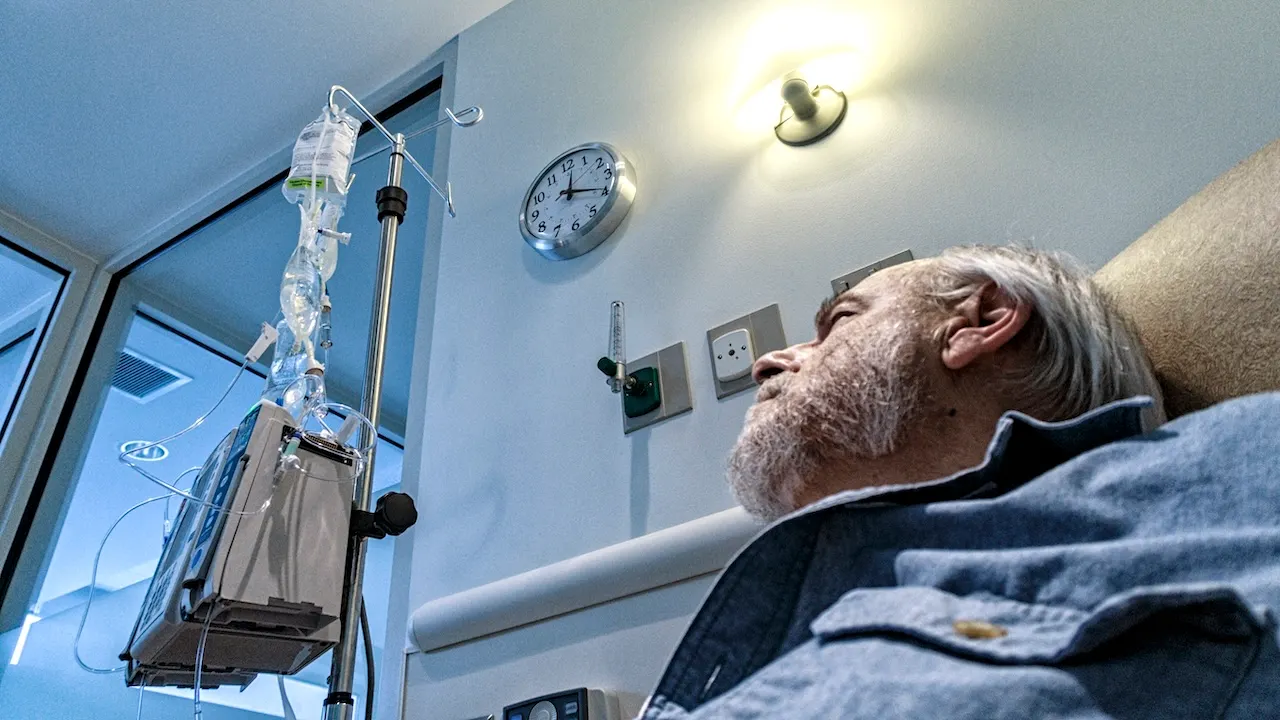
The timing of cancer treatments could significantly influence their effectiveness, according to new research published in the American Cancer Society’s journal Cancer. Patients with extensive-stage small cell lung cancer (ES-SCLC) who received immunochemotherapy before 3:00 PM showed markedly better outcomes compared to those treated later in the day.
Researchers from the Affiliated Cancer Hospital of Xiangya School of Medicine at Central South University in China analyzed data from nearly 400 patients treated between May 2019 and October 2023. All participants had ES-SCLC and received first-line immunotherapy treatments (atezolizumab or durvalumab) combined with chemotherapy.
“Our study found that patients who received immunochemotherapy before 3:00 PM had substantially longer progression-free survival and overall survival,” said lead study author Dr. Yongchang Zhang, medical oncologist and chief director at Hunan Cancer Hospital in Changsha, China.
The results were striking – after adjusting for various factors, patients receiving morning treatments showed a 52% lower risk of cancer progression and a 63% lower risk of death compared to those treated in the afternoon.
“It was quite surprising that simply changing the infusion time could lead to such substantial survival benefits for patients,” Dr. Zhang added.
These findings align with chronotherapy principles, which suggest that the body’s natural circadian rhythms affect immune system function and drug metabolism throughout the day. Cancer treatments may therefore be more effective at specific times when immune activity and drug processing are optimal.
The study adds to growing evidence that treatment timing matters across multiple cancer types. Dr. Gilberto Lopes, chief of medical oncology at the Sylvester Comprehensive Cancer Center at the University of Miami Miller School of Medicine, noted that similar results have been observed in non-small cell lung cancer patients.
“What is striking is that this signal now appears in small cell lung cancer, a disease where outcomes have been notoriously difficult to improve,” said Dr. Lopes, who was not involved in the study. “The results are biologically plausible and consistent with a growing body of evidence across cancers.”
However, the research does have important limitations. As a retrospective observational study, it cannot establish a definitive cause-and-effect relationship between treatment timing and outcomes. Other factors might have influenced the results.
“Did patients who come early in the day have a better quality of life, performance status and socioeconomic status and that is what made the difference?” Dr. Lopes questioned. “These results need to be confirmed prospectively to eliminate known and unknown sources of bias.”
Dr. Zhang acknowledged these limitations, noting that the single-center study included only Chinese patients. “To obtain more definitive evidence, prospective clinical trials conducted across multiple countries and diverse populations are needed,” he said.
Looking ahead, researchers plan to conduct randomized trials to confirm these preliminary findings and identify optimal treatment windows based on individual patients’ internal body clocks, or chronotypes.
Healthcare experts emphasize that patients should not delay necessary treatment or become anxious about appointment times based on these early findings. However, the study raises important questions for cancer treatment centers about potentially optimizing scheduling practices.
“This study should not prompt patients to delay treatment or panic about appointment times,” Dr. Lopes cautioned. “But it raises an important, low-cost question for oncology systems: If scheduling flexibility exists, should earlier infusion times be preferred?”
The research represents a potentially cost-effective approach to improving cancer outcomes simply by reconsidering when treatments are administered.
“The next step is prospective testing,” Dr. Lopes concluded, “but until then, this research invites us to rethink something medicine usually ignores: timing itself.”
Fact Checker
Verify the accuracy of this article using The Disinformation Commission analysis and real-time sources.

14 Comments
Wow, a 52% lower risk of progression and 63% lower mortality risk just by timing the treatments differently? This is a remarkable discovery. I’m curious to learn more about the underlying mechanisms driving these substantial differences.
Absolutely, the magnitude of the impact is quite striking. Further research to unpack the biological factors at play could yield important insights for optimizing cancer treatment protocols.
While the results are compelling, I wonder about the broader applicability. Were there any demographic or clinical factors that influenced the timing effect? Replicating the study in diverse patient populations would help validate the findings.
Good point. Expanding the research to examine potential confounding variables and ensure the results hold true across different patient subgroups will be crucial next steps.
This study underscores the importance of considering chronobiology in cancer care. Small adjustments to treatment timing may yield significant improvements in survival. I hope these findings spur further research into personalized, time-of-day-sensitive cancer therapies.
Agreed, this could be a game-changer if the results are replicated. Implementing such timing protocols could be challenging, but the potential patient benefits make it well worth the effort.
This is really intriguing research. I’m curious to learn more about the biological mechanisms underlying the observed timing effects. Are there certain cellular processes or signaling pathways that are more active at different times of day? Understanding the ‘why’ behind these findings could lead to innovative new treatment approaches.
Excellent question. Elucidating the underlying chronobiological factors at play would be a valuable next phase of this research. Uncovering those mechanistic insights could open up new frontiers in personalized, time-sensitive cancer therapies.
Fascinating findings on the impact of treatment timing on cancer survival rates. I wonder if this has to do with circadian rhythms and biological processes that fluctuate throughout the day. It would be interesting to see if this effect holds true for other cancer types as well.
Yes, the biological timing aspect is intriguing. Optimizing treatment schedules could make a real difference in patient outcomes.
While the findings are promising, I would encourage the researchers to exercise caution in drawing sweeping conclusions. Cancer is an incredibly complex disease, and treatment response can be influenced by myriad patient-specific and tumor-specific variables. Replicating these results in larger, more diverse cohorts will be crucial to determining the broader applicability of this timing effect.
Fair point. Robust validation across multiple studies and settings is essential before implementing major changes to clinical practice. The initial results are intriguing, but more comprehensive evidence is needed to fully understand the implications.
This is a really important finding that could have major implications for how we approach cancer care. I hope the researchers are able to dig deeper and clarify the optimal treatment windows for different cancer types and stages.
Yes, I agree. Identifying the most effective timing for therapies could be transformative. It’s an exciting development that warrants close attention from the medical and research communities.