


Listen to the article
Brazilian Coastal Plant Shows Promise for Arthritis Treatment in Laboratory Study
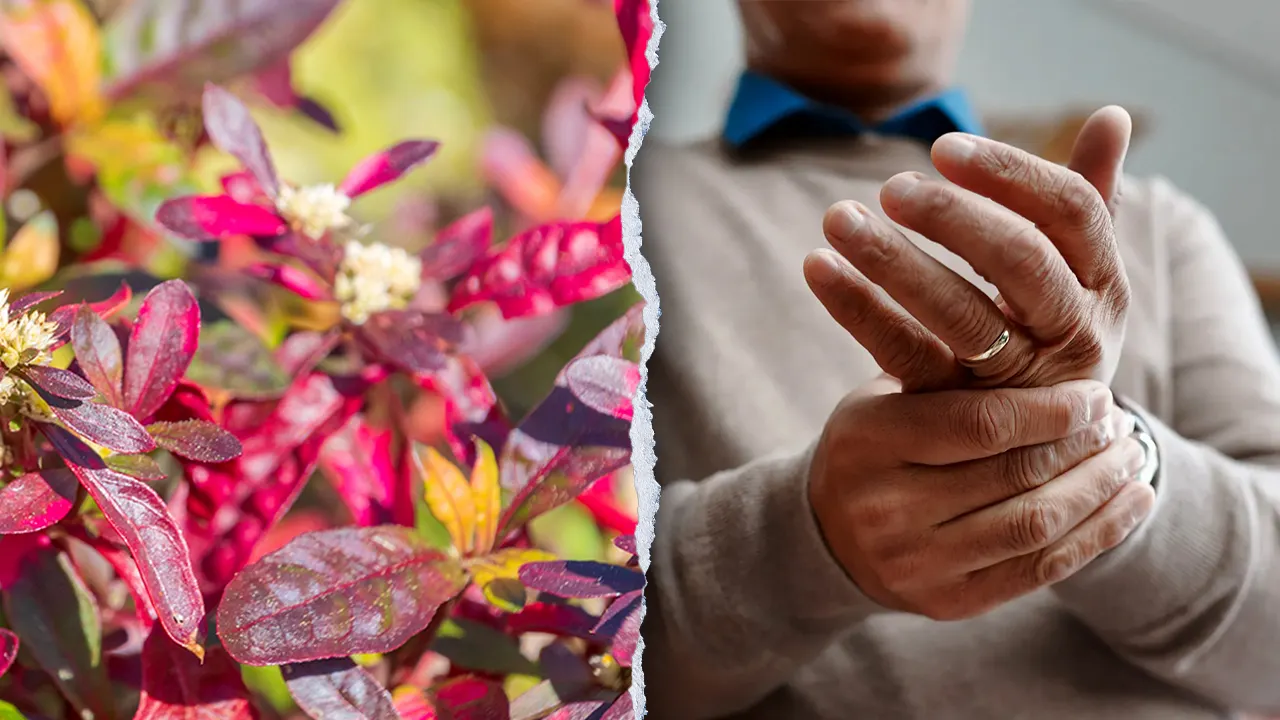
A plant traditionally used in Brazilian folk medicine has demonstrated significant potential for treating arthritis and other inflammatory conditions, according to new research. Joseph’s Coat (Alternanthera littoralis), which grows naturally along Brazil’s coastline, reduced swelling, protected joint tissue, and showed no harmful effects at the tested doses in laboratory studies.
The findings, published in the Journal of Ethnopharmacology, provide the first substantial scientific evidence supporting the plant’s traditional use for inflammatory conditions, infections, and parasites by local Brazilian communities.
“In the experimental models, we observed reduced edema, improved joint parameters, and modulation of inflammatory mediators, suggesting antioxidant and tissue-protective actions,” explained Arielle Cristina Arena, associate professor in the Department of Structural and Functional Biology at São Paulo State University’s Botucatu Campus.
The collaborative research, conducted by teams from the Federal University of Grande Dourados, the State University of Campinas, and São Paulo State University, began by examining the chemical composition of the plant’s above-ground stems and leaves. Scientists prepared an ethanolic extract, using alcohol to isolate the plant’s active compounds.
When tested in laboratory models of arthritis, this extract significantly reduced visible swelling. The researchers observed that it influenced key inflammatory pathways and reduced oxidative stress, which can damage tissue during chronic inflammation. Joints treated with the extract exhibited fewer signs of degeneration and better overall health compared to untreated control samples.
Toxicology testing yielded promising results, with the plant extract showing no detectable harmful effects in laboratory animals at the tested doses. This safety profile, combined with its anti-inflammatory properties, suggests Joseph’s Coat could become a valuable source for new plant-based treatments.
The discovery holds particular promise for the millions suffering from arthritis worldwide. Current pharmaceutical treatments for arthritis can be effective but often come with significant side effects that limit their long-term use. Natural compounds with fewer adverse reactions could offer important alternatives or complementary approaches in future therapies.
However, the researchers caution that these findings cannot be directly applied to human patients. The study was conducted using animal models, and human bodies process compounds differently than laboratory specimens. Treatments showing promise in laboratory settings don’t always translate into safe or effective therapies for people.
Additionally, the research focused on a specific extract prepared under controlled laboratory conditions. Commercial or homemade preparations of the plant would likely vary widely in strength, composition, and safety profile.
Another limitation is that the research has not yet identified which specific compounds in Joseph’s Coat are responsible for the observed anti-inflammatory effects. Without this information, standardizing doses or predicting long-term outcomes remains challenging.
The research team acknowledges these limitations and emphasizes the need for further studies to isolate active ingredients, evaluate long-term safety, and eventually conduct clinical trials in humans before any treatments could become available.
Despite these caveats, the study represents an important step in validating traditional medicine through scientific inquiry. It demonstrates how indigenous knowledge about local plants can guide modern pharmaceutical research, potentially leading to new treatment options for chronic inflammatory conditions that affect millions worldwide.
As research continues, Joseph’s Coat joins a growing list of plants being investigated for their medicinal properties, highlighting the ongoing importance of biodiversity in developing new therapeutic approaches for common health conditions.
Fact Checker
Verify the accuracy of this article using The Disinformation Commission analysis and real-time sources.

11 Comments
The findings on Joseph’s Coat’s anti-inflammatory and tissue-protective effects are quite promising. It will be interesting to see if the results can be replicated in larger-scale trials. Expanding the research to explore applications for other inflammatory conditions could also be valuable.
This is really promising news. Developing treatments from native plants could be a more sustainable approach compared to relying on synthetic drugs. I hope the researchers can continue to build on these preliminary findings.
Do you know if they plan to conduct any human clinical trials to further validate the efficacy and safety of this plant-based remedy?
This is an exciting advancement in the field of ethnobotany and natural medicine. Investigating traditional remedies can lead to important discoveries that benefit public health. I hope the researchers are able to secure funding to continue this line of inquiry.
Agreed. Supporting this kind of collaborative research that bridges indigenous knowledge and modern science should be a priority for funding bodies.
This is an intriguing development in the quest for new arthritis treatments. I’m curious to learn more about the safety profile and potential side effects of this Brazilian coastal plant. Rigorous clinical testing will be important.
It’s great to see traditional knowledge informing modern scientific research. Exploring the medicinal properties of underutilized plants could uncover novel therapeutic options. I’m looking forward to seeing what other insights emerge from this study.
Agreed. Collaborations between indigenous communities and academic institutions can be mutually beneficial, preserving cultural traditions while advancing scientific understanding.
Fascinating to see traditional Brazilian plants demonstrating therapeutic potential for arthritis. This is an exciting area of research that could lead to new natural treatments.
I’m curious to learn more about the specific mechanisms of action behind the anti-inflammatory effects observed. Understanding the pharmacological properties could unlock further applications.
While the initial results are encouraging, I would caution against overstating the findings until more comprehensive clinical trials are conducted. Nonetheless, this is a step in the right direction for exploring plant-based alternatives to conventional arthritis treatments.