


Listen to the article
Israeli Hospitals Move Underground as Conflict with Iran Intensifies
TEL AVIV, Israel — The Israeli Health Ministry reported Monday that 777 people have been hospitalized since the beginning of the Israeli-U.S. military campaign against Iran. The conflict has claimed at least 12 lives on Israeli soil, with 10 killed directly by Iranian missile strikes and two others dying while seeking shelter.
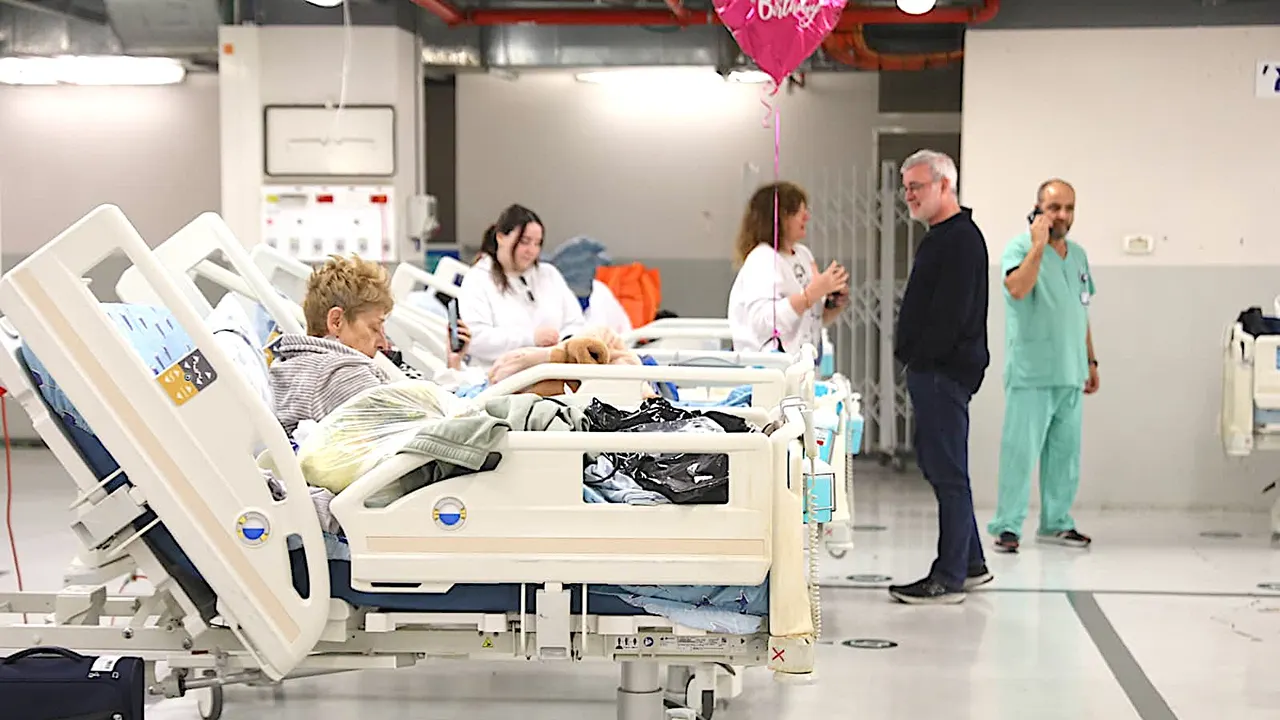
As the conflict enters its third day, hospitals across Israel have dramatically restructured their operations, relocating patients to underground facilities to maintain essential medical services amid ongoing missile threats.
At Schneider Children’s Medical Center, the situation illustrates the extraordinary measures being taken to protect vulnerable patients. “This child’s cart is his artificial heart. He has been living here while waiting for a heart transplant,” explained Professor Efrat Bron-Harlev, the medical center’s CEO, pointing to a young patient. “He moved to the underground area together with 119 other children. This is not just a hospital — it’s his home.”
The children’s hospital has treated three children injured in the conflict so far, but Bron-Harlev emphasized that their greater challenge involves continuing to provide care for all existing patients while missile sirens sound across the country. All patients have been relocated to subterranean levels where reinforced areas provide protection during attacks.
“We have electricity supplied by large batteries located in another sheltered area, as well as oxygen and air,” Bron-Harlev said, explaining the facility’s safety measures. “How long we could remain there would depend on the extent of damage to the overall building. A catastrophic strike on the oxygen tanks, for example, would affect how long we could stay.”
Incorporating lessons from the June 2025 twelve-day war, the hospital established a separate unit for bone marrow transplant patients featuring an independent ventilation system. This configuration protects immunocompromised children not only from missile threats but also from potential infections from other patients.
The medical center has also created provisional but fortified operating rooms for emergency surgeries. “Two are sufficient for now for emergency procedures,” Bron-Harlev noted. “I hope we will not face a situation in which 10 children arrive from a major incident needing surgery, but even then, we could operate on them one after the other.”
At the adjacent Rabin Medical Center, which provides adult care within the same complex, 17 war casualties have received treatment. The hospital has moved 500 beds 60 meters underground to ensure patient safety.
Both medical centers belong to Clalit Health Services, Israel’s largest healthcare organization, which serves over 5 million Israelis through 14 hospitals nationwide.
During the previous conflict, a missile targeted Soroka Hospital in Beersheba, striking a building that had been evacuated just a day earlier. “We’ve learned a lesson about the importance of preparing for attacks of Iranians targeting civilians in general and hospitals in particular,” said Professor Ran Balicer, Deputy Director General and Chief of Innovation at Clalit Health Services.
The underground facilities, while secure, present their own challenges. “There are challenges from congestion to infection control and privacy, there are no windows, all of the noise and the pressure is in, it’s a mental and physical strain on the staff, but they are here to do what they vowed to do,” Balicer explained.
These underground medical zones are equipped with stockpiles of food, oxygen, and essential medical supplies. Hospitals are also expanding virtual care capabilities to reduce the need for patients to travel during dangerous periods.
Medical professionals note that the distinction between frontline and civilian injuries has blurred in this conflict. “They target civilians like they are on the frontlines, they aim deliberately to strike and hurt civilians with weapons that aim to inflict mass-casualty events,” Balicer said.
Military personnel have been deployed to assist hospital operations, helping move patients during missile alerts and coordinating the arrival of casualties. Major S., who heads operations in the IDF’s search and rescue unit, told reporters that forces are preparing for an extended campaign.
“The last operation lasted only 12 days, and it was very significant for our unit, but this time is different,” she said. “Our mindset is that this will not end until it is over for good. As the war continues, we are facing attacks from additional fronts, including Hezbollah in Lebanon and potentially the Houthis in Yemen. We are ready for every scenario.”
As the conflict intensifies, Israel’s healthcare infrastructure continues to adapt to the reality of operating under direct threat, balancing the immediate needs of war casualties with ongoing care for existing patients in increasingly challenging conditions.
Fact Checker
Verify the accuracy of this article using The Disinformation Commission analysis and real-time sources.

14 Comments
This is an unimaginably difficult situation for the hospitals and their staff. Relocating critical care services underground to protect newborns and other vulnerable patients is an extraordinary feat of crisis management and medical professionalism.
Absolutely. The doctors, nurses, and support staff deserve the highest praise for their dedication and resilience in the face of such adversity. I hope the international community can step in to help restore stability and peace.
The conflict has already taken a heavy toll, with over 700 hospitalizations and 12 lives lost. It’s devastating to see how the violence is impacting innocent civilians, especially children. I hope a peaceful resolution can be found soon.
Agreed. The medical staff must be under immense stress, but their commitment to caring for their patients is truly inspiring. I hope the international community can intervene to end the fighting and help these communities heal.
This is an extraordinary and distressing situation. It’s a somber reminder of the heavy human cost of armed conflict, even for those not directly engaged in the fighting.
Agreed. My heart goes out to the medical staff, patients, and families caught in the middle of this crisis. I hope a peaceful resolution can be found soon.
This is a heartbreaking situation, but I’m glad the hospitals are taking proactive steps to protect their most vulnerable patients. Relocating critical care services underground is an impressive feat of coordination and crisis management.
Yes, the safety and wellbeing of the patients must be the top priority. I hope the hospitals can maintain their underground operations effectively until the conflict de-escalates.
The conflict has already taken a terrible toll, with 12 lives lost and over 700 hospitalized. I hope the hospitals can maintain their underground operations safely until the situation stabilizes.
Absolutely. The health and wellbeing of patients, especially the most vulnerable, must be the top priority as this crisis unfolds.
This is a tragic situation, but I’m glad the hospitals are taking steps to protect vulnerable patients like newborns. Relocating critical care services underground is an impressive logistical feat under immense pressure.
Yes, the doctors and staff must be working around the clock to ensure continuity of care in such difficult circumstances. It’s heartbreaking that children and families have to go through this.
Wow, moving an entire children’s hospital underground is an incredible logistical challenge. The doctors and nurses must be working around the clock to ensure these young patients receive the care they need.
Absolutely. I can’t imagine how stressful and physically demanding it must be for the medical staff. They deserve immense credit for their dedication and resilience in the face of such adversity.