


Listen to the article
Pennsylvania’s Decades-Long Battle for False Claims Law Nears Potential Victory
For more than 20 years, Pennsylvania lawmakers from both parties have attempted to pass legislation that would crack down on fraudulent government spending and protect whistleblowers. Despite broad support, these efforts have repeatedly stalled due to opposition from powerful health care and business interests. Now, supporters believe 2024 may finally be the year this anti-fraud measure becomes law.
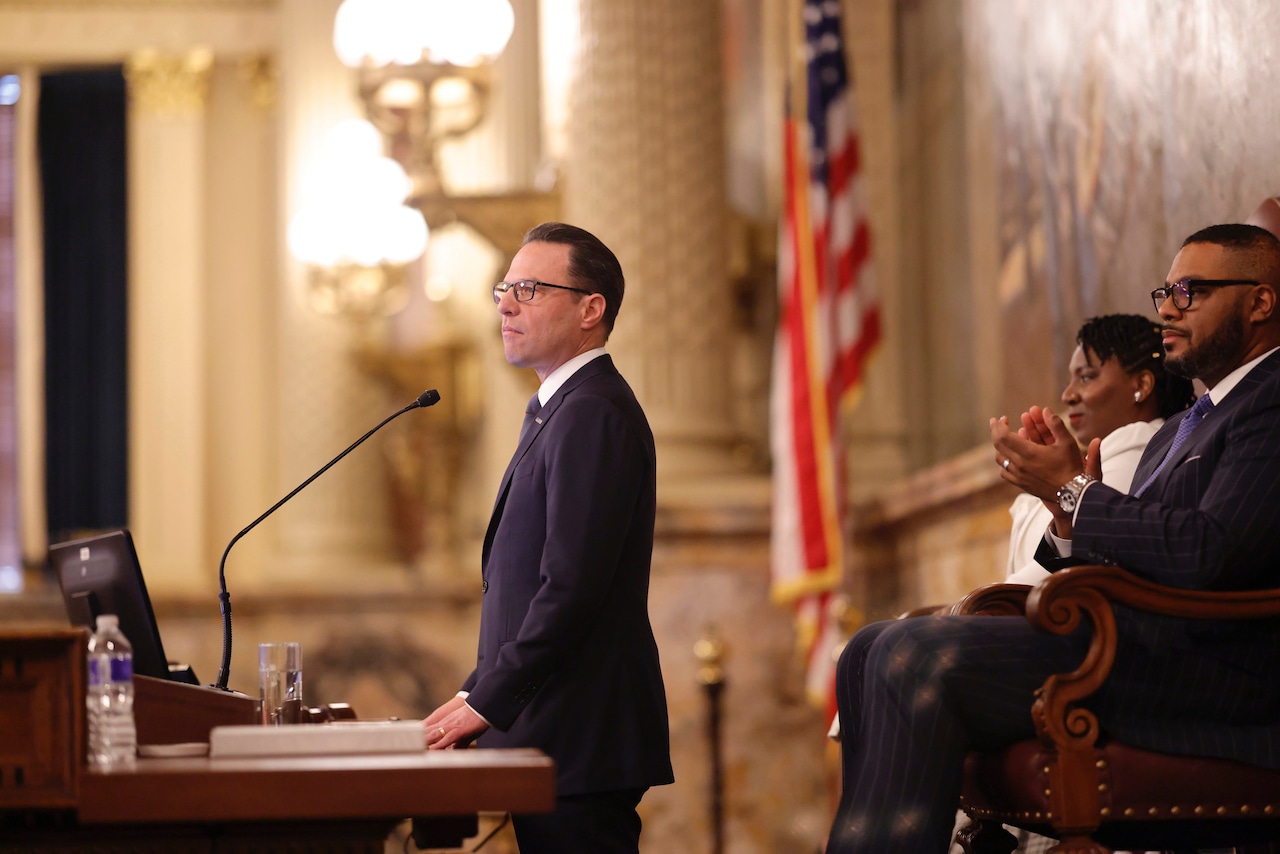
Last summer, a bipartisan bill passed the state House that would give Pennsylvania a new tool to target fraud, but it has yet to advance in the state Senate. Democratic Governor Josh Shapiro recently highlighted the issue in his budget address, urging lawmakers to “finally get it done” and noting the law would allow Pennsylvania to “collect additional damages and recoup more state dollars that would otherwise be lost to fraud.”
The proposed legislation mirrors the federal False Claims Act, which has proven to be one of the federal government’s most effective tools against fraud. The federal law allows whistleblowers to file lawsuits on the government’s behalf and receive a portion of recovered funds. In the most recent fiscal year alone, federal false claims cases recovered more than $6.8 billion in settlements and judgments, with over three-quarters coming from whistleblower-initiated lawsuits.
At least 29 states have already passed their own versions of the law. Pennsylvania remains the largest state without one, though Philadelphia and Allegheny County have enacted local false claims ordinances.
A significant incentive for states to enact such laws is the financial benefit. Many false claims cases involve Medicaid fraud, a program funded jointly by states and the federal government. States with their own false claims laws receive an additional 10% from the federal government’s share of any recoveries.
“There is money that is being wasted, and we have an opportunity to do the best job we can to get that recovered,” said state Sen. Lindsey Williams (D., Allegheny), who has introduced legislation to create a state false claims act. “It’s way past time.”
The federal False Claims Act dates back to the Civil War era, when President Abraham Lincoln signed it into law in 1863 to combat contractors who sold substandard supplies to the Union Army. The law was significantly strengthened in 1986 to enhance whistleblower protections and incentives.
Under Pennsylvania’s proposed law, an employee who discovers a contractor defrauding the state could file a lawsuit on the commonwealth’s behalf. The suit would initially be filed under seal, giving the state attorney general time to investigate. If found liable, the company would pay three times Pennsylvania’s losses plus civil penalties. The whistleblower could receive 10% to 30% of any recovery and would gain additional protection from retaliation.
Advocates point to research showing that whistleblower tips are the most effective method of uncovering fraud. A 2024 survey by the Association of Certified Fraud Examiners found that 43% of fraud cases were discovered through whistleblower tips.
Opponents, however, warn the law could encourage frivolous lawsuits. “It becomes lawsuit abuse masquerading as fighting abuse,” said Curt Schroder, executive director of the Pennsylvania Coalition for Civil Justice Reform. The Hospital and Healthsystem Association of Pennsylvania claims the law could threaten rural healthcare facilities, warning that “rural hospitals may be just one frivolous lawsuit away from closure.”
The bill that passed the state House includes provisions to discourage meritless claims, requiring plaintiffs to pay defendants’ legal fees if a judge determines a lawsuit is “frivolous, clearly vexatious or brought primarily for purposes of harassment.”
Estimates of potential financial benefits vary widely. A legislative analysis did not project specific revenue but estimated implementation would cost approximately $1.4 million in the first two years to staff the attorney general’s office properly. Critics argue Pennsylvania might actually recover less money since whistleblowers would receive a portion of settlements. Supporters counter that any reduction in per-case recovery would be offset by an increase in the number of cases pursued.
A 2019 report by the state House Government Oversight Committee found that other states had recovered significant sums after passing false claims laws. Between 2015 and 2018, Texas recovered almost $4 million, Florida more than $6 million, and Massachusetts nearly $22 million.
The push for this legislation in Pennsylvania has a long history. In 1999 and 2001, false claims bills passed the state House unanimously but stalled in the Senate. Similar measures were introduced in almost every legislative session since 2005.
The effort gained momentum in 2019 after a statewide grand jury identified “systemic issues” that left Pennsylvania’s Medicaid program vulnerable to fraud. Shapiro, then state attorney general, joined with lawmakers to propose reforms, including a state false claims act.
While that attempt failed, a bill introduced by Rep. Frank Burns (D., Cambria) passed the House with broad bipartisan support last summer. Though the Senate has not yet advanced the bill, it could become part of this year’s budget negotiations.
As the legislative process continues, state Sen. Kristin Phillips-Hill (R., York), a co-sponsor of the Senate version, called the legislation “a logical step” toward protecting taxpayer dollars. “My hope is that we’re going to have a really serious conversation about how to do this.”
Fact Checker
Verify the accuracy of this article using The Disinformation Commission analysis and real-time sources.

7 Comments
Whistleblower protections are an important safeguard against government waste and abuse. I hope Pennsylvania lawmakers can find a way to get this legislation passed, despite the apparent opposition from certain interest groups. Transparency and accountability should be priorities.
Interesting to see the opposition from healthcare and business interests. I wonder what their specific concerns are with this legislation. Transparency and accountability should be priorities when it comes to government spending and fraud prevention.
It’s disappointing to see this legislation stalling in Pennsylvania despite broad support. Whistleblower protections are crucial for identifying and addressing government waste and abuse. Hopefully the governor’s push will help get this over the finish line.
The federal False Claims Act has proven effective, so it makes sense for Pennsylvania to adopt a similar law. Whistleblowers play a vital role in rooting out fraud, and they deserve robust legal protections. I’m curious to see if this bill can gain traction in the state Senate.
This is an important issue that deserves attention. Whistleblower laws can be a powerful tool to combat fraud and protect taxpayer funds. I hope Pennsylvania lawmakers can find a way to move this bill forward in a bipartisan manner.
This is an issue I’ve been following with great interest. Whistleblower laws have the potential to generate significant recoveries for states, as seen in other jurisdictions. I hope Pennsylvania legislators can find a path forward that satisfies all stakeholders.
The federal False Claims Act has been a powerful tool, so it makes sense for Pennsylvania to adopt a similar law. Protecting whistleblowers and empowering them to report fraud is crucial. I’m curious to see if this bill can gain traction and become law.