


Listen to the article
Community confusion leads to vandalism at Washington corrections office in Pasco
A state corrections facility in Pasco, Washington has become an unintended target of vandalism following widespread misinformation on social media platforms that misidentified it as an Immigration and Customs Enforcement (ICE) facility.
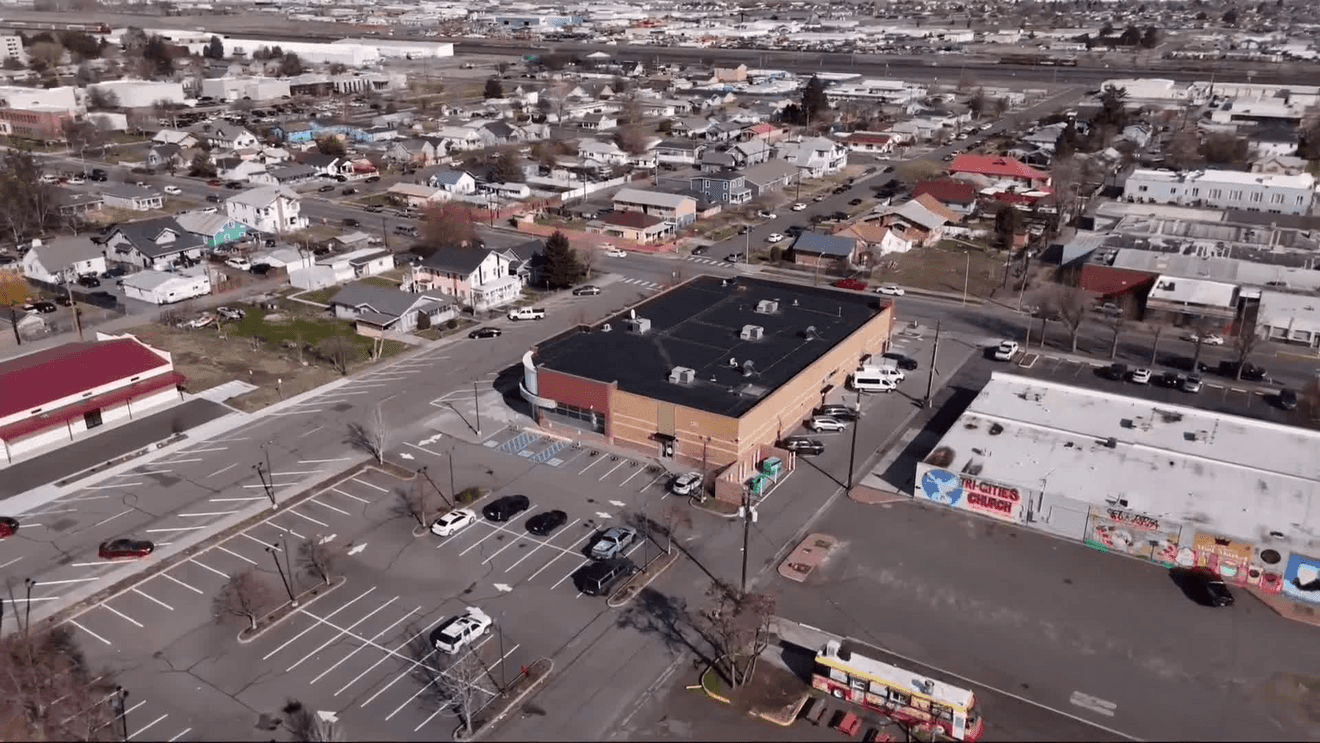
The Washington State Department of Corrections office, which recently relocated to a repurposed former Rite Aid building, has been vandalized twice this month. Perpetrators spray-painted anti-ICE slogans across several undercover vehicles and portions of the building exterior.
“It’s just been frustrating for everyone out there to have it happen multiple times, especially because this is not an ICE facility. This is a state department of corrections facility,” said Chris Wright, communications director for the Washington Department of Corrections.
The incidents have prompted the department to invest thousands of dollars in security upgrades to protect the property and staff. These unexpected expenses come at a time when many state agencies are already operating under tight budget constraints.
The Pasco field office serves an essential role in community supervision, functioning as one of dozens of similar facilities statewide where individuals on probation or parole check in regularly with their assigned probation officers. These routine check-ins form a critical component of Washington’s criminal justice system, helping formerly incarcerated individuals transition back into society while maintaining accountability.
“The office’s primary purpose is to keep the community safe and hold people accountable,” Wright explained.
The Tri-Cities region, which includes Pasco, has experienced significant demographic changes over the past two decades, with a growing Latino population that now makes up nearly 56 percent of Pasco’s residents. This demographic shift has sometimes created tensions around immigration enforcement in the area.
Law enforcement officials believe the confusion may stem from the facility’s institutional appearance and the presence of state vehicles in the parking lot, which could resemble federal facilities to those unfamiliar with government buildings.
Social media posts incorrectly identifying the building began circulating shortly after the department completed its relocation to the more spacious former retail location. The misinformation spread rapidly across multiple platforms, apparently motivating the subsequent vandalism.
This incident highlights the real-world consequences of misinformation in an era when claims can spread widely before being verified. Local community leaders have called for greater digital literacy and responsible sharing of information online.
The Department of Corrections has since installed additional signage clearly identifying the facility as a state corrections office, hoping to prevent future misunderstandings. They have also reached out to community organizations to help spread accurate information about the facility’s purpose.
Franklin County law enforcement officials are investigating the vandalism incidents but have not yet identified suspects. They encourage anyone with information to contact local authorities.
The vandalism comes at a time of heightened national discourse around immigration policy, with federal immigration enforcement actions often drawing protests across the country. However, state corrections facilities operate entirely separately from federal immigration authorities, focusing instead on supervision of individuals convicted under state law.
Department officials emphasized that the facility serves all community members regardless of immigration status and is not involved in immigration enforcement activities.
The Washington Department of Corrections operates 44 field offices throughout the state, supervising approximately 20,000 individuals on community supervision at any given time. These offices play a vital role in the rehabilitation process, connecting formerly incarcerated individuals with resources while ensuring they meet the conditions of their release.
Fact Checker
Verify the accuracy of this article using The Disinformation Commission analysis and real-time sources.

8 Comments
It’s disheartening to see a state agency tasked with community supervision and support become the victim of vandalism and property damage. This is a clear example of how misinformation can quickly spiral out of control and lead to real-world harm. I hope the perpetrators are held accountable.
This highlights the importance of verifying information before taking action, especially when it involves government facilities. While the concern over ICE policies is understandable, misdirecting that anger towards an unrelated state agency is counterproductive.
Absolutely. The state corrections office was just collateral damage in this case. Vandalism and property damage are never justified, no matter the perceived cause. I hope the perpetrators are identified and held accountable.
This is very concerning to hear. It’s unfortunate that misinformation on social media led to the vandalization of a state corrections facility. I hope the security upgrades will be effective in protecting the staff and property from further incidents.
Agreed. Mob mentality and jumping to conclusions without verifying facts can lead to real harm. Targeting the wrong facility is unacceptable, even if the intent was to voice opposition to ICE policies.
It’s frustrating to see taxpayer money have to be diverted to security upgrades due to this mistaken targeting. The state corrections office is already operating under tight budgets, so these unexpected expenses must be a real burden. Hopefully the community can come together to support the staff and prevent future incidents.
This is a cautionary tale about the real-world consequences of social media misinformation. While the intent may have been to voice opposition, the end result is just unnecessary damage and wasted public resources. I hope lessons are learned here to avoid similar situations in the future.
Well said. Jumping to conclusions without verifying facts can lead to very unintended and harmful outcomes. The state corrections office was simply in the wrong place at the wrong time, and should not have been targeted in this way.