


Listen to the article
Minnesota DHS Attempts to Downplay State’s Extensive Fraud Problems
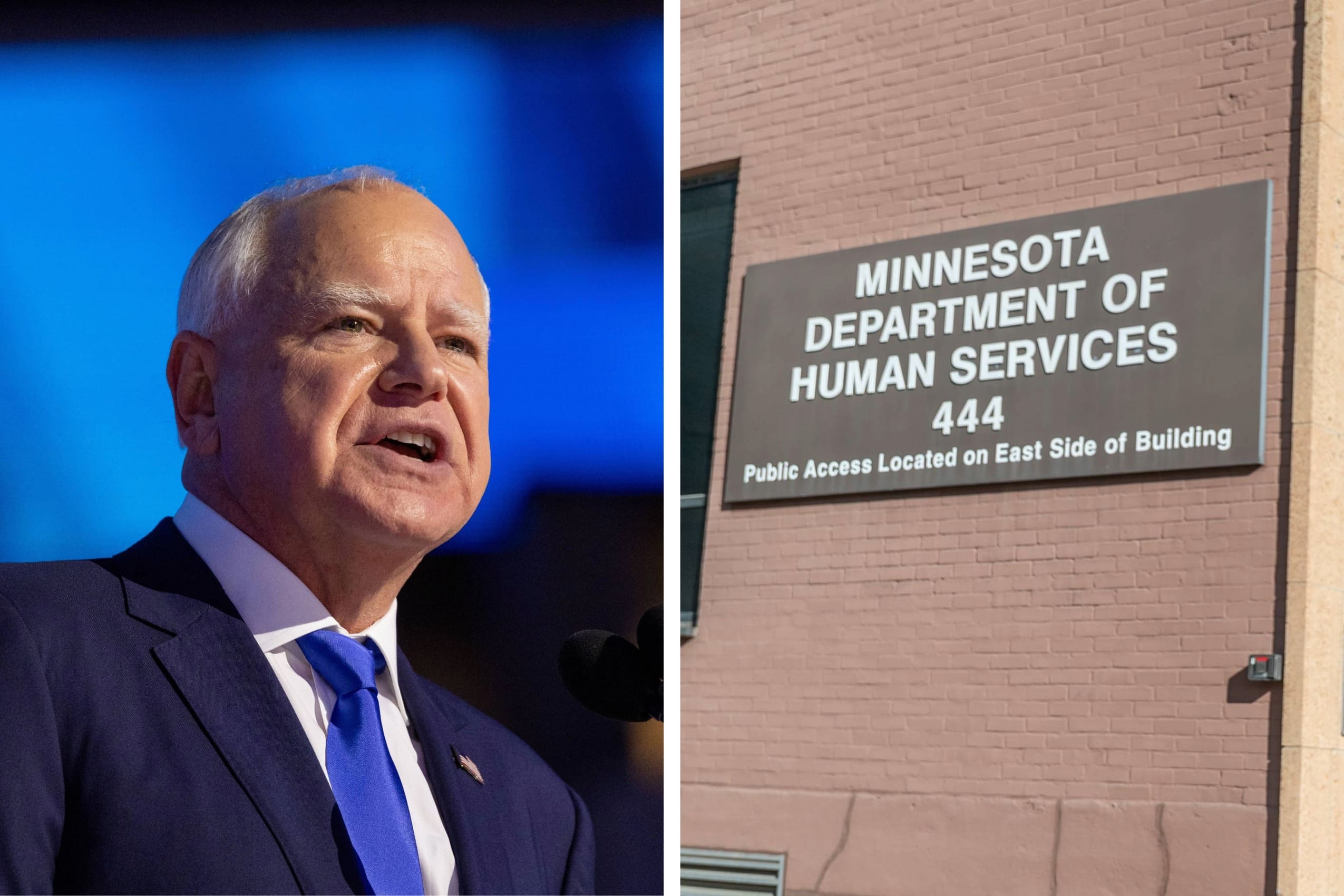
The Minnesota Department of Human Services (DHS) published a controversial “fact check” this week aimed at countering what it called “misleading information and outright false claims about Medicaid fraud in Minnesota.”
In the document, DHS directly challenged the assertion that “Minnesota’s fraud problem is uniquely bad,” claiming instead that “fraud is a nationwide challenge and is not unique to Minnesota.” The agency pointed to fraud cases in other states, including a $490 million healthcare fraud scheme in California, a $2.5 billion Medicaid scheme in Arizona, and an alleged $14.6 billion Medicaid and Medicare fraud scheme across New York, Illinois, California, and North Carolina.
However, critics quickly noted that these comparisons fail to account for Minnesota’s significantly smaller size relative to those states. Despite its smaller population, Minnesota has experienced fraud schemes of comparable magnitude, most notably the $250 million Feeding Our Future scandal prosecuted since 2022. Even more concerning, the Minnesota U.S. Attorney’s Office has estimated that fraud in 14 state-run, Medicaid-funded programs could exceed $9 billion since 2018.
Federal prosecutors have repeatedly emphasized that Minnesota’s fraud situation is indeed exceptional. Former U.S. Attorney Andy Luger stated plainly in December 2024 that “no other state had a Feeding Our Future, we did. No other state has had some of the kinds of problems we’ve had with government fraud.”
Joe Thompson, who has served as both the office’s top fraud prosecutor and later as acting U.S. attorney, has been equally direct about Minnesota’s outlier status. Thompson has described the problem as “a far-reaching fraud crisis that’s swamping Minnesota” with “staggering” levels of fraud in state-run, Medicaid-funded programs.
At a December press conference, Thompson emphasized the scale of the problem: “The fraud is not small. It isn’t isolated. The magnitude cannot be overstated. What we see in Minnesota is not a handful of bad actors committing crimes. It’s a staggering, industrial-scale fraud.”
When directly asked how Minnesota compares to other states, Thompson was unequivocal: “I think we are an outlier in a bad way, yes. Have I gone through [all 50 states]? No, but you don’t see fraud on this scale in other states.”
In its defense, DHS cited federal documents showing Minnesota has a lower projected Medicaid improper payment rate (2.2%) than the national average (6.12%). The agency also appeared to distance itself from responsibility, stating: “MN DHS did not authorize fraud; criminals external to the state agency falsified records and exploited vulnerabilities.”
Only after fraud became a dominant political issue in Minnesota did DHS begin implementing significant countermeasures. The agency has since classified the 14 programs as “high-risk” for fraud, shut down the Housing Stabilization Services program after determining it had been exploited by fraudsters, and begun implementing an automated prepayment review system to screen Medicaid claims.
Former State Legislative Auditor Jim Nobles, who served for 38 years auditing government programs, has repeatedly stated that Minnesota’s fraud problem could have been prevented with basic financial controls. Nobles has also defended the U.S. Attorney’s $9 billion fraud estimate, which Governor Tim Walz previously dismissed as “speculating.”
The political fallout has been severe, with fraud becoming Minnesota’s top political issue. The scandal has significantly damaged Governor Walz’s administration, with many observers linking the fraud issues to his diminished political standing.
Shortly after DHS posted its “fact check” webpage, a social media account claiming to represent 480 DHS staff members publicly criticized it as “shameful” and “full of inaccurate excuses on why DHS fraud is ‘not so bad.'”
The DHS has indicated this is the first in a series of fact checks it plans to publish on its website. Governor Walz’s office did not respond to requests for comment.
Fact Checker
Verify the accuracy of this article using The Disinformation Commission analysis and real-time sources.

8 Comments
The fraud allegations in Minnesota’s programs are very troubling, and the state’s response doesn’t seem fully satisfactory. I’m curious to learn more about the specific factors contributing to these issues and what steps are being taken to address them. Transparent and rigorous investigation is crucial.
Agreed, the state needs to provide more clarity and accountability around these fraud problems. A deeper dive into the data and root causes is essential to developing effective solutions.
This is a concerning situation that warrants a serious and thorough investigation. While fraud is a nationwide issue, the specific details and magnitude of the problems in Minnesota are quite troubling. I hope the authorities can get to the bottom of what’s going on and implement effective solutions.
Fraud is certainly an issue that states across the country grapple with, but the scale and nature of the problems in Minnesota are quite alarming. I’m curious to learn more about the state’s oversight and accountability measures, and whether there are any unique factors at play.
Absolutely, the comparisons to larger states don’t seem to fully account for Minnesota’s specific situation. More transparency and a deeper dive into the data would be helpful to put the state’s challenges in proper context.
It’s good that the Minnesota DHS is trying to address the fraud allegations, but the agency’s response doesn’t seem fully convincing. Comparing to other states’ issues doesn’t really explain the scale and nature of the problems in Minnesota. More investigation is warranted.
This seems like a complex issue with a lot of nuance. While fraud is a nationwide problem, it’s concerning to hear about the scale of fraud in Minnesota’s programs. I wonder what specific factors may be contributing to the state’s challenges and what steps can be taken to address them.
Agreed, the fraud allegations are quite troubling, especially given Minnesota’s smaller size. It will be important to thoroughly investigate the facts and understand the root causes to develop effective solutions.