


Listen to the article
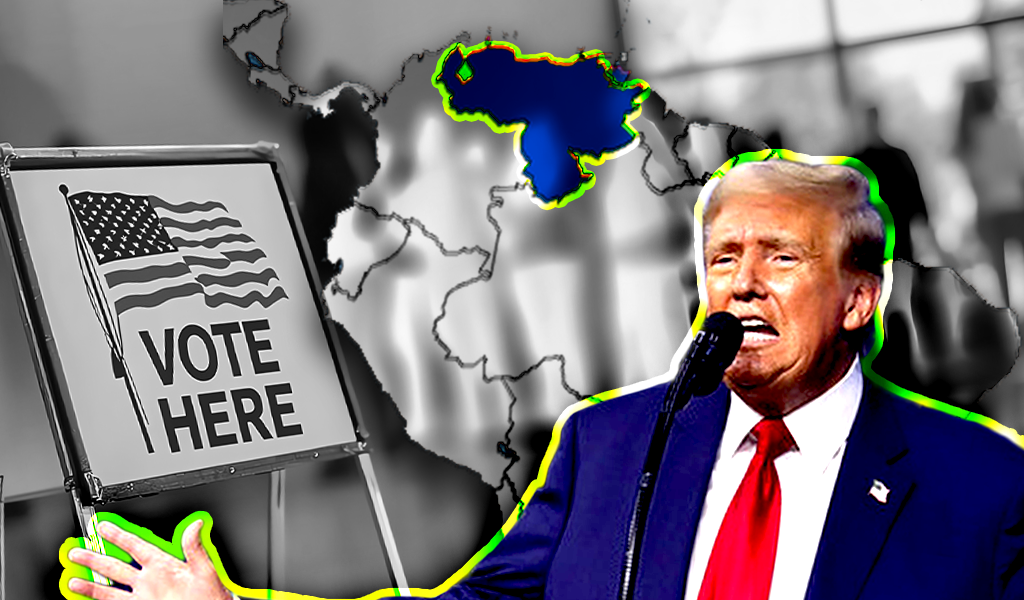
The recent arrest of Venezuelan President Nicolás Maduro by U.S. authorities has reignited a wave of conspiracy theories surrounding the 2020 presidential election, with election deniers claiming the development validates their long-held allegations about foreign interference in American voting systems.
For more than five years, segments of right-wing media and election fraud proponents have advanced elaborate conspiracy theories suggesting the 2020 U.S. presidential election was compromised through Venezuelan government influence via voting machine companies Smartmatic and Dominion. These unsubstantiated claims have persisted despite numerous court rulings, audits, and investigations finding no evidence of significant election fraud.
The narrative falsely asserts that Smartmatic and Dominion are Venezuelan-based companies with direct connections to former President Hugo Chávez or current President Nicolás Maduro. Proponents claim these voting systems contained software capable of bypassing security protocols and altering vote tallies, allegedly used to manipulate both Venezuelan and American elections.
Election security experts and federal officials have repeatedly debunked these allegations. Both Smartmatic and Dominion have filed multiple defamation lawsuits against media outlets and individuals promoting these false claims. Smartmatic, founded by Venezuelan-born engineers but headquartered in London with U.S. operations, has limited presence in U.S. elections. Dominion, a U.S.-Canadian company, has no connection to Venezuela.
The U.S. Cybersecurity and Infrastructure Security Agency, along with election officials from both political parties, declared the 2020 election “the most secure in American history.” Multiple audits across contested states revealed no evidence of widespread fraud or vote manipulation.
Despite this overwhelming evidence, the recent capture of Maduro by the Trump administration has provided new fuel for conspiracy theorists. Similarly, an FBI operation at an election center in Fulton County, Georgia — reportedly related to a cybersecurity investigation unconnected to election fraud claims — has been mischaracterized by election deniers as proof of their allegations.
Political analysts note that these conspiracy theories have had lasting consequences for American democracy, contributing to decreased trust in electoral systems among certain segments of the population. A recent Pew Research Center poll found that approximately 35% of Americans still express some doubt about the legitimacy of the 2020 election results, with the percentage rising to nearly 70% among self-identified Republicans.
“These conspiracy theories demonstrate remarkable staying power despite being repeatedly disproven,” said Dr. Jennifer Mercieca, professor of communication at Texas A&M University who specializes in political rhetoric. “They’ve become part of a broader narrative that’s resistant to factual correction.”
The persistence of these claims has posed challenges for election officials preparing for the 2024 presidential contest. Many states have implemented additional security measures and transparency protocols, not because of actual vulnerabilities but to address public perception concerns.
Meanwhile, voting machine companies continue to defend their reputations in court. Dominion reached a historic $787.5 million settlement with Fox News in 2023 over the network’s promotion of false claims about its voting systems. Additional defamation cases against other media outlets and prominent individuals remain pending.
Election security experts warn that the renewed spread of debunked theories threatens to undermine public confidence in upcoming elections. They emphasize that the U.S. electoral system features numerous safeguards, including paper ballot backups, pre-election testing, and post-election audits, that make systematic fraud extremely difficult to execute without detection.
As the 2024 election approaches, officials from both parties continue to stress the importance of relying on verified information from election authorities rather than unsubstantiated claims circulating online or through partisan media channels.
Fact Checker
Verify the accuracy of this article using The Disinformation Commission analysis and real-time sources.

10 Comments
While I’m concerned about potential foreign interference in elections, these allegations seem to be driven more by partisan politics than evidence. I hope the investigation is conducted fairly and transparently.
Absolutely. Preserving the integrity of elections is critical for democracy, but unfounded conspiracy theories only undermine public trust. Let’s focus on facts, not fiction.
I’ll be curious to see what the investigation uncovers. Allegations of foreign interference in elections are serious, but we’ve seen too many unfounded conspiracy theories in recent years. Hoping for a thorough, impartial process.
Hmm, another case of election deniers grasping at straws. I’ll wait to see if this investigation uncovers any real evidence, but my expectations are low given the track record of these types of claims.
This investigation sounds like another conspiracy theory without much substance. Extraordinary claims require extraordinary evidence, which seems to be lacking here. I’ll wait to see what the facts show before drawing any conclusions.
I agree, we should be skeptical of unsubstantiated claims, especially those made for political motives. Thorough, impartial investigations are needed to get to the truth of the matter.
These types of claims seem to be more about sowing doubt than finding the truth. While we should take election security seriously, we also need to be wary of partisan actors trying to delegitimize valid election results.
Exactly. A healthy democracy requires trust in the electoral process, which these conspiracy theories only undermine. I hope the investigation sticks to the facts and doesn’t get caught up in political agendas.
Interesting development, though I’m skeptical of the claims until more concrete evidence emerges. Voting system security and election integrity are important issues, but they require nuanced, non-partisan analysis.
Well said. We should approach this with an open mind but also a critical eye. Rushing to judgment based on partisan rhetoric rarely leads to good outcomes.