


Listen to the article
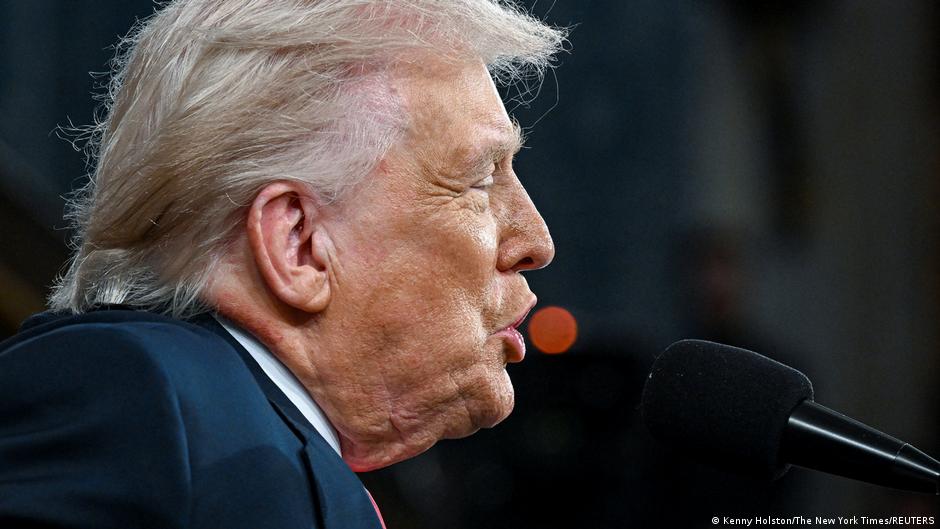
US President Donald Trump declared America “back, bigger, better, richer and stronger than ever before” during a nearly two-hour State of the Union address Tuesday night. Amid declining poll numbers ahead of midterm elections, Trump made several contested claims about his administration’s accomplishments, particularly regarding international conflicts, economic trends, and immigration.
DW Fact check examined three key assertions from the speech, finding significant discrepancies between Trump’s statements and verifiable data.
Trump’s claim of ending eight major international conflicts—which he characterized as personal diplomatic achievements—failed to withstand scrutiny. While the president has previously made similar assertions, an analysis of the situations he referenced reveals a more complex reality.
The border dispute between Cambodia and Thailand continues despite temporary ceasefires. Trump’s intervention in July 2025 resulted in an agreement that quickly collapsed, with subsequent arrangements negotiated without his involvement. Regional experts describe the situation as “still fragile.”
Similarly, Trump’s assertion about averting nuclear war between Pakistan and India overstates his role. While he facilitated discussions, Saudi Arabia and Iran were equally significant mediators. India has repeatedly rejected Trump’s characterization of his involvement.
The president also claimed credit for resolving conflicts between Kosovo and Serbia, Israel and Iran, Egypt and Ethiopia, Armenia and Azerbaijan, the Democratic Republic of Congo and Rwanda, and the ongoing war in Gaza. In each case, fact-checkers found that either active conflicts persist or Trump’s role was less decisive than portrayed.
Particularly notable is the situation in Gaza, where hostilities continue despite a ceasefire agreement Trump brokered in October 2025. Both Israel and Hamas have accused each other of violations since the document was signed, with the death toll in Gaza having reached 71,000 according to local health officials.
Trump’s economic claims also faced challenges. His statement that “inflation is plummeting” contradicts official statistics showing modest improvement. According to the US Bureau of Labor Statistics, inflation stands at 2.4%, down from 3% when Trump took office in January 2025—hardly the dramatic decline suggested in his speech.
The president also incorrectly stated that the Biden administration oversaw “the worst inflation in the history of our country.” While inflation did reach a 40-year high of 9.1% in June 2022 under Biden, this was more than two years before Trump’s return to office and had significantly decreased before the transition. Historical records show that post-World War I inflation peaked at 23.7% between June 1919 and June 1920, far exceeding recent rates.
On immigration, Trump made unsubstantiated claims about millions entering the US “from prisons and mental institutions” during the Biden administration. The president specifically cited “11,888 murderers” among those he claimed had entered the country.
US Customs and Border Protection data confirms approximately 10.8 million migrant “encounters” at national borders from 2021 to 2024 under Biden. However, no comprehensive data exists documenting immigrants’ criminal or institutional backgrounds in their countries of origin.
Fact-checkers traced Trump’s specific figure of 11,888 murderers to statistics about non-detained noncitizens convicted of homicide. The Department of Homeland Security has clarified that this data spans decades—including individuals who entered the country over the past 40 years—rather than representing recent arrivals during the Biden administration.
The analysis of Trump’s State of the Union claims highlights continuing concerns about factual accuracy in presidential communications, particularly as the administration positions itself ahead of consequential midterm elections.
Fact Checker
Verify the accuracy of this article using The Disinformation Commission analysis and real-time sources.

8 Comments
Interesting fact-check on Trump’s State of the Union claims. It’s good to see an objective analysis of the president’s statements, especially on complex foreign policy issues. While he may have oversimplified some of the details, I appreciate efforts to hold leaders accountable and provide nuanced perspectives.
The border dispute between Cambodia and Thailand is a complex, long-running issue. It’s encouraging to see diplomatic efforts, but as the article notes, the situation remains fragile. Ongoing regional tensions are a reminder that resolving international conflicts requires sustained, careful work.
Agreed. Lasting peace often requires more than short-term political victories. Maintaining stability and security in volatile regions takes time, patience and a nuanced understanding of local dynamics.
The article’s summary of Trump’s State of the Union address highlights the importance of critical thinking when it comes to political rhetoric. It’s easy to make bold claims, but substantiating them is another matter entirely. This fact-check serves as a reminder to scrutinize official narratives and seek out credible, impartial information.
I appreciate the DW Fact check’s balanced approach. Rather than simply dismissing Trump’s claims, the article delves into the nuances and complexities behind the president’s statements. Fact-checking is an essential part of maintaining a healthy democracy, even if the conclusions aren’t always black and white.
While the economy has shown some positive trends, it’s important to look past headlines and examine the full picture. This fact-check provides a helpful, data-driven assessment rather than just echoing political rhetoric. Objective analysis is crucial for voters to make informed decisions.
Trump’s claim about averting nuclear war between India and Pakistan is particularly concerning. Nuclear threats are extremely serious, and the public deserves an accurate accounting of the administration’s actions and their real-world impacts. This fact-check highlights the importance of scrutinizing high-stakes foreign policy assertions.
Evaluating the accuracy of high-profile political statements is no easy task, but this fact-check tackles it head-on. The authors’ willingness to dive into the details and provide context around Trump’s claims is commendable. Fact-based journalism plays a vital role in holding leaders accountable and informing the public.