


Listen to the article
Trump Continues to Push False Election Claims at National Prayer Breakfast
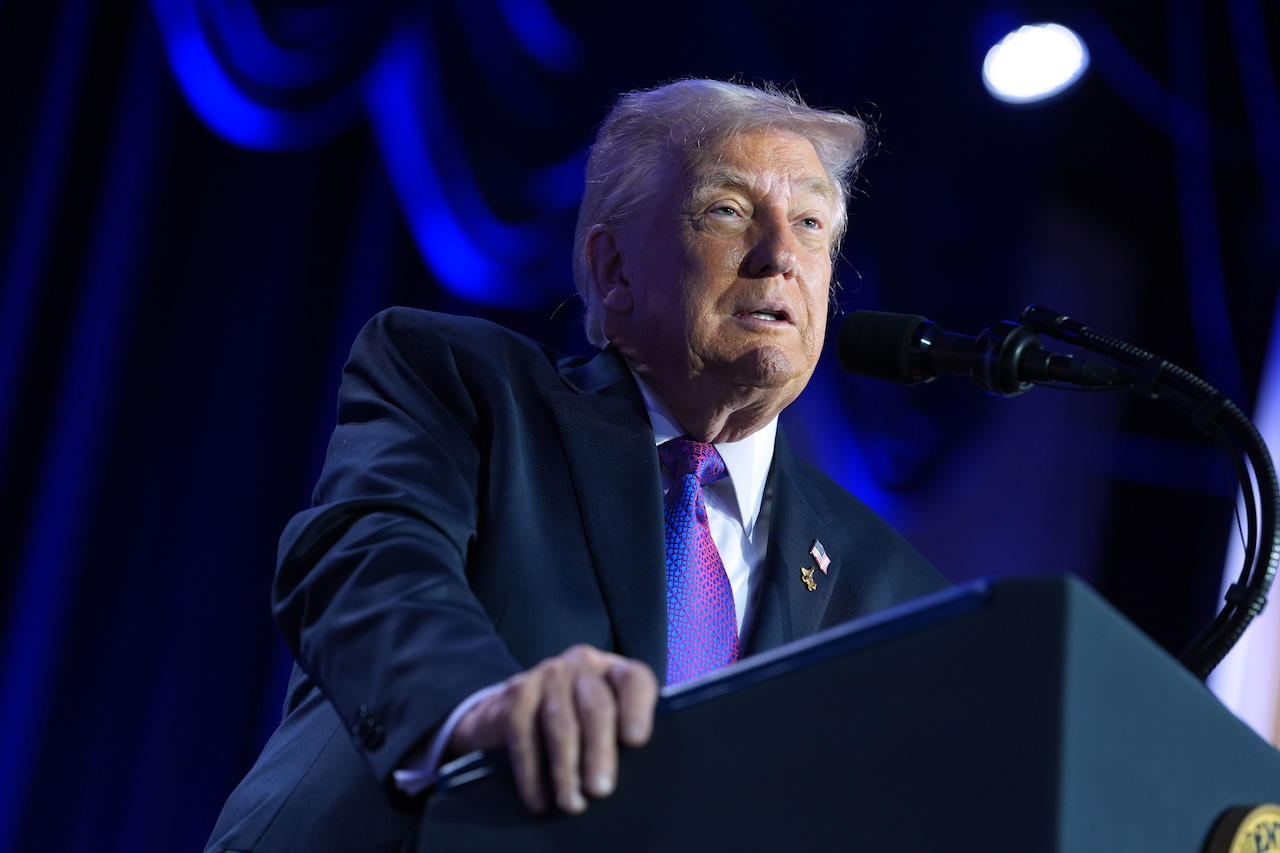
President Donald Trump renewed his unfounded assertions about the 2020 presidential election during Thursday’s National Prayer Breakfast, continuing a pattern of election falsehoods that has persisted for more than five years.
In his remarks, Trump characterized the 2020 election as “rigged” against him, despite the complete absence of evidence supporting widespread voter fraud. He candidly admitted that winning in 2020 was important to him for personal reasons, telling attendees: “They rigged the second election. I had to win. I needed it for my own ego. I would have had a bad ego for the rest of my life now. I really have a big ego.”
Election officials, courts, and Trump’s own Justice Department have consistently found no evidence of significant fraud in the 2020 election, with numerous legal challenges failing across multiple states.
The former president also made the demonstrably false claim that he won the popular vote in the 2016 election against Hillary Clinton. Official election results show Trump lost the popular vote by nearly 2.9 million votes while winning the Electoral College. Similarly, he lost the popular vote to Joe Biden in 2020 by approximately 7 million votes. Trump did, however, win the popular vote in his 2024 victory over Kamala Harris by about 2.3 million votes.
“Winning the popular vote, the first time. You know, they said I didn’t win the popular vote. I did,” Trump claimed without evidence.
The president’s remarks took a particularly divisive turn when he questioned how people of faith could support Democrats. “I don’t know how a person of faith can vote for a Democrat. I really don’t, and I know we have some here today, and I don’t know why they’re here,” Trump said, before adding without evidence that Democrats “cheat” in elections.
Trump’s renewed focus on election grievances comes amid growing concerns about his stance toward future elections. In a recent interview with former FBI Deputy Director Dan Bongino, Trump suggested Republicans should “nationalize” elections, a statement that drew criticism even from within his own party.
“The Republicans should say, ‘We want to take over.’ We should take over the voting in at least many, 15 places,” Trump told Bongino. “The Republicans ought to nationalize the voting.”
These comments follow an FBI search of a warehouse near Atlanta where voter records and information about the 2020 election were stored. The search occurred against the backdrop of Trump’s persistent claims that fraud cost him Georgia in 2020, a state he narrowly lost.
Political analysts have expressed concern that Trump’s rhetoric could set the stage for challenges to the 2026 midterm elections. While the White House has dismissed such fears, pointing out that Trump did not interfere in the 2025 off-year elections, the president has already signaled his potential response to Republican losses.
In an NBC News interview aired Wednesday, Trump said he would trust Republican defeats in the midterms “if the results are honest,” employing a familiar strategy of preemptively questioning election legitimacy.
This approach mirrors his tactics before previous elections, establishing a narrative where any defeat would be attributed to fraud rather than legitimate democratic processes, a stance that continues to concern election security experts and democratic institutions.
Fact Checker
Verify the accuracy of this article using The Disinformation Commission analysis and real-time sources.

7 Comments
Interesting to see Trump acknowledge the personal motivations behind his false election claims. Rebuilding trust in the electoral process should be the priority, not catering to individual egos or political agendas.
Interesting to see Trump’s continued focus on the 2020 election and his admission that it was important to his ‘ego.’ While claims of widespread fraud have been thoroughly debunked, it seems his personal motivations are still driving this narrative.
Regardless of one’s political leanings, it’s clear Trump’s fixation on the 2020 election is more about his own ego than the facts. Moving forward, the focus should be on strengthening electoral integrity through nonpartisan reforms, not perpetuating false narratives.
Trump’s admission that winning in 2020 was important ‘for his own ego’ provides important insight into his motivations. While the election results have been extensively validated, his continued propagation of falsehoods is troubling for American democracy.
The former president’s reliance on unfounded election fraud claims is concerning. It’s important that public discourse on elections is grounded in facts and evidence, not personal agendas or ego. Rebuilding trust in the democratic process should be the priority.
While Trump’s claims of a ‘rigged’ election have been thoroughly debunked, his continued focus on the issue suggests deeper personal motivations. Rebuilding trust in democratic institutions should be the priority, not catering to individual agendas.
Trump’s fixation on the 2020 election and his own ego is concerning. Moving forward, the focus should be on strengthening electoral integrity through nonpartisan reforms, not perpetuating unsubstantiated narratives for personal gain.