


Listen to the article
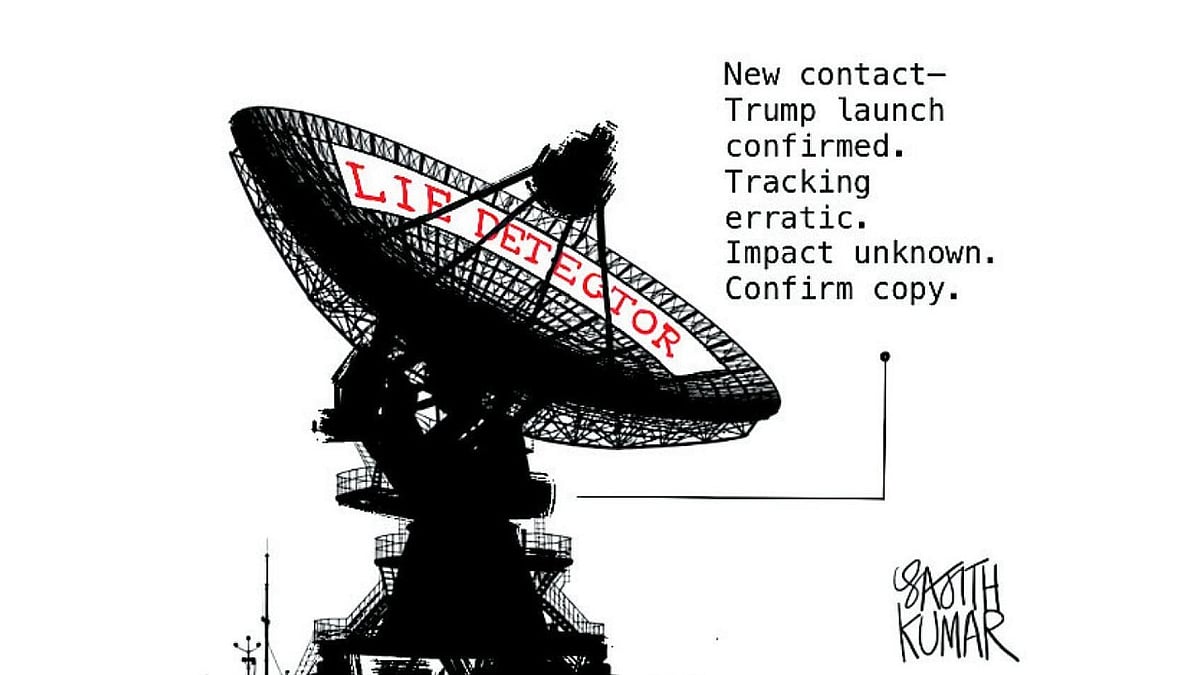
The digital age has amplified political misinformation, with former U.S. President Donald Trump’s rhetoric continuing to draw scrutiny from media outlets and fact-checkers alike. A recent satirical cartoon from Deccan Herald depicts Trump connected to a lie detector, highlighting the ongoing public discourse surrounding his statements and their veracity.
The cartoon comes amid intensified scrutiny of Trump’s public pronouncements as he campaigns for a potential return to the White House in 2024. Fact-checking organizations have documented thousands of false or misleading claims during his presidency, a pattern that has persisted since he left office in January 2021.
Political analysts note that Trump’s relationship with factual accuracy has become a defining characteristic of his political identity. “What we’re seeing is unprecedented in modern American politics,” explains Dr. Eleanor Simmons, professor of political communication at Georgetown University. “The volume and boldness of demonstrably false statements have forced media organizations to develop entirely new frameworks for covering a major political figure.”
The satire reflects broader concerns about truth in politics that extend beyond any single politician. In recent years, digital media platforms have grappled with their role in distributing and potentially amplifying misinformation, implementing various fact-checking mechanisms with mixed results.
India’s Deccan Herald, which published the cartoon, has joined international media organizations in their coverage of American politics, demonstrating how U.S. election narratives resonate globally. The publication’s editorial choice to comment on Trump’s veracity issues indicates the worldwide interest in American political dynamics.
Media experts point out that political cartooning serves a vital function in democratic discourse. “Political cartoons distill complex issues into powerful visual metaphors,” says media studies professor James Richards. “They can capture public sentiment about a politician’s credibility more effectively than lengthy analyses.”
Trump’s supporters have consistently dismissed fact-checking efforts as politically motivated, arguing that mainstream media applies different standards to different political figures. This perspective has fueled alternative media ecosystems where different versions of truth compete for public acceptance.
The cartoon’s imagery of a lie detector—a device meant to scientifically determine truthfulness—juxtaposed with a political figure known for challenging conventional facts, creates a particularly striking commentary on the nature of truth in contemporary politics.
Social psychology research suggests that repeated exposure to misleading information can reshape public perceptions regardless of subsequent corrections. “Once a false claim enters the public sphere, corrections rarely reach the same audience with the same impact,” explains Dr. Vanessa Thornton, who studies misinformation at the University of California.
Election officials across the United States continue to combat lingering false narratives about election integrity stemming from Trump’s unsubstantiated claims about the 2020 presidential election. These efforts have become increasingly important as the 2024 election cycle approaches.
The international attention to American political rhetoric, as evidenced by the Deccan Herald cartoon, underscores how U.S. information integrity issues have global implications. Democratic norms in one major power can influence political discourse worldwide.
Journalistic standards have evolved in response to the challenges posed by politicians who regularly make false claims. Major news organizations now employ dedicated fact-checking teams and have developed protocols for contextualizing misleading statements in real-time reporting.
Media literacy advocates emphasize that political cartoons like the one published by Deccan Herald provide entry points for critical thinking about media consumption. “Visual satire can prompt people to question what they’re hearing from political figures in ways that traditional reporting sometimes cannot,” notes media literacy educator Sara Jeffries.
As campaign season intensifies, the debate over truth in political discourse shows no signs of abating. The cartoon serves as both commentary on a specific politician’s reputation and a broader reflection on the challenges facing democratic societies when shared facts become contested territory.
Fact Checker
Verify the accuracy of this article using The Disinformation Commission analysis and real-time sources.

10 Comments
This cartoon is a biting commentary on the current state of political discourse. While satire, it reflects very real concerns about the corrosion of truth and the need for greater transparency and accountability in government.
This cartoon is a powerful commentary on the erosion of truth in American politics. It’s critical that we have leaders who respect facts and are willing to be held accountable for their statements and actions.
This cartoon really captures the ongoing battle over facts and truth in US politics. Trump’s relationship with accuracy has been a major issue, and it’s concerning to see such a cavalier approach to the truth from a former president.
The pervasiveness of misinformation is a troubling trend that undermines public trust. This cartoon serves as a stark reminder of the importance of critical thinking and fact-based decision making in a healthy democracy.
Agreed. Restoring faith in the democratic process will require a renewed commitment to honesty and integrity from our elected officials.
This cartoon highlights the need for greater media scrutiny and public awareness around political rhetoric. Fact-checking has become essential to exposing the truth and holding leaders accountable.
Absolutely. The public deserves leaders who are truthful and transparent, not those who peddle falsehoods for political gain.
Fact-checking has become an essential part of modern political reporting. The sheer volume of false statements from Trump has pushed the media to develop new ways of covering leaders and their relationship with the truth.
The cartoon’s depiction of Trump being connected to a lie detector reflects the ongoing battle over truth and facts in US politics. It’s a sobering reminder of the corrosive impact that misinformation can have on democratic institutions.
It’s worrying that misinformation and false claims have become so normalized, even at the highest levels of government. The media and fact-checkers play a crucial role in holding leaders accountable and maintaining democratic norms.