


Listen to the article
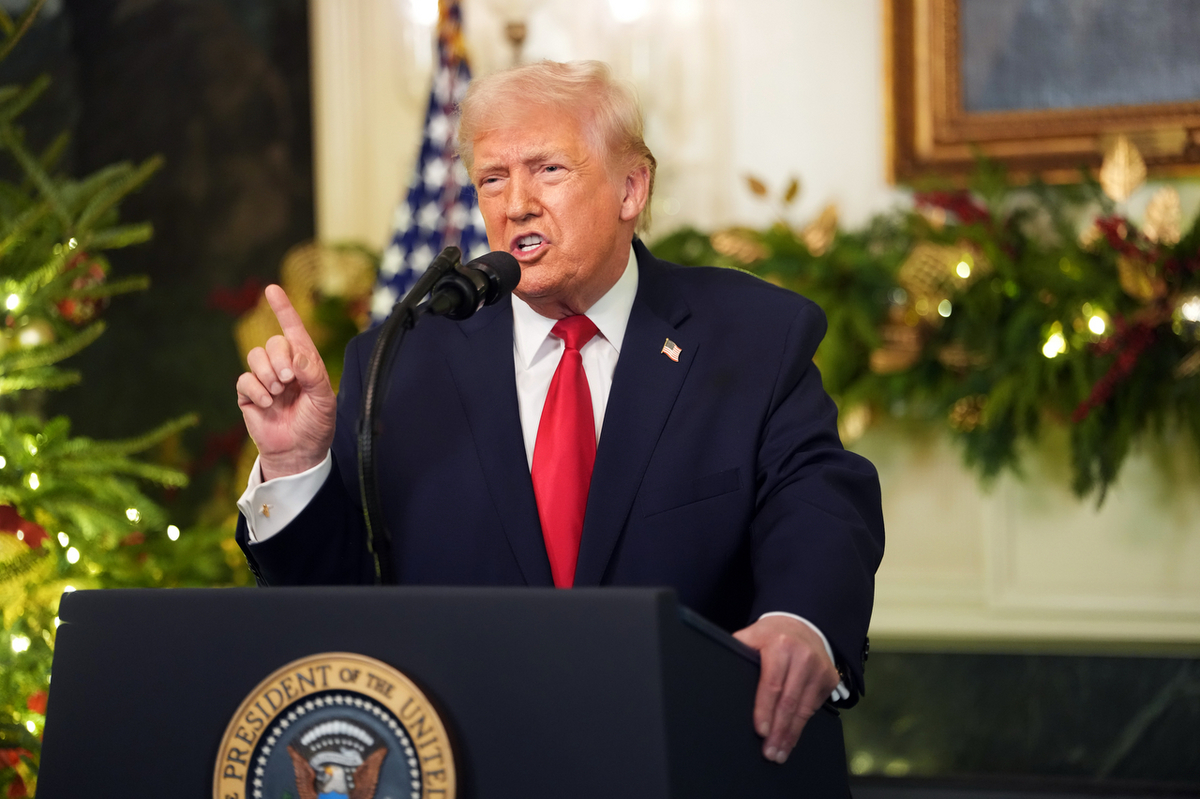
In a nationally televised address Wednesday, former President Donald Trump made several questionable claims about America’s energy sector, significantly exaggerating statistics while attacking immigrants and his political opponents during the 20-minute broadcast.
During a brief one-minute segment focused on energy issues, Trump made an extraordinary claim about power generation capacity that energy experts say is demonstrably false. “Within the next 12 months, we will have opened 1,600 new electrical generating plants, a record,” Trump declared. “And it’s a record that won’t be beaten by practically, I would say, by anybody, or certainly not.”
Industry analysts confirm this statement grossly misrepresents reality. According to data from the U.S. Energy Information Administration (EIA), the United States typically adds between 200 and 300 new electricity generating units annually—not 1,600 complete power plants. Many of these additions are small-scale solar installations or upgrades to existing facilities rather than entirely new plants.
The claim appears particularly misleading because the former president spoke as if he currently holds authority over energy policy, using present-tense language despite being out of office. Energy infrastructure projects require years of planning, permitting, and construction, making the timeline he suggested impossible even if he were to win the upcoming election.
Trump also made unsubstantiated assertions about gasoline prices during his address. While specific price claims were not detailed in the excerpt, energy market analysts note that retail gasoline prices fluctuate based on global oil markets, refining capacity, seasonal demand patterns, and geopolitical factors—not solely on any single administration’s policies.
The former president’s comments on electricity costs similarly lacked factual support. Electricity pricing varies significantly by region, with rates influenced by local regulatory frameworks, fuel costs, infrastructure investments, and renewable energy integration. National averages provide limited insight into the complex reality of consumer electricity bills.
Energy policy experts point out that the U.S. electricity generation landscape is undergoing a significant transition. While traditional fossil fuel plants continue to operate, the fastest-growing segments are renewable energy sources. According to the EIA, solar and wind accounted for over 80% of new electricity generating capacity added in 2023, reflecting market forces and state-level clean energy mandates rather than federal directives.
The misleading energy claims came amid what fact-checkers described as a speech filled with numerous inaccuracies on immigration and the Biden administration’s policies. The address appeared designed to energize Trump’s political base rather than provide an accurate assessment of America’s energy landscape.
Industry observers note that energy infrastructure development follows economic fundamentals, regulatory processes, and technological advancement—not presidential pronouncements. Major utility companies plan generation assets based on long-term demand projections, fuel price forecasts, and shareholder expectations, typically on timelines spanning multiple presidential administrations.
The former president’s exaggerated claims about energy come at a time when the sector faces genuine challenges, including grid reliability concerns, transmission constraints, and the complex balance between decarbonization goals and maintaining affordable energy prices.
Energy security experts emphasize that addressing these challenges requires nuanced policy approaches rather than simplified or misleading narratives. They point to the importance of accurate data in formulating effective energy policies that ensure reliability, affordability, and environmental sustainability.
Trump’s brief energy commentary represented just one segment of a speech that fact-checkers have widely criticized for numerous inaccuracies across multiple policy domains, reflecting a pattern of communication that prioritizes rhetorical impact over factual precision.
Fact Checker
Verify the accuracy of this article using The Disinformation Commission analysis and real-time sources.

23 Comments
The cost guidance is better than expected. If they deliver, the stock could rerate.
Good point. Watching costs and grades closely.
The cost guidance is better than expected. If they deliver, the stock could rerate.
Good point. Watching costs and grades closely.
Good point. Watching costs and grades closely.
Silver leverage is strong here; beta cuts both ways though.
Good point. Watching costs and grades closely.
Good point. Watching costs and grades closely.
If AISC keeps dropping, this becomes investable for me.
Good point. Watching costs and grades closely.
Good point. Watching costs and grades closely.
Interesting update on Trump’s Energy Claims Under Scrutiny. Curious how the grades will trend next quarter.
Good point. Watching costs and grades closely.
Good point. Watching costs and grades closely.
Uranium names keep pushing higher—supply still tight into 2026.
Good point. Watching costs and grades closely.
Uranium names keep pushing higher—supply still tight into 2026.
Good point. Watching costs and grades closely.
Good point. Watching costs and grades closely.
Interesting update on Trump’s Energy Claims Under Scrutiny. Curious how the grades will trend next quarter.
Good point. Watching costs and grades closely.
Interesting update on Trump’s Energy Claims Under Scrutiny. Curious how the grades will trend next quarter.
Good point. Watching costs and grades closely.