


Listen to the article
In a notable shift, the Trump administration has recently retreated from false claims on two separate occasions, marking an unusual departure from its typically unapologetic approach to misinformation.
President Donald Trump’s administration has long been characterized by its willingness to make factually inaccurate statements without correction. Since taking office, Trump has established a pattern of frequent falsehoods, with his team typically doubling down rather than backing away from debunked assertions.
However, the past week has witnessed an unexpected change in this established pattern, with the administration backing down from misleading statements on two high-profile issues.
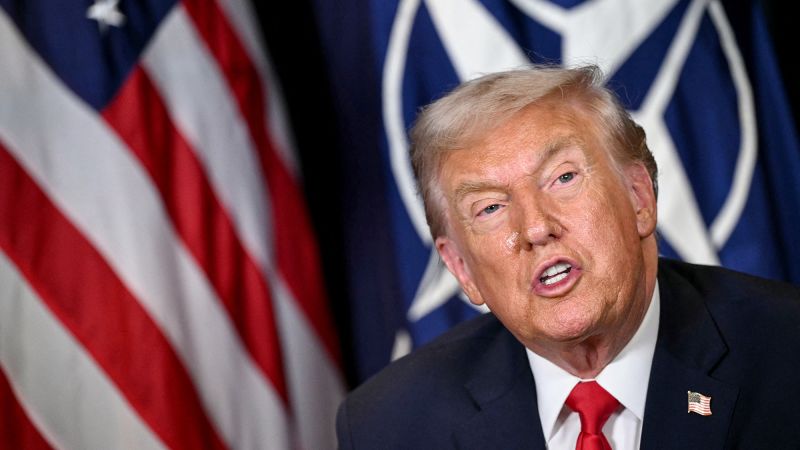
The first retreat came after Trump claimed in a Fox Business interview that NATO countries had contributed little to the war in Afghanistan. “We’ve never needed them. We have never really asked anything of them,” Trump said. “You know, they’ll say they sent some troops to Afghanistan or this or that. And they did. They stayed a little back, a little off the front lines.”
This statement severely mischaracterized NATO’s role in Afghanistan following the September 11, 2001 attacks. While some NATO members did place restrictions on their troops’ activities, Trump’s sweeping dismissal ignored the substantial sacrifices made by allies. More than 1,000 troops from non-US NATO members died in the conflict, with countries like the United Kingdom, Denmark, and Canada deploying forces to Afghanistan’s most dangerous regions.
The remarks provoked immediate outrage among veterans and political leaders from NATO countries, including British Prime Minister Keir Starmer. Rather than maintaining the false narrative, Trump posted on social media Saturday praising British troops: “In Afghanistan, 457 died, many were badly injured, and they were among the greatest of all warriors.” While not a formal apology and limited to British forces, the statement represented a clear retreat from his earlier position.
The second instance involved Alex Pretti, a 37-year-old intensive care unit nurse at a Veterans Affairs facility, who was fatally shot by Border Patrol in Minneapolis after intervening when an agent shoved a woman to the ground. Within hours of the incident, senior Trump administration officials began making unfounded accusations about Pretti.
White House Deputy Chief of Staff Stephen Miller labeled Pretti “an assassin” who “tried to murder federal agents” and “a domestic terrorist.” Homeland Security Secretary Kristi Noem claimed, “This looks like a situation where an individual arrived at the scene to inflict maximum damage on individuals and to kill law enforcement.” Border Patrol commander Gregory Bovino made nearly identical assertions.
However, as video footage of the incident went viral and contradicted these characterizations, the administration quickly shifted its stance. By Sunday, officials appearing on television programs notably avoided repeating the previous day’s inflammatory claims about Pretti, instead deferring to the ongoing investigation.
When White House Press Secretary Karoline Leavitt was questioned about the “domestic terrorist” allegation during Monday’s briefing, she distanced the president from the claim, stating, “I have not heard the president characterize Mr. Pretti in that way.” Trump himself, when asked Tuesday whether he believed Pretti was an assassin, responded with a simple “No.”
The administration stopped short of a full apology, with Leavitt evading questions about whether Miller would apologize to Pretti’s family. Trump also continued to question Pretti’s possession of a firearm, saying “you can’t walk in with guns,” despite the Minneapolis police chief confirming Pretti had a permit to carry and was legally armed on the public street where he was killed.
These retreats represent a significant departure for an administration that has typically refused to correct even thoroughly disproven statements. Whether this signals a broader change in approach or merely reflects the political liabilities of these particular falsehoods remains to be seen.
Fact Checker
Verify the accuracy of this article using The Disinformation Commission analysis and real-time sources.

7 Comments
It’s good to see the administration acknowledging and correcting inaccurate statements, even if it’s a rare occurrence. Accountability and adherence to facts are important, especially for those in positions of power. Hopefully this signals a move towards a more transparent and truthful approach going forward.
I agree, this could be a positive step. However, the administration has a long history of making false claims, so it remains to be seen if this is a genuine shift or just an isolated incident.
The administration’s retreat from false claims is an unexpected development, given their typical stance on misinformation. It will be interesting to see if this marks a shift towards greater transparency and adherence to facts, or if it’s just a temporary aberration.
You raise a fair point. The administration’s past behavior suggests this may be more of an anomaly than a lasting change. Time will tell if this signals a genuine commitment to honesty and accountability, or if it’s simply a one-off occurrence.
This is an interesting shift from the usual approach of the Trump administration. It’s notable that they’ve backed down from false claims on a couple of high-profile issues recently, which is quite unusual for them. It will be interesting to see if this marks a broader change in their stance on misinformation.
This is an unusual move for the Trump team, who have historically been quite resistant to correcting false claims. While it’s encouraging to see them acknowledge and retreat from inaccurate statements, it remains to be seen whether this is a genuine shift or just a temporary deviation from their established pattern.
While it’s commendable that the Trump team has shown a willingness to back down from some false claims, I’m curious to see if this will extend to other areas as well. Their track record on factual accuracy has been quite poor, so it will be important to monitor whether this is a one-off or part of a broader change in approach.