


Listen to the article
Pennsylvania’s top election official firmly rejected President Donald Trump’s recent claims about voter fraud in the state, as the president signaled intentions to nationalize elections with a particular focus on Philadelphia.
Secretary of State Al Schmidt issued a statement Wednesday defending the integrity of Pennsylvania’s electoral system. “Pennsylvania elections have never been more safe and secure,” said Schmidt, who previously served as Philadelphia’s Republican city commissioner during the 2020 election when the city faced numerous accusations from Trump.
“Thousands of election officials — Democrats, Republicans, and Independents alike — across the Commonwealth’s 67 counties will continue to ensure we have free, fair, safe, and secure elections for the people of Pennsylvania,” Schmidt added.
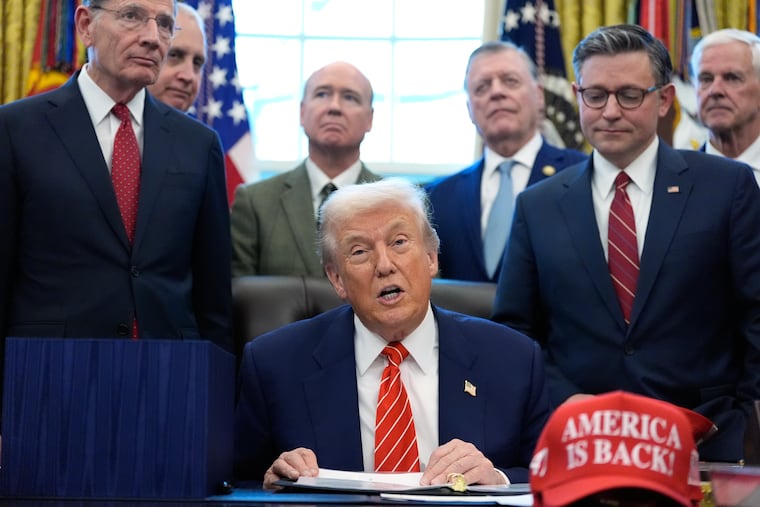
The statement came in response to comments Trump made Tuesday in the Oval Office, where he specifically targeted Philadelphia, Detroit, and Atlanta as locations where the federal government should take control of elections. “Take a look at Detroit. Take a look at Pennsylvania, take a look at Philadelphia,” Trump said. “You go take a look at Atlanta. The federal government should get involved.”
Critics have noted that Trump singled out three predominantly Black cities in crucial swing states without providing evidence of voter fraud or corruption to support his allegations of a “rigged election.”
Philadelphia has long been a target of Trump’s unsubstantiated claims dating back to his efforts to overturn the 2020 election results. City and state officials have consistently refuted these accusations, emphasizing that there is no evidence of fraud in Philadelphia’s electoral process.
Trump has previously advocated for federal control of elections in 15 states, though his administration has not specified which ones. “The Republicans should say, ‘We want to take over,'” Trump said in December. “We should take over the voting, the voting in at least many — 15 places. The Republicans ought to nationalize the voting.”
Legal experts point out that such a move would face substantial constitutional hurdles. Marian Schneider, an election attorney who served as Pennsylvania’s deputy secretary of elections during the 2016 election, stated bluntly: “The president has zero authority to order anything about elections.” The U.S. Constitution explicitly grants control of elections to states, with Congress having only limited power to establish rules.
White House Press Secretary Karoline Leavitt attempted to clarify that the president was referring to the SAVE Act, legislation proposed by House Republicans that would require citizens to show identification documents like a passport or driver’s license when registering to vote. However, Trump made no mention of this legislation during his Tuesday remarks.
The proposal has already encountered resistance within Trump’s own party. Senate Majority Leader John Thune (R-S.D.) told reporters he disagrees with any attempt to nationalize elections, calling it “a constitutional issue” and stating, “I’m not in favor of federalizing elections.”
Montgomery County Commissioner Neil Makhija, who chairs the Montgomery County Board of Elections, characterized Trump’s comments as “clearly a case of Trump trying to push the boundaries of federal involvement in election administration because he has a problem with any checks on his power, democracy being one of them.”
The timing of Trump’s remarks is notable, coming just a week after FBI agents seized ballots and voting records from the 2020 election from Fulton County, Georgia. County officials have announced plans to challenge the legality of the warrant and the seizure of election materials.
Lisa Deeley, a Democratic Philadelphia city commissioner who oversees elections, suggested Trump’s comments were meant to distract from other controversies. “We all know the President’s playbook by now. His remarks on elections are an effort to change the conversation from the fact that the Federal Government is killing American citizens in Minneapolis,” she said in a statement.
Trump’s claims about election fraud are not new. Since 2016, when he lost the popular vote to Hillary Clinton, he has repeatedly made unsubstantiated allegations about voting irregularities. During a 2020 debate with Joe Biden, Trump famously said, “Bad things happen in Philadelphia, bad things,” in what many viewed as an attempt to undermine confidence in the electoral process.
Despite losing Pennsylvania by more than 80,000 votes in 2020, Trump has persistently claimed victory, making false statements about mail-in votes being “created out of thin air” and alleging there were more votes than voters—claims that have been thoroughly debunked by election officials and independent reviews.
Fact Checker
Verify the accuracy of this article using The Disinformation Commission analysis and real-time sources.

14 Comments
Interesting proposal, but I’m cautious about the implications of nationalizing elections. States and localities have an important role to play in managing elections, and centralized federal control could raise constitutional concerns. We need to find ways to improve election security without undermining core democratic principles.
Securing elections is essential, but nationalizing the process could create more problems than it solves. State and local officials play a vital role, and we need to find ways to strengthen security and integrity while respecting the rights of states and localities to manage their own elections.
Securing elections is essential for democracy. While concerns about fraud should be taken seriously, nationalizing elections could raise serious constitutional and practical issues. It’s crucial to maintain the integrity of the electoral process while respecting state and local authority.
I’m not sure nationalizing elections is the right approach. Robust state and local oversight, clear procedures, and nonpartisan election administration are key to maintaining trust in the system. We should focus on practical steps to secure elections without centralizing federal control.
This is a complex issue with valid concerns on both sides. Protecting election integrity is crucial, but nationalizing the process could raise serious constitutional and practical issues. We should look for practical ways to strengthen security and public trust without undermining the vital role of state and local officials.
Hmm, this is an interesting proposal, but I have some reservations. While we must protect the integrity of elections, nationalizing the process could raise serious constitutional and practical issues. State and local officials play a vital role, and we need to find ways to strengthen security without overriding their authority.
This is a complex issue with valid concerns on both sides. Ensuring election integrity is critical, but nationalizing elections seems like a heavy-handed approach that could undermine democratic principles. We need to find balanced solutions that uphold voter rights and public trust without excessive federal control.
Hmm, this is an interesting proposal, but I have some reservations. While we must ensure election integrity, nationalizing elections seems like an extreme solution that could backfire and undermine public trust. State and local officials play a critical role, and we need to find balanced approaches that uphold democratic principles.
Securing elections is essential, but nationalizing the process is a risky and potentially unconstitutional solution. State and local officials have an important role to play, and we should focus on practical steps to improve security and public trust – without centralizing federal control over elections.
Nationalizing elections is a bold idea, but I’m not sure it’s the right approach. While concerns about fraud must be taken seriously, state and local oversight is essential for responsive governance and public trust. We need to find balanced solutions that uphold democratic principles without excessive federal intervention.
Hmm, this is a complex issue. I can understand the desire to ensure election integrity, but nationalizing elections seems like a drastic step that could backfire and undermine faith in the democratic process. We need to find balanced solutions that uphold the rights of all voters.
While election integrity is critical, nationalizing elections seems like a risky and potentially unconstitutional solution. State and local officials play a vital role in administering elections and responding to local concerns. We should look for ways to strengthen security and public trust without overriding state authority.
Ensuring election integrity is crucial, but nationalizing elections seems like an extreme measure that could backfire. State and local officials have an important role to play, and we should focus on practical steps to improve security and public trust – without centralizing federal control over the electoral process.
Nationalizing elections is a bold idea, but I’m not sure it’s the right approach. Maintaining state and local control is important for responsive governance and public trust. We should focus on practical steps to secure elections, like clear procedures, nonpartisan oversight, and improved voter access – without centralizing federal power.