


Listen to the article
South African Diplomatic Relations Sour as Trump Renews False Claims of “White Genocide”
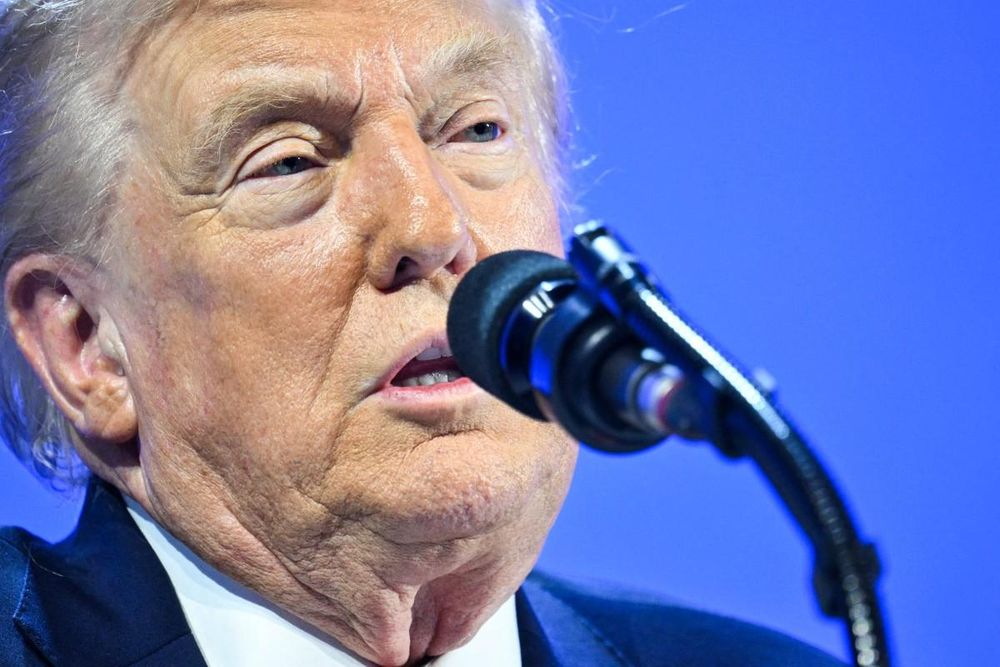
U.S. President Donald Trump has once again stirred controversy on the global stage by repeating false claims about South Africa following his address at the World Economic Forum in Davos on Wednesday.
Speaking to reporters after his WEF appearance, Trump made unsubstantiated allegations regarding the treatment of Afrikaners in South Africa. “What’s happening in South Africa is terrible. It’s a terrible situation. What they’re doing to people, a certain group of people, is unbelievable. You wouldn’t think it could happen today,” Trump told reporters, adding, “Well, we have seen the numbers, we’ve seen the records, and it is taking place and it’s gotta be stopped.”
These comments represent the latest development in an increasingly strained diplomatic relationship between Washington and Pretoria. Relations have deteriorated significantly over repeated false assertions from the U.S. that South Africa is implementing race-based laws and seizing land belonging to white Afrikaners.
The tension has manifested in concrete policy actions. Late last year, the U.S. House Committee on Foreign Affairs passed legislation calling for a reassessment of U.S.-South Africa bilateral relations, including provisions to identify South African government officials who might be subject to sanctions. These developments reflect a deeper diplomatic rift between the two nations.
Trump’s adversarial stance toward South Africa was further demonstrated when he declined to attend the G20 Summit hosted by South Africa in Johannesburg last November. In a move widely interpreted as diplomatic retaliation, the U.S. subsequently excluded South Africa from the invitation list for the upcoming summit in Miami, Florida, later this year.
As of reporting, neither the South African Department of International Relations nor the Presidency has issued a formal response to Trump’s latest remarks.
During his main address at the World Economic Forum, Trump pivoted to domestic accomplishments, proclaiming what he characterized as the “fastest and most dramatic economic turnaround” in American history. He positioned the United States as the “economic engine of the planet,” suggesting that when America prospers, the global economy benefits by extension.
Trump’s WEF speech heavily emphasized his administration’s energy policies and trade strategies. He delivered a pointed critique of renewable energy initiatives, repeatedly referring to them as the “Green New Scam,” and blamed European governments for what he described as excessive electricity prices and diminished energy output.
“Instead of closing down energy plants, we’re opening them up,” he declared, highlighting his administration’s expansion of oil, gas, and nuclear energy production. Trump claimed U.S. natural gas output had reached unprecedented levels and that oil production had increased by 730,000 barrels daily, factors he credited for falling fuel prices domestically.
The president also emphasized his administration’s deregulatory agenda, asserting they had eliminated 129 regulations for each new one implemented and reduced the federal workforce by over 270,000 employees within a single year.
On international trade, Trump defended his tariff policies, claiming they had substantially reduced the U.S. trade deficit while reinvigorating domestic manufacturing sectors, particularly steel production and factory construction.
These tensions with South Africa come at a time when the U.S. is recalibrating numerous international relationships, particularly with nations that have shown increased economic cooperation with China or Russia. South Africa’s membership in BRICS (Brazil, Russia, India, China, and South Africa) has further complicated its relationship with Washington amid growing global competition for influence in Africa.
Analysts note that Trump’s comments on South Africa appear disconnected from the actual policy situation in the country, where land reform remains a complex political issue but bears little resemblance to the scenario described by the president.
Fact Checker
Verify the accuracy of this article using The Disinformation Commission analysis and real-time sources.

8 Comments
While land reform is certainly a contentious issue in South Africa, the President’s comments seem to mischaracterize the situation. Balanced reporting and objective analysis would be more constructive.
Precisely, we should avoid inflammatory language and focus on nuanced, evidence-based discussion of these challenging topics.
I’m curious to learn more about the context and details behind the President’s remarks. Does he have credible data to support these claims of “white genocide”? It’s an serious accusation that warrants careful scrutiny.
Disappointing to see the President trafficking in unsubstantiated conspiracy theories on the global stage. Responsible leadership requires a commitment to facts and diplomacy, not inflammatory rhetoric.
Well said. Sensational claims about “white genocide” only serve to inflame tensions and distract from the real policy challenges facing South Africa.
Given the complex history and ongoing social/economic transformation in South Africa, it’s troubling to see the President make such sweeping, unverified allegations. Constructive engagement requires nuance, not oversimplification.
Troubling to see the President repeat these unsubstantiated claims about South Africa. We should rely on facts and data, not sensational rhetoric, when it comes to complex political and social issues.
Agree, it’s important our leaders exercise caution and seek credible information from reliable sources when commenting on sensitive geopolitical matters.