


Listen to the article
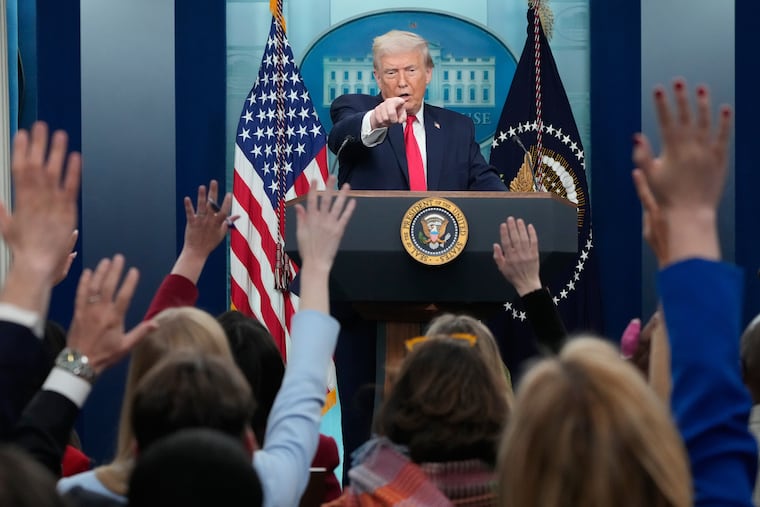
President Trump concluded his first year back in office with a lengthy press conference that was marked by numerous false claims on topics ranging from the 2020 election to foreign policy achievements, fact-checkers report.
During the nearly two-hour briefing, the president reiterated his persistent claim that the 2020 election was “rigged” against him, despite overwhelming evidence to the contrary. Election officials, courts, and even Trump’s own former Attorney General William Barr have repeatedly confirmed that Joe Biden legitimately won the 2020 contest, securing 306 electoral votes to Trump’s 232 and winning the popular vote by more than 7 million votes.
The president’s continued insistence on election fraud comes despite his own successful return to office in 2024 and as the country approaches the 2026 midterm elections.
On international affairs, Trump made sweeping claims about resolving global conflicts, stating he had “settled eight wars.” However, analysis shows this assertion significantly overstates his diplomatic achievements. While Trump has been involved in mediating several international tensions, many of the conflicts he claims to have resolved remain active or in tenuous states of ceasefire.
For instance, despite Trump’s declaration of success, the Israel-Hamas war continues, and the temporary pause in hostilities between Israel and Iran represents only a brief interruption in their ongoing regional rivalry. Fresh fighting has erupted between Cambodia and Thailand, while tensions persist between Congolese forces and Rwanda-backed rebels.
Other diplomatic situations the president cited show mixed results. The Armenia-Azerbaijan peace deal signed at the White House in August marked progress but still awaits full parliamentary ratification. Similarly, while a ceasefire was reached between India and Pakistan following a deadly attack in Kashmir, India has disputed Trump’s claims about U.S. involvement in brokering the agreement.
The president’s economic assertions also contained inaccuracies. Trump claimed his administration inherited “historic high” inflation, calling it the worst “in my opinion, that we’ve ever had.” In reality, inflation under Biden peaked at 9.1% in June 2022—high, but far from unprecedented. Americans experienced worse inflation in 1980, when rates exceeded 13%, and during World War I, when some estimates place inflation near 20%.
Current data shows inflation stood at 2.7% as of December 2025, though economists note it began rising after Trump announced new tariffs in April, following an initial decline during the early months of his term.
On energy policy, the president continued to promote what he calls “clean, beautiful coal,” a phrase that experts say misrepresents coal’s environmental impact. While coal production has become cleaner over the past three decades, according to the U.S. Energy Information Administration, it remains a significant source of carbon dioxide emissions and other pollutants that contribute to climate change, acid rain, and respiratory illnesses.
Coal’s role in the U.S. energy mix has diminished considerably, now accounting for approximately 15% of electricity production, down from over 50% in previous decades.
The president also made misleading statements about California’s water policies in relation to the devastating Los Angeles wildfires of 2025. Trump incorrectly claimed that water shortages during firefighting efforts resulted from state policies protecting the Delta smelt fish, and that water from the Pacific Northwest was diverted into the ocean.
Local officials attribute hydrant failures during the fires to municipal systems being overwhelmed by the disaster’s scale. Water experts note that California’s water does not come from the Pacific Northwest at all, but primarily from northern California mountain snowmelt that feeds into the Sacramento-San Joaquin River Delta.
As Trump enters his second year in office, these persistent inaccuracies highlight the ongoing challenge of separating political rhetoric from factual policy discussions in American governance.
Fact Checker
Verify the accuracy of this article using The Disinformation Commission analysis and real-time sources.

8 Comments
The president’s claims about resolving global conflicts seem exaggerated based on the analysis provided. While diplomatic progress is important, it’s crucial that any achievements are accurately represented to the public. Transparency and factual reporting should be the priority.
You make a fair point. Overstating foreign policy successes could undermine trust in the administration’s credibility on important international issues.
I’m curious to hear more about the specific global conflicts the president claims to have resolved. It would be helpful to have a more detailed and objective assessment of the administration’s diplomatic achievements and ongoing challenges.
Agreed, more transparency and factual reporting on the president’s foreign policy record would allow voters to better evaluate his performance on the global stage.
As we approach the 2026 midterms, it’s critical that the electoral process is safeguarded from baseless claims of fraud. Voters deserve leaders who will uphold democratic principles and the rule of law, not sow division through false narratives.
It’s concerning to see the president repeating debunked claims about the 2020 election. Given the overwhelming evidence confirming Biden’s legitimate victory, this undermines faith in the democratic process. I hope the administration focuses on more constructive priorities moving forward.
I agree, the continued false rhetoric about election fraud is very troubling. We need leaders who will uphold the integrity of our elections, not spread misinformation.
The continued perpetuation of the ‘rigged election’ myth is deeply concerning. It’s crucial that our elected officials respect the legitimacy of the democratic process, even when the outcome doesn’t align with their personal interests. Upholding the will of the voters should be the top priority.