


Listen to the article
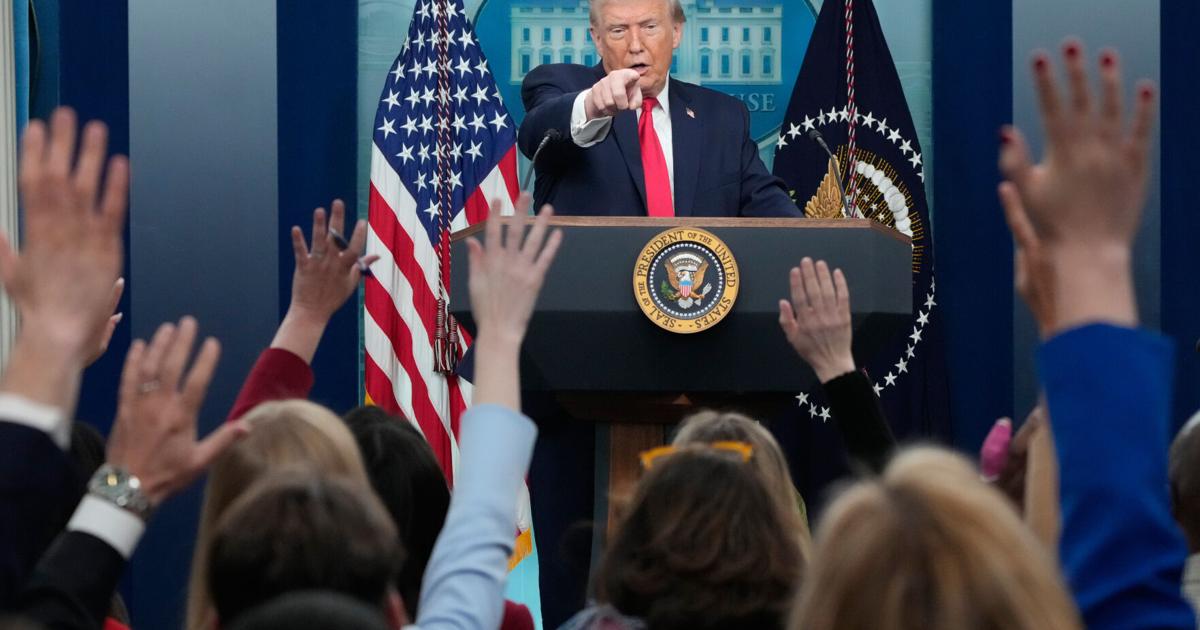
President Trump has returned to familiar territory with a series of false claims while reviewing his first year back in office, continuing a pattern of misinformation that has characterized much of his political communication strategy.
During a recent address, the former president made several assertions about his administration’s accomplishments that conflict with verified data and official records. These claims ranged from economic statistics to immigration policy outcomes, many of which have been repeatedly debunked by fact-checkers and government agencies.
Trump’s economic declarations particularly stood out for their divergence from reality. He claimed credit for creating “the greatest economy in American history” before the pandemic, despite historical data showing that GDP growth during his administration never exceeded 3% annually, falling short of growth rates seen under previous administrations. Economic experts point out that while the pre-pandemic economy performed well by some metrics, it was far from unprecedented in American economic history.
The former president also revisited his frequent assertions about immigration, claiming his administration had “completely secured” the southern border. Department of Homeland Security data contradicts this characterization, showing that while border apprehensions fluctuated during his term, unauthorized crossings continued throughout his presidency. His border wall project, a centerpiece of his immigration platform, resulted in approximately 450 miles of barriers, most of which replaced existing structures rather than creating new barriers.
On international affairs, Trump repeated claims about forcing NATO allies to “pay their fair share,” suggesting they had failed to meet their financial obligations before his intervention. Defense analysts clarify that NATO’s defense spending increases began in 2014, predating Trump’s presidency, following Russia’s annexation of Crimea. While Trump did pressure allies to increase spending, the narrative of delinquent nations suddenly paying up misrepresents the gradual nature of these increased commitments.
The pattern of factual distortions extends to Trump’s characterizations of his administration’s handling of the COVID-19 pandemic. In his address, he described his response as “perfect” despite the United States recording one of the highest per-capita death rates among developed nations. Public health experts have consistently criticized the administration’s early downplaying of the virus and inconsistent messaging on preventive measures.
Media analysts note that these recurring false claims serve a specific purpose in Trump’s political strategy. “These assertions, regardless of their accuracy, resonate with his base and reinforce a narrative of success that supports his political ambitions,” says Dr. Martha Reynolds, political communication specialist at Georgetown University. “The repetition itself serves to cement these alternative interpretations of his record in the public consciousness.”
The phenomenon extends beyond mere political spin. Fact-checking organizations documented over 30,000 false or misleading claims during Trump’s presidency, averaging roughly 21 per day. This approach to communication represents what some political scientists describe as a “post-truth” political environment, where emotional appeals and subjective interpretations often carry more weight than verifiable facts.
In Northeast Mississippi, where Trump maintains strong support, local Republican officials continue to embrace his messaging. County GOP Chairman Robert Thornton stated, “What matters to voters here is that President Trump stands up for American interests and speaks directly to the concerns of everyday people.”
Democratic representatives in the region offer a sharply different perspective. State Representative Anita Wells characterized Trump’s claims as “deliberately misleading rhetoric designed to distract from his administration’s actual record.”
As the political landscape continues to evolve, the persistence of demonstrably false claims in political discourse presents challenges for voters seeking accurate information. Media literacy experts emphasize the importance of consulting multiple sources and official government data when evaluating political statements.
While Trump’s approach to political communication remains controversial, its effectiveness as a political strategy continues to reshape expectations around accountability and factual accuracy in American political discourse, with implications that extend far beyond his individual candidacy.
Fact Checker
Verify the accuracy of this article using The Disinformation Commission analysis and real-time sources.

7 Comments
Misinformation can be very damaging to public trust. I hope the current administration will prioritize transparency and fact-based communication, even when it may be politically inconvenient.
It’s unfortunate that the former president continues to repeat false claims and misinformation. Fact-checking is crucial to maintain trust in government and hold leaders accountable.
While the economy performed well in some ways under the previous administration, the data doesn’t support the idea that it was the ‘greatest in American history.’ Exaggerated claims like this erode public trust.
While the pre-pandemic economy did well in some areas, the data shows it was not the ‘greatest economy in American history’ as claimed. Leaders should rely on verified facts, not hyperbole.
Absolutely. Economic growth during the Trump administration never exceeded 3% annually, which is below the rates seen under previous presidents. It’s important to be objective about the facts.
The former president’s assertions about immigration policy also seem to conflict with official records. Leaders should be careful not to make claims that are repeatedly debunked by fact-checkers and government agencies.
It’s concerning to see a pattern of false claims and misinformation coming from a former president. Fact-checking and accountability are vital for preserving the integrity of our political discourse.