


Listen to the article
Trump Renews Call for Federal Control of Elections, Citing Unfounded Fraud Claims
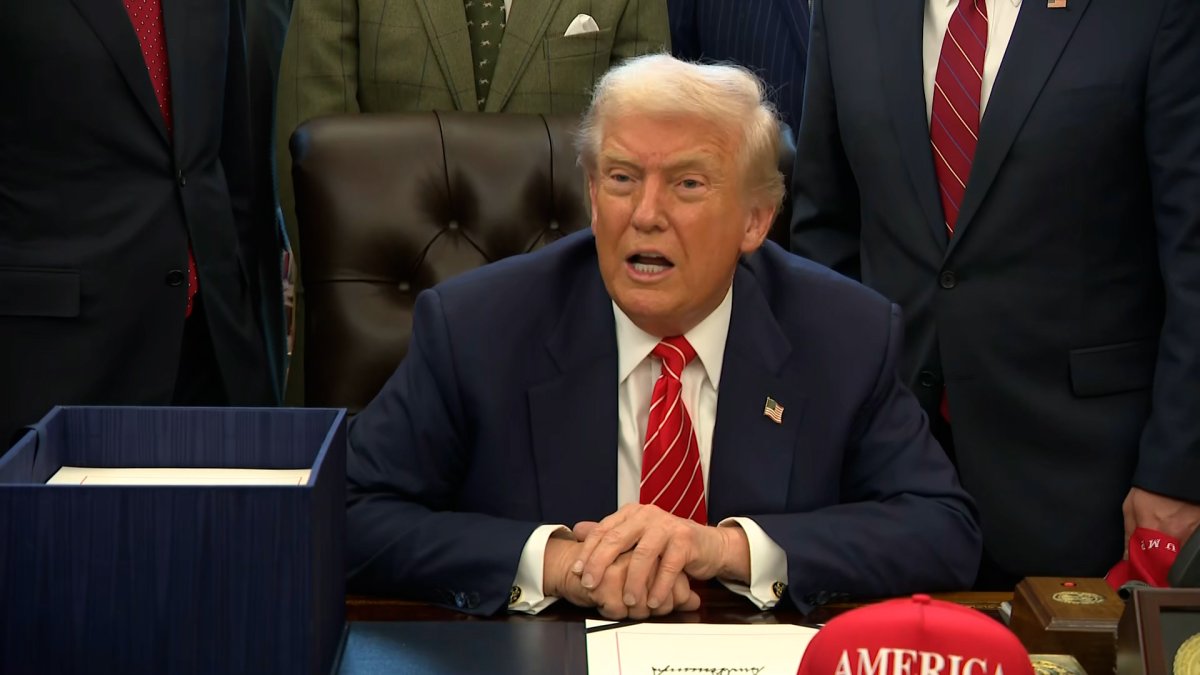
Former President Donald Trump has once again advocated for the federal government to take control of the nation’s election systems, a proposal that challenges the longstanding tradition of state-run elections in the United States.
During recent remarks, Trump reiterated his desire to “nationalize” the voting process, specifically targeting what he described as election fraud in blue states and swing states—claims that have been repeatedly debunked by election officials, courts, and independent analysts.
“The state is an agent for the federal agent in elections,” Trump stated. “I don’t know why the federal government doesn’t do them anyway.”
The former president’s comments represent a significant departure from America’s decentralized election system, which has historically given states primary authority over administering elections. This arrangement is rooted in the Constitution and reinforced through decades of legal precedent and practice.
Election security experts note that the decentralized nature of American elections actually serves as a safeguard against widespread fraud. With thousands of local jurisdictions each managing their own election processes, it becomes nearly impossible to coordinate the type of mass fraud that Trump has alleged.
The timing of Trump’s renewed call comes as several states are implementing changes to their voting laws and procedures ahead of upcoming elections. Some Republican-led states have tightened voter ID requirements and limited early voting options, while many Democratic-led states have expanded mail-in voting and early voting opportunities.
Legal scholars point out that a federal takeover of elections would face significant constitutional hurdles. Edward Foley, an election law expert at Ohio State University, explained in a recent analysis that “the Constitution clearly delegates primary authority for conducting elections to the states, with Congress having limited oversight power.”
Trump’s claims about widespread fraud in the 2020 election have been thoroughly investigated and discredited. His campaign filed more than 60 lawsuits challenging election results, with virtually all being dismissed for lack of evidence. Former Attorney General William Barr, whom Trump appointed, stated that Justice Department investigations found no evidence of fraud on a scale that would have affected the election outcome.
Nevertheless, polling suggests Trump’s messaging has resonated with many Republican voters. A recent survey from the Pew Research Center found that approximately 65% of Republican and Republican-leaning voters continue to express skepticism about the 2020 election results.
The proposal to federalize elections has drawn sharp criticism from both Democratic officials and traditional conservatives who champion states’ rights. Senate Majority Leader Chuck Schumer called the idea “a dangerous power grab that undermines our democratic system,” while several Republican governors have expressed concerns about federal overreach.
Election administration experts warn that centralizing control of elections could actually create new vulnerabilities. “One of the strengths of our current system is its distributed nature,” said Tammy Patrick, senior advisor to the Democracy Fund and former election official. “Having thousands of different systems makes it much more difficult for any single actor to compromise our elections.”
As the debate continues, state election officials are preparing for upcoming elections while navigating increasingly polarized public opinion about election security and access. Many are investing in new equipment, training, and procedures designed to both enhance security and maintain voter confidence in the process.
The controversy highlights a fundamental tension in American democracy between federal oversight and state autonomy—a balance that has been continuously negotiated throughout the nation’s history.
Fact Checker
Verify the accuracy of this article using The Disinformation Commission analysis and real-time sources.

12 Comments
While I understand the desire for secure elections, I’m not convinced that federal control is the answer. Our state-run system has historically served us well, and experts say the decentralized nature actually helps prevent fraud. I’d want to see a very compelling case before making such a significant change.
Absolutely, the checks and balances of our current system are crucial. Rushing into a federalized election model without a clear need and plan could backfire and undermine public trust.
While I respect Trump’s perspective, I’m not convinced the federal government taking control of elections is the right solution. Our decentralized system has served us well, and election security experts say it actually helps prevent large-scale fraud. I’d want to see a very compelling case before making such a major change.
Absolutely, any proposals to alter our fundamental electoral processes should be approached with the utmost care and scrutiny. Maintaining public trust in the integrity of our elections is critical for democracy.
Interesting claims, but I haven’t seen credible evidence to back up the allegations of widespread fraud. Our decentralized election system is designed to protect against large-scale issues, and state officials have consistently rebutted these fraud claims. Curious to hear more objective analysis on this.
I agree, the lack of substantiated evidence is concerning. Any major changes to our election processes should be approached with great caution and full transparency.
I appreciate Trump’s focus on election integrity, but I haven’t seen credible evidence to support these fraud claims. Our state-run election system has robust safeguards, and experts say the decentralized nature helps prevent widespread issues. I’d want to see a very thorough, objective analysis before considering a major shift to federal control.
Agreed, it’s crucial that we have a fact-based, transparent discussion on this. Making significant changes to how we conduct elections should only be done with overwhelming justification and public support.
While I understand the desire for secure elections, I’m not convinced that federal control is the answer. Our state-run system has historically served us well, and election security experts say the decentralized nature actually helps prevent fraud. I’d want to see a very compelling case before making such a major change to our electoral processes.
Absolutely, any proposals to alter our fundamental electoral system should be approached with great caution and scrutiny. Maintaining public trust in the integrity of our elections is crucial for democracy.
I’m curious to hear more details on the specific fraud claims Trump is citing. Given the gravity of the issue, I think it’s important we have a fact-based, objective discussion rather than relying on unsubstantiated allegations. Our electoral system is fundamental to democracy.
Agreed, transparency and rigorous review of any potential issues are essential. We should be extremely cautious about making sweeping changes to how we conduct elections based on unproven claims.