


Listen to the article
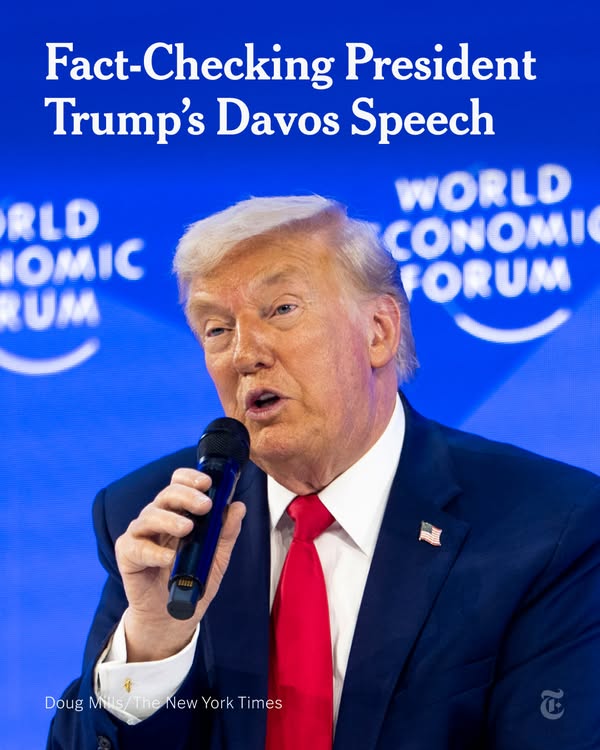
In a confrontational address at the World Economic Forum in Davos, Switzerland on Wednesday, President Trump delivered sharp criticism of European allies while reviving his controversial ambition to acquire Greenland, sending diplomatic ripples through the international gathering.
The president’s remarks about Greenland came as a surprise to many attendees, particularly as the issue had seemingly faded from public discourse since 2019 when he first floated the idea of purchasing the autonomous Danish territory. Trump’s renewed interest in Greenland appears to align with his administration’s growing focus on Arctic resources and strategic positioning.
During his speech, Trump presented a distorted version of Greenland’s history, omitting key facts about its status as a self-governing territory within the Kingdom of Denmark. The massive island, approximately three times the size of Texas, maintains significant autonomy while Denmark oversees foreign affairs and defense policy. When Trump initially proposed purchasing Greenland in 2019, Danish Prime Minister Mette Frederiksen firmly rebuffed the suggestion as “absurd,” leading to diplomatic tension between the longtime allies.
Experts note that Greenland holds considerable strategic value due to its location and natural resources. The territory sits at a critical Arctic junction between North America and Europe and possesses valuable mineral deposits including rare earth elements crucial for technology manufacturing. Climate change has also made previously inaccessible areas potentially viable for resource extraction.
Trump’s renewed interest comes amid increasing global competition for Arctic influence, with Russia and China both expanding their presence in the region. The U.S. already maintains Thule Air Base in northwestern Greenland, its northernmost military installation and a vital component of missile defense systems.
Beyond Greenland, the president directed pointed criticism toward NATO, repeating several claims about alliance funding that fact-checkers have consistently disputed. While NATO members have increased defense spending since 2014, Trump’s characterization of these changes misrepresented both the timing and nature of these adjustments, according to defense policy experts.
The president’s combative tone toward European allies marks a continuation of his “America First” approach to foreign policy that has characterized his administration. Several European diplomats in attendance, speaking on condition of anonymity, expressed concern that such rhetoric undermines transatlantic relationships during a period of global instability.
The World Economic Forum, traditionally a venue for promoting international cooperation and addressing global challenges, has increasingly become a platform for competing geopolitical visions. Trump’s speech stood in stark contrast to other world leaders who emphasized collaborative approaches to climate change, technology regulation, and economic development.
Market analysts noted that the president’s remarks caused temporary fluctuations in Danish companies with Greenlandic operations, though the impact was limited as investors have become somewhat accustomed to unexpected policy pronouncements.
Danish officials responded with measured diplomatic language, reaffirming Greenland’s status while avoiding direct confrontation. “The relationship between Denmark, Greenland and the United States remains strong and based on mutual respect,” said a spokesperson from the Danish Ministry of Foreign Affairs.
Greenlandic officials were more direct, with one local politician stating: “Greenland is not for sale, and decisions about our future belong to our people.”
The timing of Trump’s speech coincides with increasing attention on Arctic policy across multiple nations, as melting ice creates new shipping routes and resource opportunities. The U.S. has recently expanded its diplomatic presence in Greenland, reopening a consulate in the capital Nuuk in 2020 after a 67-year absence.
As the international community digests the president’s remarks, policy experts suggest that substantive cooperation on Arctic issues may become more challenging amid such rhetoric, even as the strategic importance of the region continues to grow.
Fact Checker
Verify the accuracy of this article using The Disinformation Commission analysis and real-time sources.

7 Comments
Interesting to see Trump reviving the Greenland acquisition idea. While the proposal was dismissed as ‘absurd’ before, I wonder if there’s more strategic reasoning behind it now given the growing focus on Arctic resources. Curious to see how this plays out diplomatically.
You raise a good point. Controlling strategic territories and resources has been a priority for this administration. Acquiring Greenland could provide geopolitical advantages, even if the proposal faces significant opposition from Denmark and other allies.
While I’m skeptical of Trump’s claims about Greenland’s history, the potential strategic value of the Arctic region is undeniable. As resource competition and geopolitical tensions rise, securing influence in the High North could become an increasing priority for major powers. However, any moves must be balanced with respect for local autonomy and international law.
Trump’s confrontational speech in Davos is concerning, especially the rhetoric around European allies. Maintaining strong international partnerships is crucial, particularly on issues like climate change and economic stability. I hope cooler heads can prevail and find a diplomatic path forward.
I agree. Unilateral actions and antagonizing key allies is not a sustainable strategy, especially on complex global challenges that require coordinated efforts. Diplomacy and compromise will be essential to make progress.
Trump’s speech highlights the growing geopolitical rivalry over the Arctic. While the Greenland proposal may be unrealistic, the underlying competition for resources and strategic positioning in the region is concerning. Navigating these complex issues will require nuanced diplomacy and multilateral cooperation, not confrontational rhetoric.
The renewed focus on Greenland seems more like political grandstanding than a serious policy proposal. Unilaterally trying to acquire autonomous territories is unlikely to succeed and could further damage diplomatic relations. I hope the administration shifts its attention to more constructive ways of addressing Arctic challenges.