


Listen to the article
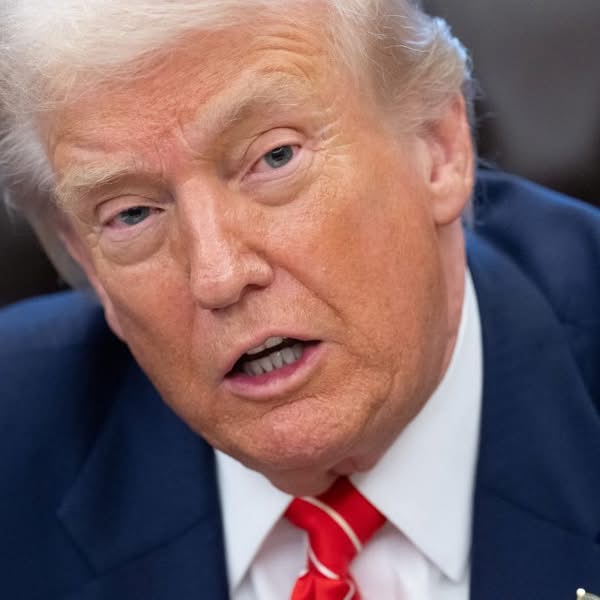
Former President Donald Trump made a series of false or misleading statements during a recent Oval Office interview with NBC News anchor Tom Llamas, covering a wide range of topics including economic policy, immigration, and electoral processes.
The interview, which aired as part of NBC’s broader coverage of the current administration, featured Trump touching on several contentious issues that have defined both his presidency and his current political messaging.
On economic matters, Trump repeated claims about his administration’s economic performance that conflict with official data from the Bureau of Labor Statistics and the Department of Commerce. While the pre-pandemic economy under Trump did see growth and low unemployment, his characterization of it as “the greatest economy in history” overlooks higher growth rates during previous administrations and economic challenges that preceded the pandemic.
Immigration policy, a cornerstone of Trump’s political platform, featured prominently in the interview. The former president restated his position that the southern border faced unprecedented security threats, though Customs and Border Protection data shows fluctuating patterns of migration that have challenged multiple administrations. His claims about the effectiveness of border wall construction also diverged from assessments by security experts who have noted both the benefits and limitations of physical barriers.
Perhaps most notably, Trump continued to make unfounded assertions about election integrity during the 2020 presidential contest. These claims have been repeatedly investigated and debunked by election officials from both parties, court rulings, and independent audits across multiple states. Despite this, the former president maintained his position that irregularities affected the outcome.
Media watchdog organizations have documented thousands of false or misleading claims made by Trump during his presidency and post-presidential period. This pattern has raised concerns among political analysts about the impact of misinformation on public discourse and democratic processes.
The NBC interview comes as Trump maintains a high profile in Republican politics, with polling showing him as a frontrunner for the party’s nomination should he choose to run in upcoming elections. His continued influence in the party has shaped policy positions on issues ranging from pandemic response to international relations.
Political science experts suggest that Trump’s communication style—blending confident assertions with claims that often contradict official records—has changed expectations around political discourse. Dr. Rachel Montgomery, professor of political communication at Georgetown University, noted, “We’re seeing a fundamental shift in how factual accuracy is weighted against rhetorical effectiveness in political messaging.”
NBC News provided fact-checking annotations to the interview when it was published online, a practice that has become increasingly common in political coverage. The network faced both criticism for providing a platform for misleading claims and praise for contextualizing the statements with factual corrections.
The interview highlights ongoing challenges for news organizations attempting to balance access to influential political figures with responsibilities to provide accurate information to viewers. Media ethics specialists point out that live or lightly edited interviews with figures known for making inaccurate statements present particular challenges for journalists.
As the political landscape continues to evolve, the impact of factual distortions in high-profile interviews remains a subject of concern for institutions focused on democratic governance and information integrity. Research from the Pew Research Center indicates that Americans increasingly receive news from siloed information environments, potentially limiting exposure to fact-checking or alternative perspectives.
The NBC interview is likely to reinforce existing perspectives among both Trump’s supporters and critics, according to polling experts, rather than significantly shift public opinion about the former president or the issues discussed.
Fact Checker
Verify the accuracy of this article using The Disinformation Commission analysis and real-time sources.

7 Comments
While I may not agree with all of the former President’s positions, I think it’s valuable to hear different perspectives, as long as they are grounded in facts. Balanced reporting is key.
Interesting to see the former President make such claims, though the data seems to tell a different story. I wonder how his economic assessments align with broader economic indicators during his term.
It’s important to scrutinize claims, especially from political figures, and look to objective data sources. Fact-checking is crucial for understanding the full context.
Misleading statements from high-profile figures can be damaging, especially on sensitive topics like the economy and immigration. It’s crucial that the public has access to accurate, fact-based information.
The interview raises some interesting points, but I’m more interested in the underlying data and analysis than political rhetoric. Fact-checking is essential for understanding the full context.
The border security claims are certainly controversial. I’d be curious to see the CBP data referenced and how it compares to the former President’s characterization of the situation.
Objective analysis of immigration trends and border activity is important to cut through political rhetoric. Data transparency can help inform a balanced understanding of the issues.