


Listen to the article
Trump Dismisses Climate Crisis as Deadly Cold Snap Sweeps Nation
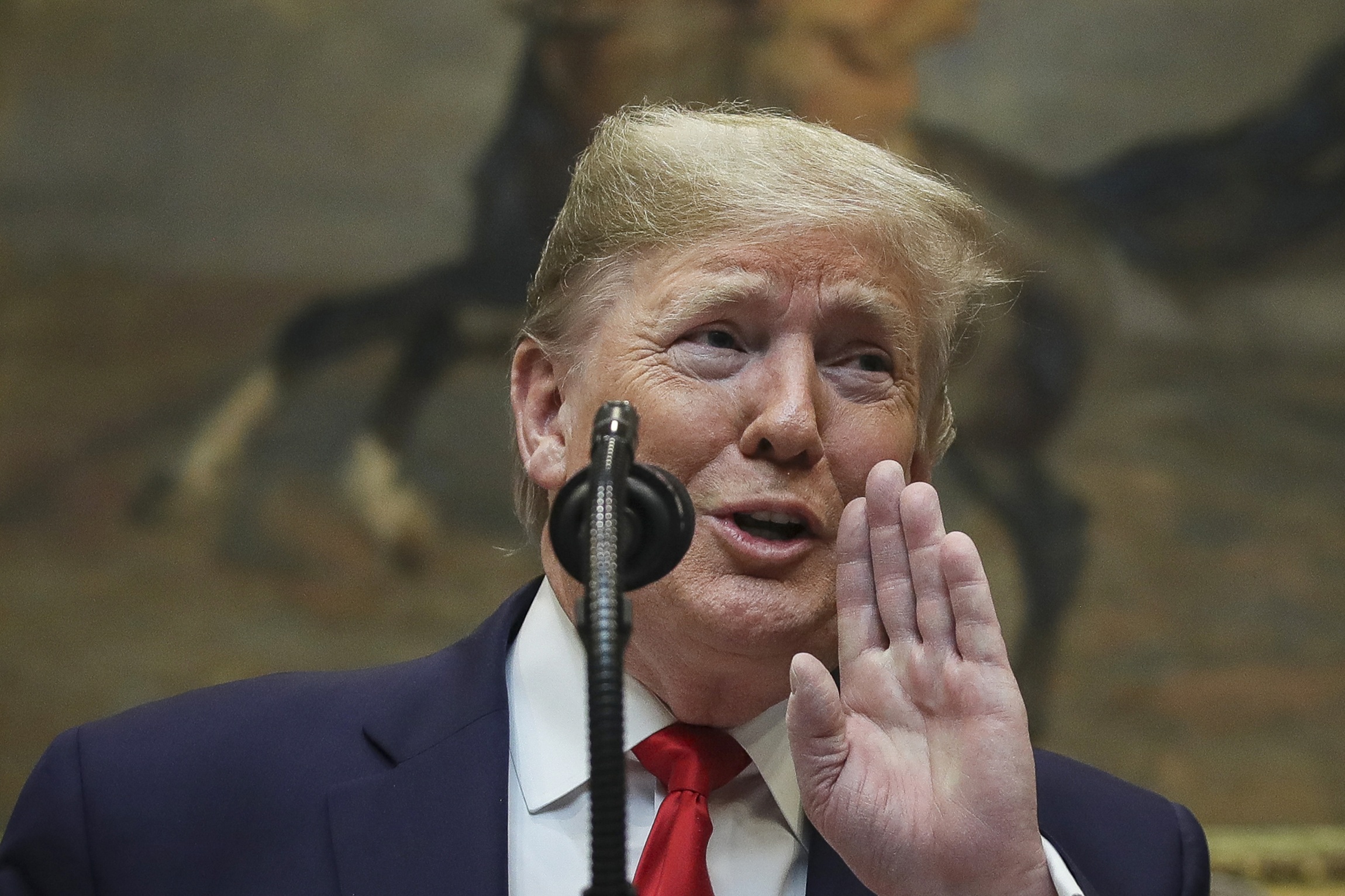
Former President Donald Trump has once again questioned the existence of climate change, using last weekend’s extreme cold weather as evidence for his skepticism. In a post on his Truth Social platform, Trump wrote: “Record Cold Wave expected to hit 40 States. Rarely seen anything like it before,” before asking, “Could the Environmental Insurrectionists please explain — WHATEVER HAPPENED TO GLOBAL WARMING???”
The frigid conditions that swept across much of the United States left at least 30 people dead and more than 600,000 homes and businesses without power as of Monday. In Chicago, wind chill temperatures plummeted to -36 degrees Fahrenheit during the peak of the cold snap.
Climate scientists have swiftly refuted Trump’s implication that cold weather disproves global warming. Jennifer Francis, an atmospheric scientist and senior scientist at the Woodwell Climate Research Center, explained to Inside Climate News that such extreme cold events are actually consistent with climate change patterns.
“Big waves like this are more common when the Arctic is unusually warm, and it’s near record-warm right now,” Francis noted. The science behind this phenomenon is well-established: as warming air currents push into the Arctic region, the cold air normally contained there gets displaced southward, resulting in frigid temperatures in places like the continental United States.
This weather dynamic was clearly visible during the recent cold snap. While Chicago experienced dangerous sub-zero temperatures, Nuuk, Greenland – located in the Arctic region – enjoyed relatively balmy conditions with temperatures reaching a positive 36 degrees Fahrenheit on the same day.
Trump’s climate skepticism reflects his consistent stance throughout his political career. During his first administration, he systematically dismantled environmental protections and expanded fossil fuel production, including coal and oil. He withdrew the United States from the Paris Climate Agreement, a decision he repeated early in his second term.
The recent polar vortex event underscores the growing frequency and intensity of extreme weather phenomena linked to climate change. According to the National Oceanic and Atmospheric Administration, 2025 ranks as the third-warmest year on record globally, with all ten of the warmest years on record occurring since 2015.
Climate scientists warn that this warming trend will likely make weather events like the recent polar vortex more common in the future, not less. The destabilization of traditional weather patterns creates more volatility, leading to both extreme heat and extreme cold events.
Meanwhile, the Trump administration has implemented significant cuts to the Federal Emergency Management Agency (FEMA), potentially hampering the government’s ability to respond to weather-related emergencies. While some FEMA layoffs and funding reductions were temporarily paused as the recent storm approached, these cuts are expected to resume, raising concerns about response capabilities during future extreme weather events.
The deadly consequences of the cold snap highlight the real-world implications of climate policy decisions. Emergency services across affected states struggled to meet demand as temperatures plunged to dangerous levels, with vulnerable populations particularly at risk.
As climate change continues to alter global weather patterns, scientists emphasize that understanding the difference between weather (short-term atmospheric conditions) and climate (long-term patterns) remains crucial for developing effective policy responses to the ongoing climate crisis.
The weekend’s extreme cold event, rather than disproving global warming as Trump suggested, actually provides further evidence of the complex and disruptive weather patterns that climate scientists have long predicted would accompany a warming planet.
Fact Checker
Verify the accuracy of this article using The Disinformation Commission analysis and real-time sources.

12 Comments
It’s understandable that extreme cold weather can raise doubts about global warming, but climate change is a long-term trend that can’t be reduced to individual weather events. We need to look at the big picture based on rigorous data.
While I respect the former president’s perspective, I think it’s important to distinguish political rhetoric from scientific analysis when it comes to complex issues like climate change. We should be guided by the evidence, not partisan agendas.
While extreme cold spells can be alarming, they don’t negate the overwhelming scientific consensus on climate change. Reputable climate experts have explained how such events can still occur even as the planet warms on average.
Dismissing climate science based on anecdotal weather events is misguided. We need to look at long-term trends and global data to understand the reality of climate change.
While extreme weather can be unpredictable, the link between human-caused climate change and more frequent and severe weather events is well-established. We shouldn’t let political rhetoric obscure the scientific facts.
Climate change is a complex, global phenomenon that can’t be reduced to a few anecdotal weather occurrences. Responsible policymaking requires looking at the full body of evidence, not cherry-picking data.
I’m curious to hear more from climate experts on how extreme cold events like this can actually be consistent with broader climate change patterns. It’s important to separate political rhetoric from scientific analysis.
Thoughtful discussion of climate change should be grounded in data and research, not partisan posturing. I hope we can move beyond simplistic arguments and have a more nuanced, evidence-based dialogue on this critical issue.
It’s concerning to see political figures sow doubt about climate change, especially when the scientific evidence is so clear. We should be looking to experts, not politicians, for guidance on this critical issue.
Questioning climate change based on a single cold snap is like denying the existence of summer because of a brief cold spell. The overall warming trend is undeniable.
While I appreciate the former president’s concerns about the economic impacts of climate policies, dismissing the scientific consensus on global warming is not a constructive approach. We need realistic solutions, not denial.
Responsible leaders should be looking to the advice of climate scientists, not spreading misinformation that sows public confusion. We need to focus on fact-based policymaking, not political point-scoring.