


Listen to the article
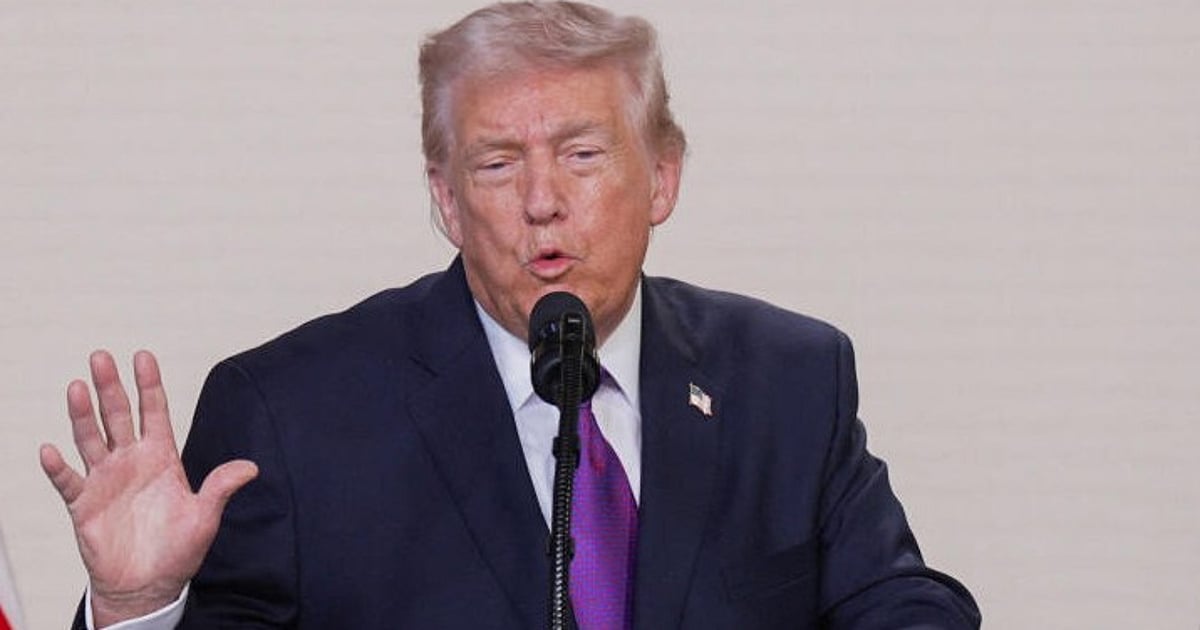
Former President Donald Trump has called for Republicans to “nationalize” and “take over” voting in at least 15 unspecified locations across the United States, reviving his unsubstantiated claims about widespread electoral fraud.
Speaking at a campaign event on Monday, Trump advocated for what he described as Republican control of voting processes in select areas, though he did not specify which 15 locations he was targeting. The statement marks a continuation of Trump’s long-standing narrative challenging the integrity of American elections, claims that have been repeatedly debunked by election officials, courts, and independent analysts.
Trump’s comments come amid an increasingly tense political climate as the nation approaches another presidential election cycle. Since his defeat in the 2020 election, the former president has maintained that the election was “stolen” from him, despite more than 60 court cases failing to find evidence of fraud that could have changed the outcome.
Election integrity experts have expressed concern about such rhetoric, warning that it undermines public confidence in the democratic process. The Brennan Center for Justice, a nonpartisan law and policy institute, has consistently found that voter fraud is exceedingly rare in the United States, with incident rates between 0.0003% and 0.0025%.
“When political leaders suggest taking over election administration, it raises serious questions about the separation of powers and nonpartisan election oversight,” said David Becker, executive director of the Center for Election Innovation & Research. “Our decentralized election system, administered at local levels, has historically been one of its greatest strengths against manipulation.”
Trump’s latest comments represent an escalation from previous statements about election administration. Earlier in his political career, he focused primarily on claims of individual voter fraud, but has increasingly directed attention to what he characterizes as systemic issues requiring direct Republican intervention.
The White House responded to Trump’s statement, emphasizing that the federal government has no formal plans to deploy Immigration and Customs Enforcement (ICE) or other federal agents to polling sites, as some had interpreted Trump’s comments to suggest. Federal law strictly limits the presence of federal agents at polling locations to prevent voter intimidation.
Electoral administration in the United States is primarily managed at the state and local levels, with each state maintaining its own laws regarding voter registration, early voting, mail-in ballots, and Election Day procedures. This decentralized system means that any effort to “nationalize” voting would face significant legal and practical hurdles.
Since 2020, several Republican-controlled state legislatures have passed new voting laws that supporters claim enhance election security, while critics argue they make voting more difficult, particularly for minority communities. States like Georgia, Texas, and Florida have enacted significant changes to their voting procedures, including new ID requirements, limits on ballot drop boxes, and restrictions on providing food and water to voters waiting in line.
Election officials from both parties have consistently defended the integrity of American elections. A joint statement from the U.S. Election Assistance Commission, the Cybersecurity and Infrastructure Security Agency, and state and local election officials after the 2020 election described it as “the most secure in American history.”
Trump’s latest comments have drawn criticism from democracy advocates who warn that such rhetoric not only damages trust in elections but could potentially encourage confrontation at polling places in future elections.
As the next presidential election approaches, election officials nationwide are preparing for increased scrutiny, potential threats to poll workers, and the challenge of maintaining public confidence amid polarized rhetoric about election security and access.
Fact Checker
Verify the accuracy of this article using The Disinformation Commission analysis and real-time sources.

16 Comments
The former president’s rhetoric is deeply concerning and seems to undermine the core democratic principle of free and fair elections. I hope election officials remain vigilant in protecting the integrity of our voting systems.
Agreed. Promoting unsubstantiated claims of fraud and calling for partisan control of elections is a disturbing development that requires close monitoring by election experts and the public.
Spreading disinformation about election fraud is a dangerous game that erodes public trust. I hope voters can rely on impartial, nonpartisan election administration and resist attempts at partisan interference. Maintaining the integrity of our electoral process should be a top priority.
Absolutely. Undermining trust in the electoral system, one of the foundations of democracy, is a concerning path. Voters deserve transparent, secure, and fair elections, not partisan rhetoric or actions.
Repeated claims of ‘stolen’ elections without credible evidence are extremely damaging. Voters should be able to trust the results, even if they don’t like the outcome. This is a concerning development that merits close scrutiny.
Absolutely. Undermining trust in the electoral system, one of the foundations of democracy, is a dangerous path. Voters deserve transparent, secure, and fair elections, not partisan interference.
While I understand concerns about election integrity, the appropriate way to address them is through official channels and legal processes, not unilateral partisan action. We must protect the independence and impartiality of election administration.
Well said. Nonpartisan oversight and public confidence in the process are critical. Attempts to ‘take over’ elections raise serious red flags about the health of our democratic institutions.
This is concerning rhetoric from the former president. We need to uphold the integrity of our electoral process and ensure all eligible voters can participate freely and safely. Spreading disinformation about fraud undermines faith in democracy.
Agreed. Authoritarian attempts to interfere with or control the voting process are unacceptable in a free society. Election officials must remain independent and nonpartisan.
While I understand concerns about election integrity, the appropriate way to address them is through official channels and legal processes, not unilateral partisan action. Voters deserve transparent, secure, and fair elections, not partisan interference.
Well said. Nonpartisan oversight and public confidence in the process are critical. Promoting unsubstantiated claims of fraud and calling for partisan control of elections is a disturbing development that requires close monitoring.
This is a concerning development that merits close scrutiny. Unsubstantiated claims of fraud and calls for partisan control of elections undermine the foundations of our democracy. Voters deserve transparent, secure, and fair elections.
Exactly. Attempts to interfere with or control the voting process are unacceptable in a free society. Election officials must remain independent and nonpartisan to ensure the integrity of our elections.
Spreading disinformation about election fraud is a dangerous game that erodes public trust. I hope voters can rely on impartial, nonpartisan election administration and resist attempts at partisan interference.
Well said. Maintaining the independence and integrity of our electoral process should be a top priority, regardless of partisan affiliation. Voters deserve transparency and confidence in the system.