


Listen to the article
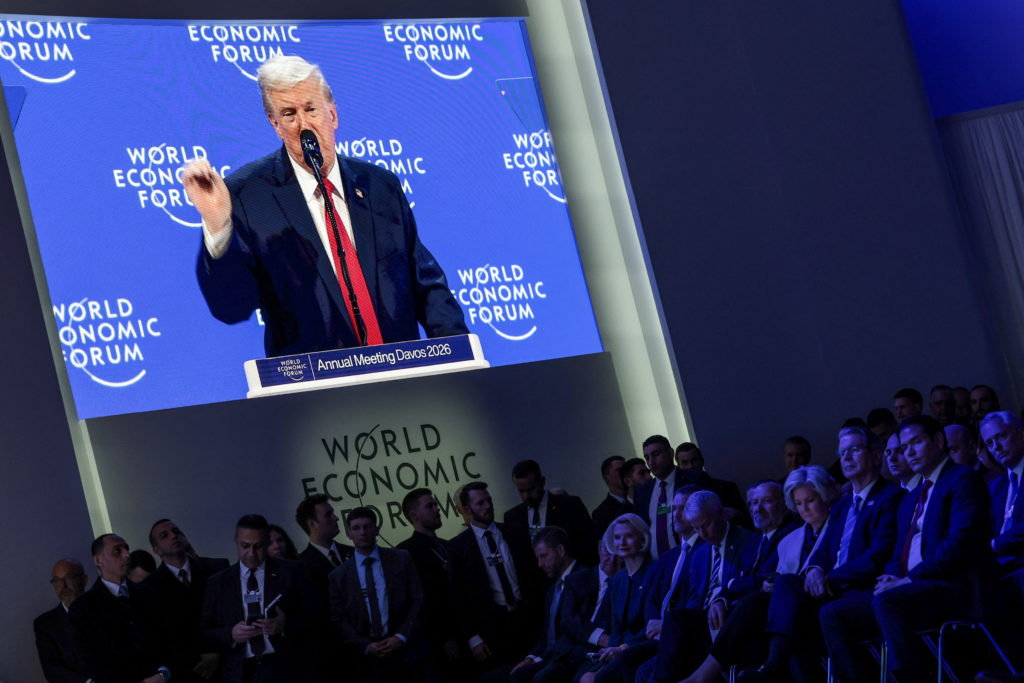
In a striking moment at the World Economic Forum in Davos, former President Donald Trump reiterated his unsubstantiated claim that the Russian invasion of Ukraine would never have happened if not for what he termed a “rigged” 2020 U.S. presidential election.
Speaking before an international audience of political and business leaders, Trump connected the ongoing conflict in Eastern Europe directly to American domestic politics, suggesting a causal relationship between the U.S. electoral outcome and Russian President Vladimir Putin’s decision to launch a full-scale invasion of Ukraine in February 2022.
“The Russian war on Ukraine wouldn’t have started if the 2020 U.S. presidential election weren’t rigged,” Trump told attendees at the prestigious Swiss forum, echoing claims he has made repeatedly since leaving office.
Election officials, courts, and even members of Trump’s own administration have consistently rejected the former president’s allegations about the 2020 election. Official results showed Joe Biden winning 306 electoral votes to Trump’s 232, a margin identical to Trump’s 2016 victory that he previously described as a “landslide.”
Trump’s comments in Davos come at a particularly sensitive moment in the Ukraine conflict, now approaching its two-year mark with no resolution in sight. The war has resulted in tens of thousands of casualties and created Europe’s largest refugee crisis since World War II, with millions of Ukrainians displaced.
In a concerning escalation of rhetoric, the former president also suggested there would be legal consequences for unnamed individuals related to the 2020 election. “People will soon be prosecuted for what they did,” Trump stated, without elaborating on who might face charges or what specific allegations would be pursued.
The comments represent the latest instance of Trump blending foreign policy issues with his ongoing grievances about the 2020 election. Political analysts note this messaging strategy appears designed to resonate with his base supporters as he campaigns to return to the White House in the 2024 election.
The former president’s appearance at Davos marks a significant return to the international stage. The World Economic Forum traditionally brings together heads of state, CEOs, and influential thought leaders to discuss pressing global challenges, making it a high-profile platform for Trump’s remarks.
In the same appearance, Trump also made provocative statements about America’s northern neighbor, claiming that “Canada lives because of the United States,” a comment that quickly drew attention from international observers and Canadian officials.
Trump’s assertions about Ukraine come as the conflict continues to reshape geopolitical alliances and strain international relations. The war has prompted unprecedented Western sanctions against Russia and catalyzed significant shifts in European defense policies, including NATO expansion with Finland and Sweden seeking membership.
The Biden administration has maintained that Russia’s invasion represents an unprovoked attack on a sovereign nation, emphasizing that U.S. support for Ukraine remains steadfast regardless of domestic political disagreements. White House officials have repeatedly rejected suggestions that U.S. electoral outcomes influenced Putin’s decision-making.
Security experts point out that Russia’s aggressive posture toward Ukraine predates the 2020 election, noting the 2014 annexation of Crimea and ongoing support for separatist forces in eastern Ukraine’s Donbas region throughout both the Obama and Trump administrations.
As the 2024 presidential campaign intensifies, Trump’s comments highlight how foreign policy issues—particularly the Ukraine conflict—may become increasingly entangled with domestic political messaging, raising concerns about the politicization of international relations during a period of global instability.
Fact Checker
Verify the accuracy of this article using The Disinformation Commission analysis and real-time sources.

8 Comments
I’m curious to hear more about the specific evidence Trump has for his claims of a ‘rigged’ election. Without clear proof, I worry these accusations could undermine faith in the democratic process. What do you think would be a constructive way to address election integrity concerns?
While I respect the former president, I don’t believe there’s credible evidence of widespread fraud that altered the 2020 election outcome. Continuing to push these claims risks undermining faith in democratic institutions.
Reasonable people can disagree on the 2020 election, but I think we need to move forward and focus on the real challenges facing the country, like the economy and foreign policy.
Prosecutions over the 2020 election results? That seems like a risky and divisive path forward. Shouldn’t we focus on improving election integrity through bipartisan reforms instead of rehashing old grievances?
I agree, it’s important to address election integrity concerns in a constructive way that brings people together, not deepens political divides.
Prosecutions related to the 2020 election seem like a risky move that could further inflame political tensions. Shouldn’t we be focused on finding common ground and working to strengthen democratic institutions in a nonpartisan way?
The 2020 election was contentious, but pursuing prosecutions now seems like a political move that would only further polarize the country. Shouldn’t we be looking for ways to heal divisions and strengthen election integrity going forward?
While I respect the former president’s right to voice his views, I’m not convinced prosecutions over the 2020 election are the best path forward. Wouldn’t it be wiser to pursue bipartisan reforms to improve election security and transparency?