


Listen to the article
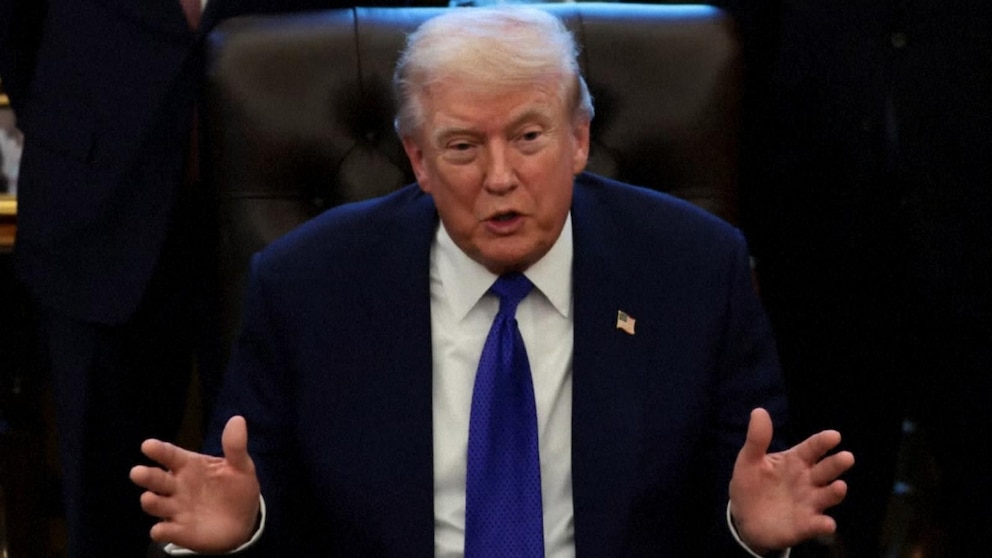
In a dramatic escalation of his rhetoric on election administration, former President Donald Trump called on Republicans to “take over” and “nationalize” the American voting system, continuing his pattern of making unsubstantiated claims about electoral processes as the 2026 midterm elections approach.
Speaking at a campaign event on February 3, Trump urged his party to seize control of election administration across the country, a move that would represent a significant departure from the United States’ longstanding tradition of decentralized, state-run elections.
“We need to take over the voting system in this country,” Trump declared to supporters. “Republicans must nationalize how Americans vote before it’s too late.”
The comments come amid an ongoing debate about election security and administration that has intensified since the 2020 presidential election, which Trump has repeatedly and falsely claimed was stolen from him despite no evidence of widespread fraud.
Election administration experts have expressed concern about Trump’s latest statements. Professor Ellen Weintraub of Georgetown University’s Election Law Center called the remarks “deeply troubling” and potentially unconstitutional.
“The U.S. has a federalist system where states have primary authority over elections,” Weintraub explained. “Any attempt to centralize control would not only face legal challenges but could undermine the checks and balances that have made our electoral system resilient.”
Currently, elections in the United States are primarily managed at the state and local levels, with each state determining its own voting procedures, equipment, and certification processes. This decentralized approach has historically been viewed as a safeguard against nationwide election manipulation.
Since his 2020 loss, Trump has maintained a campaign against what he describes as election irregularities, despite dozens of court cases rejecting these claims and his own Justice Department finding no evidence of fraud that would have changed the outcome.
Democratic Party representatives quickly condemned Trump’s latest remarks. Representative Jamie Raskin of Maryland, a member of the House Administration Committee that oversees federal elections, called the statement “a direct assault on constitutional federalism and democracy itself.”
“What the former president is suggesting would effectively end local control of elections and concentrate power in the hands of whoever controls Washington,” Raskin said in a statement. “That’s not how our democracy was designed to function.”
The timing of Trump’s comments is significant, coming less than two years before the 2026 midterm elections that will determine control of Congress. Political analysts suggest his statements may be aimed at energizing his base while laying groundwork to question results should Republicans perform poorly.
Dr. Michael McDonald, director of the United States Elections Project, noted that Trump’s rhetoric represents a continuation of efforts to cast doubt on election integrity. “We’ve seen legislation in numerous states since 2020 that has changed how elections are administered, often giving partisan officials more control,” McDonald said. “This call to ‘nationalize’ voting takes those efforts to a new level.”
Republican reactions to Trump’s statements have been mixed. Several Trump allies in Congress, including Representatives Jim Jordan and Marjorie Taylor Greene, expressed support for federal intervention in election procedures. However, other Republicans, particularly those from states with strong traditions of local control, have been notably silent.
Senate Minority Leader Mitch McConnell, who has previously criticized Trump’s election claims, declined to comment directly on the former president’s latest remarks but reiterated his belief that “states should maintain their constitutional role in administering elections.”
Election security experts emphasize that the 2020 election was among the most secure in American history, with paper ballot backups, risk-limiting audits, and bipartisan observation providing multiple layers of verification.
As the 2026 midterms approach, Trump’s comments signal that election administration itself will likely remain a central and contentious issue in American politics, with fundamental questions about who should control the voting process continuing to divide the nation along partisan lines.
Fact Checker
Verify the accuracy of this article using The Disinformation Commission analysis and real-time sources.

9 Comments
While election security is crucial, Trump’s rhetoric on this issue seems more aimed at consolidating power than protecting the integrity of our elections. We should be wary of partisan attempts to reshape the voting system for political gain.
I agree. Calls to ‘nationalize’ voting systems raise red flags and merit close scrutiny to ensure they don’t undermine the decentralized, state-run nature of US elections.
This is a concerning development. Efforts to centralize and politicize election administration could undermine the integrity of our decentralized voting system. We should be working to protect and strengthen democratic processes, not consolidate power over them.
I share your concerns. Any moves to nationalize voting systems should be approached with extreme caution and scrutiny to ensure they don’t infringe on states’ rights and voter protections.
This is a complex and sensitive topic. I think we need rigorous, fact-based analysis from election officials, security experts, and voting rights advocates to determine the best path forward – one that enhances confidence without undermining core democratic values.
Well said. Any changes to election administration should be carefully considered through a nonpartisan lens to ensure they truly strengthen, not weaken, our democratic processes.
While election security is important, Trump’s rhetoric on this issue is highly partisan and not supported by evidence. We need to rely on nonpartisan election experts, not political actors, to guide reforms and uphold democratic principles.
Agreed. Calls to ‘nationalize’ voting are concerning and seem more focused on advancing a political agenda than protecting the integrity of elections.
Centralizing control over elections is a dangerous and undemocratic path. We should be focused on strengthening nonpartisan election administration and ensuring all eligible citizens can freely and securely exercise their right to vote.