


Listen to the article
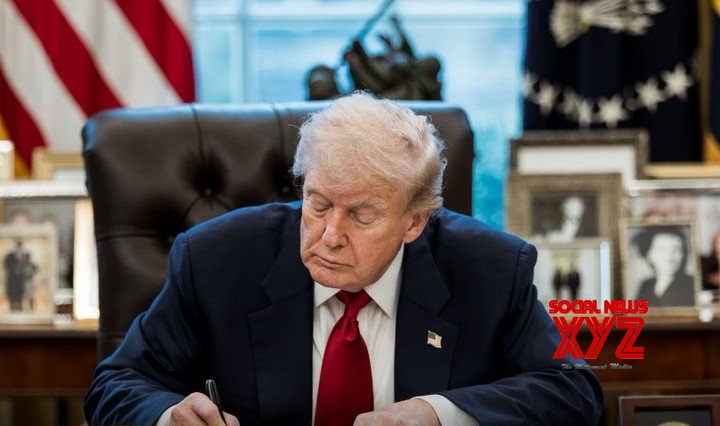
U.S. President Donald Trump has signed a sweeping executive order targeting fraudulent “Made in America” claims, escalating federal enforcement against manufacturers and retailers who falsely market their products as American-made.
The order, announced Thursday from the White House, directs federal agencies to crack down on deceptive labeling practices that have become increasingly prevalent in the digital marketplace era. It specifically empowers the Federal Trade Commission (FTC) to prioritize enforcement actions against companies using misleading origin claims like “Made in America” or “Made in the USA” when products are largely manufactured overseas.
“Americans have a right to clear, accurate, substantiated, and accessible information regarding whether products advertised as ‘Made in America’ are actually made in the United States,” the executive order states.
The measure takes particular aim at online platforms and marketplaces, where verification of origin claims has proven challenging. Under the new directive, the FTC may propose regulations that could hold e-commerce sites accountable for failing to verify country-of-origin claims made by sellers on their platforms. Such failures could be classified as “unfair or deceptive acts or practices” under U.S. consumer protection law.
White House officials emphasized that the order addresses a growing concern in modern commerce: foreign manufacturers deliberately misrepresenting their products to appeal to patriotic American consumers. The administration argues that these deceptive practices not only mislead shoppers but also damage legitimate U.S. manufacturers who invest in domestic production.
“American businesses building, growing, and manufacturing all, or virtually all, aspects of their products onshore are entitled to the undiluted branding benefits that come with supporting the American economy,” according to the executive order.
The directive also contains provisions specifically targeting federal procurement practices. Government agencies managing federal contracts must now regularly review origin claims on products sold to the government. Products found to have falsely claimed American origin must be removed from procurement lists, and vendors making such false claims could face referral to the Justice Department for potential prosecution under the False Claims Act.
This executive action builds upon Trump’s earlier economic initiatives. During his first term, he signed several executive orders promoting “Buy American and Hire American” policies and implemented tariffs to protect domestic industries including steel, aluminum, copper, and automotive manufacturing.
Manufacturing advocacy groups have long pushed for stronger enforcement of “Made in USA” labeling standards. The Alliance for American Manufacturing, which represents both manufacturers and workers, has previously documented numerous cases of imported products falsely marketed as American-made, particularly in categories like apparel, tools, and patriotic merchandise.
The issue transcends partisan lines, as both Republican and Democratic lawmakers have expressed concerns about deceptive origin claims. In recent years, the FTC has pursued cases against companies for making unsubstantiated “Made in USA” claims, but critics argue enforcement has been inconsistent and penalties often insufficient to deter violations.
E-commerce giants like Amazon and Walmart have faced particular scrutiny for third-party seller listings with questionable origin claims. These platforms typically rely on seller attestations rather than independent verification of manufacturing locations.
Market analysts suggest the executive order could potentially reshape aspects of online retail by forcing platforms to implement more rigorous vetting procedures for country-of-origin claims. However, the practical implementation will largely depend on the specific regulations the FTC develops and how aggressively the agency pursues enforcement actions.
The White House characterized the measure as both consumer protection and economic policy. “This Executive Order ensures that ‘Made in America’ is more than a label — it’s a promise,” according to the accompanying fact sheet.
The action comes amid broader national conversations about supply chain security and domestic manufacturing capacity, issues that gained renewed attention following disruptions during the COVID-19 pandemic.
Fact Checker
Verify the accuracy of this article using The Disinformation Commission analysis and real-time sources.

11 Comments
Curious to see how the FTC will implement new regulations to hold e-commerce sites responsible for verifying country-of-origin claims. That could be a complex and contentious process.
You’re right, it will be a challenge. The FTC will need to balance consumer protection with not overly burdening online marketplaces.
This executive order could have significant implications for industries like mining, metals, and energy. Companies in those sectors must ensure their supply chains and ‘Made in America’ marketing are fully transparent.
Absolutely. Raw materials and components for energy and mining equipment need close scrutiny to validate domestic sourcing and production claims.
An interesting move, though the details of enforcement and penalties will be crucial. Ensuring accurate ‘Made in America’ claims is important, but the process needs to be fair and practical.
Agreed. The administration will have to strike a careful balance to prevent overreach while still meaningfully curbing deceptive labeling.
This is an important move to crack down on deceptive ‘Made in America’ claims. Consumers deserve transparency about the true origins of the products they buy.
Agreed. False origin labeling undermines American manufacturing and misleads shoppers. Stronger enforcement is needed to protect domestic producers.
Interesting that the order specifically targets online marketplaces. E-commerce platforms need to take more responsibility for verifying seller claims about product origins.
Yes, the digital landscape has made it easier for misleading ‘Made in USA’ claims to slip through. Holding platforms accountable is a smart approach.
This crackdown could have ripple effects across the mining, metals, and energy industries. Companies should review their labeling and marketing practices to avoid any potential legal issues.