


Listen to the article
Trump Tightens “Made in America” Rules with New Executive Order
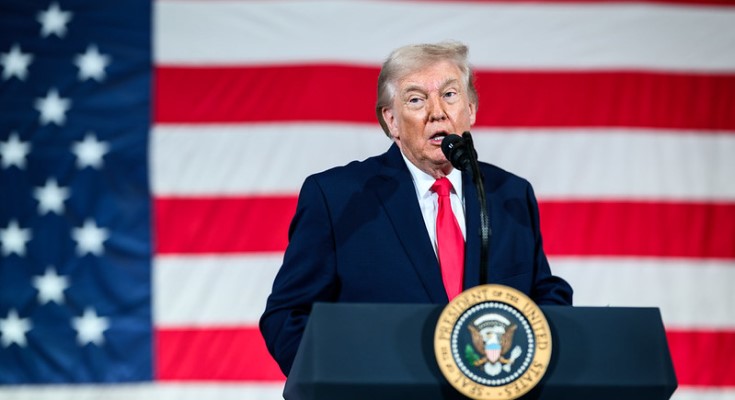
President Donald Trump signed an executive order Friday directing federal agencies to intensify enforcement against companies falsely advertising products as American-made, with particular focus on online marketplaces and government contractors that misrepresent a product’s country of origin.
The directive, signed in Washington, D.C., instructs the Federal Trade Commission to prioritize enforcement actions against sellers or manufacturers making potentially deceptive “Made in America” or “Made in the U.S.A.” claims. The order emphasizes that consumers have a right to “clear, accurate, substantiated, and accessible information” about products marketed as American-made.
Administration officials stated that domestic manufacturers should not have to compete against foreign-made products falsely marketed as American-made, particularly as consumers increasingly rely on these claims when making purchasing decisions.
The executive order represents a significant step toward protecting American manufacturers and ensuring transparency for consumers in an increasingly complex global marketplace. It comes amid growing concerns about misrepresentation in e-commerce and government procurement channels.
For online marketplaces, the order could bring substantial changes to how platforms verify seller claims. The FTC is instructed to consider regulations that would classify a marketplace’s failure to establish country-of-origin verification procedures as a potentially unfair or deceptive practice. This move signals heightened federal scrutiny of how e-commerce platforms handle product origin advertising from third-party sellers.
Industry analysts suggest this could particularly affect major platforms like Amazon, eBay, and Walmart Marketplace, which host millions of third-party sellers with limited verification infrastructure for country-of-origin claims. These companies may need to implement more rigorous screening processes to avoid potential regulatory action.
The directive also addresses federal procurement practices. Agencies overseeing government-wide acquisition contracts, Multiple Award Schedules, and other broad purchasing agreements must periodically review and verify “Buy American Act,” “Country of Origin USA,” and similar claims for products sold to the federal government.
Government contractors found to have misrepresented a product’s American-origin status could face serious consequences. The order instructs agencies to remove such products from government procurement availability and refer cases to the Department of Justice, which could pursue action under the False Claims Act. These penalties could significantly impact contractors who rely on federal business.
For domestic manufacturers, the order potentially levels the playing field against foreign competitors who might otherwise falsely claim American production. U.S. manufacturing groups have long complained about lax enforcement of origin claims, arguing that it undercuts American jobs and misleads consumers who specifically seek domestically produced goods.
Federal agencies with authority over country-of-origin labeling are directed to consider regulations promoting voluntary labeling for American-made products. The order emphasizes that agencies should coordinate to provide businesses with consistent guidance on how American-origin claims may be properly used.
While the order itself doesn’t create new penalties, it signals a clear shift toward stricter enforcement using existing legal frameworks. Any regulatory changes affecting online marketplaces or labeling practices would still require agency action consistent with existing authority.
Consumer advocates have welcomed the move, noting that “Made in America” claims often command premium prices and influence purchasing decisions for those seeking to support domestic manufacturing. More rigorous enforcement could help ensure these premium prices genuinely support American manufacturing rather than deceptive marketing.
The executive order represents the latest in a series of administration efforts to promote domestic manufacturing and address concerns about foreign competition. Implementation will depend on agency actions in the coming months as regulators determine how to execute the president’s directives within existing legal frameworks.
Fact Checker
Verify the accuracy of this article using The Disinformation Commission analysis and real-time sources.
