


Listen to the article
TaylorMade Files Lawsuit Against Callaway Over Golf Ball Performance Claims
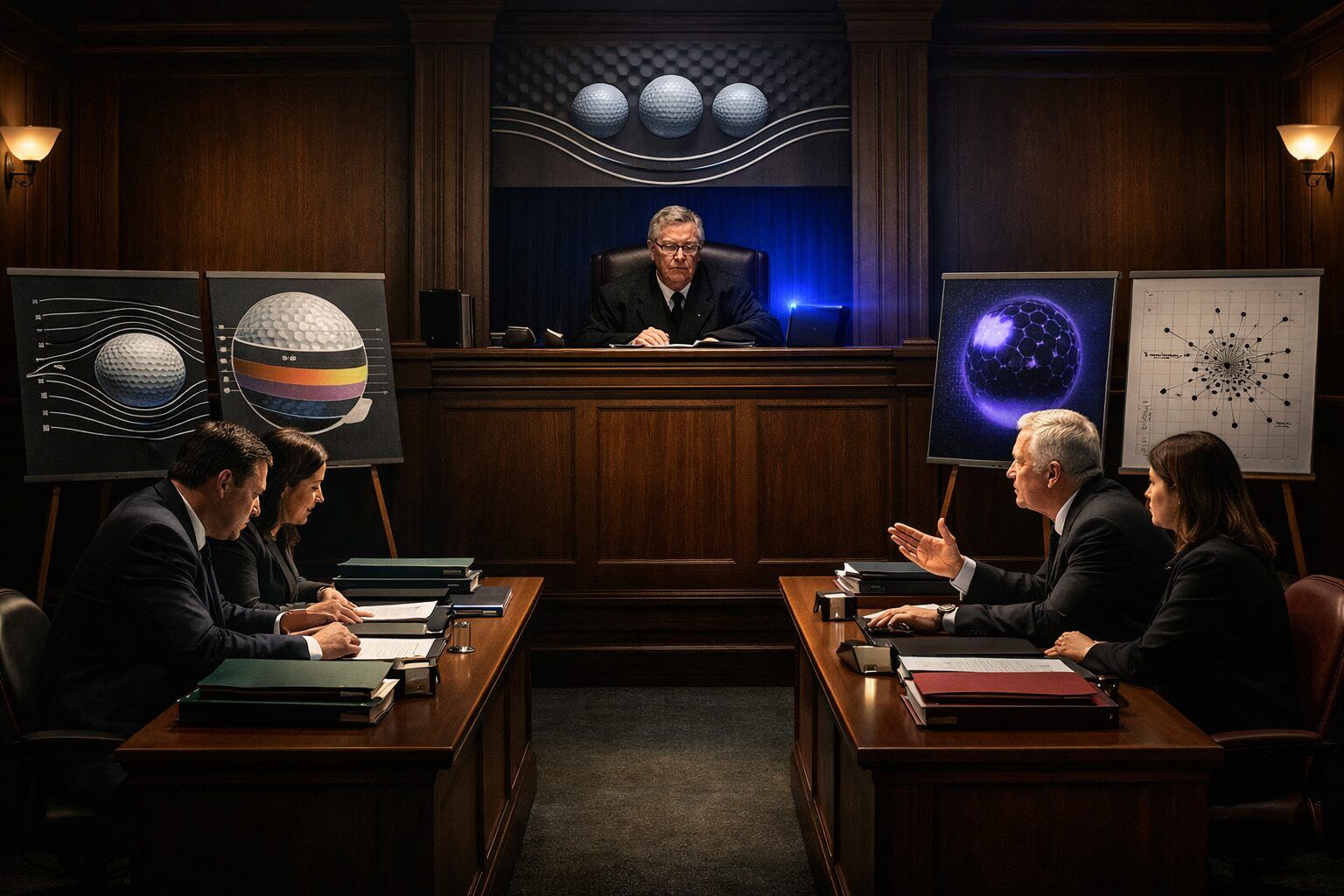
In a significant legal confrontation between two golf industry giants, TaylorMade has filed a lawsuit against Topgolf Callaway Brands, alleging false advertising, unfair competition, and trade libel related to Callaway’s marketing of its Chrome Tour golf balls. The suit, filed in the U.S. District Court for the Southern District of California, seeks injunctive relief, damages, corrective advertising, and attorneys’ fees.
This legal battle marks the end of a relatively quiet period in high-profile equipment litigation within the golf industry. Recent years have seen only sporadic disputes, including PXG’s lawsuit against TaylorMade over adjustable-weighting concepts, TaylorMade’s action against Costco regarding Kirkland Signature irons, and several other isolated cases involving companies like Foresight, Uneekor, Fujikura, and SuperSpeed Golf.
At the heart of TaylorMade’s complaint are ultraviolet light demonstrations allegedly conducted by Callaway sales representatives and brand ambassadors. According to the filing, these representatives have suggested that differences in how golf balls appear under UV light directly correlate with on-course performance. In one example cited in the complaint, a Callaway sales representative reportedly described a perceived paint imperfection on a TaylorMade TP5 as resembling a “gigantic piece of mud” under UV light, implying uneven coating, inferior quality control, and unpredictable ball flight.
The issue of golf ball imbalance is central to understanding the dispute. Both manufacturers likely agree that imbalance in a golf ball—whether caused by internal factors like off-center cores and uneven mantle layers, or external factors like cover defects—can lead to unpredictable flight patterns. When golf balls have missing dimples, gouges, or surface deformities, the aerodynamic properties become compromised.
TaylorMade’s complaint draws a parallel between mud-covered golf balls and what Callaway allegedly implies about TaylorMade’s products. When mud adheres to one side of a golf ball, it creates asymmetric aerodynamic forces that alter lift and drag, causing the ball to curve unpredictably. Similarly, uneven or poorly applied paint can potentially create imbalance with similar effects.
However, TaylorMade contends that Callaway’s UV light demonstrations are a “marketing contrivance” that merely shows differences in UV brightener usage between manufacturers, not actual performance characteristics. The lawsuit argues that UV brightness and cosmetic appearance under black light have no reliable relationship to real-world golf ball performance metrics like distance, consistency, or dispersion.
The complaint also references media coverage of the issue, specifically citing a MyGolfSpy article published on January 6, 2026, about Callaway’s new Chrome Tour, Chrome Tour X, and Chrome Soft golf balls. While acknowledging MyGolfSpy’s significant reach in the golfing community, TaylorMade’s characterization of the article appears to overstate its claims about UV testing and golf ball performance.
It’s worth noting that Callaway isn’t pioneering the use of UV light to evaluate golf ball paint uniformity. Wilson had previously employed similar demonstrations during the launch of its raw Staff and Staff Model X golf balls, discussing how paint can introduce defects during the finishing process and how removing paint altogether eliminates that risk.
As of now, Callaway has not formally responded to the allegations. It’s important to emphasize that TaylorMade’s filing represents only one side of the dispute—a complaint rather than a conclusion. The legal process will likely see Callaway present its defense, potentially followed by court proceedings that test the factual basis of both companies’ claims.
This case highlights the competitive nature of the premium golf ball market, where performance claims and quality control assertions can significantly influence consumer perception and purchasing decisions. For golfers, the outcome could provide valuable insights into manufacturing processes and how cosmetic differences might—or might not—translate to performance on the course.
As the legal proceedings unfold, industry observers will be watching closely to see whether this case reaches a courtroom verdict or, like many corporate disputes, ends in a settlement or dismissal before trial.
Fact Checker
Verify the accuracy of this article using The Disinformation Commission analysis and real-time sources.

9 Comments
Lawsuits over golf equipment claims are not super common, so this is an interesting development. I wonder what the competitive dynamics are that led to this dispute, and how the UV light testing and marketing claims will be scrutinized.
Golf equipment lawsuits can get quite technical. I’m interested to see the details emerge on the UV light testing methods and claims of false advertising. This could have broader implications for how golf ball performance is evaluated and marketed.
Yes, the technical details will be important. It seems like a complex case, so I’m curious to see what evidence comes to light from both sides as this progresses through the legal system.
Golf industry lawsuits can get quite messy. The allegations of false advertising and unfair competition are serious. I’ll be curious to see if any new information emerges about the testing methods and claims made by both sides as this case progresses.
Golf equipment disputes are fairly rare these days, so this is a notable case. I’m curious to hear more details on the specific claims and the potential impact on consumer perceptions of golf ball performance.
Yes, legal battles over equipment claims are not very common, so this one stands out. It will be interesting to see if any new information emerges that sheds light on the UV light testing and potential false advertising.
This looks like a significant lawsuit in the golf equipment space. The UV light demonstration claims are intriguing – I wonder what kind of testing and evidence is behind them. Will be interesting to see how this plays out.
A legal dispute between two major golf brands is always noteworthy. The allegations of false advertising and unfair competition are quite serious. Curious to learn more about the specifics of the UV light claims and how this could impact the golf ball market.
Interesting legal battle in the golf industry. Curious to see how the UV light claims play out and if there’s any merit to TaylorMade’s allegations of false advertising. Wonder what the implications could be for the broader golf ball market.