


Listen to the article
Pakistan has launched airstrikes on a drug rehabilitation facility in Kabul, with Taliban officials claiming more than 400 people were killed and 250 others injured in what has become a significant escalation in cross-border tensions between the neighboring countries.
The attack occurred around 9 p.m. Monday at the “Omid” rehabilitation center, a 2,000-bed facility located in Kabul’s Police District 9. Taliban spokesman Hamdullah Firtat announced on social media that “large parts of the hospital have been destroyed” in what he described as an attack by “the Pakistani military regime.”
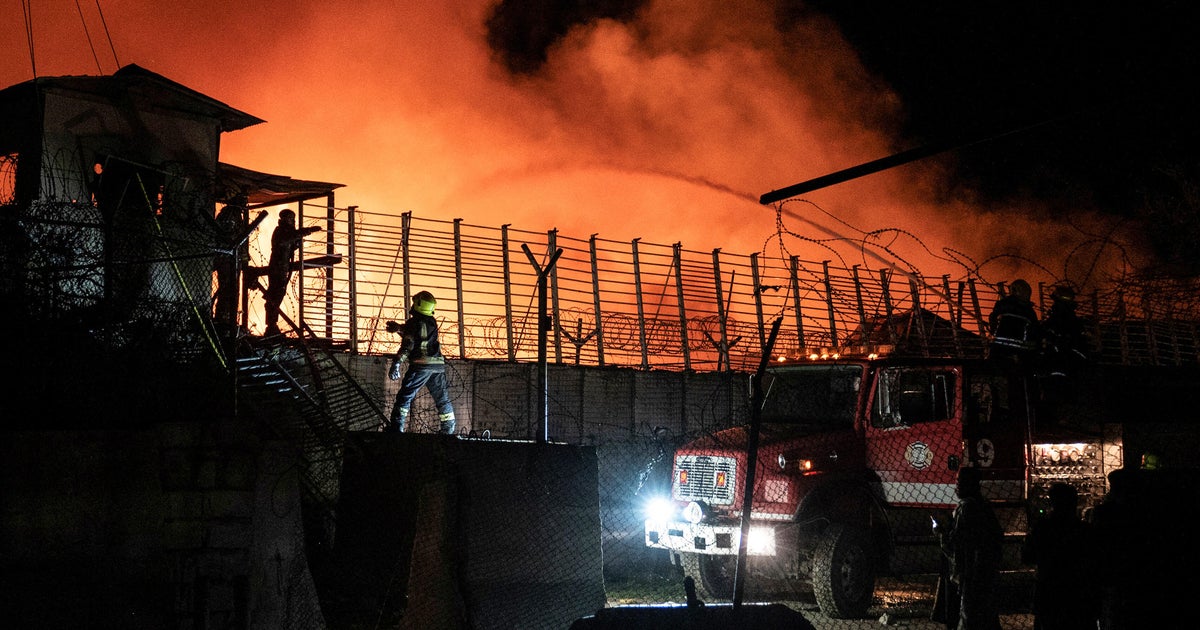
Sharafat Zaman, a spokesman for the Taliban’s Ministry of Public Health, told CBS News that the death toll could increase as rescue workers continue to recover bodies from the rubble. Videos shared with CBS News show the hospital engulfed in flames while firefighters and rescue teams worked to extinguish the blaze and evacuate victims.
Muhammad Ashraf, who was working at a nearby hospital, reported hearing several gunshots followed by two loud explosions.
Pakistan has firmly denied striking a medical facility, dismissing the Taliban’s allegations as “false claims.” Attaullah Tarar, Pakistan’s Minister of Information and Broadcasting, stated that Pakistan’s armed forces had “successfully carried out precision airstrikes” targeting “Afghan Taliban regime terrorism sponsoring military installations” in Kabul and Nangarhar provinces.
“Technical support infrastructure and ammunition storage facilities at two locations in Kabul were effectively destroyed,” Tarar said, adding that “visible secondary detonations after the strikes clearly indicate the presence of large ammunition depots.” However, the videos provided to CBS News did not appear to show secondary explosions following the initial blast.
The Omid hospital, which means “Hope” in translation, is a major rehabilitation center for drug addicts housed in a former NATO camp. The facility treats thousands of mostly young Afghans battling addiction, one of Afghanistan’s most severe social crises.
This latest incident marks a significant escalation in hostilities that began in late February. Pakistan has declared it is in an “open war” with Afghanistan, targeting what it claims are terrorist groups operating from Afghan territory. The conflict has intensified to the point where Pakistani jets have conducted multiple strikes in Kabul and other parts of Afghanistan.
The Taliban government has responded by accusing Pakistan of violating Afghan sovereignty and has launched drone strikes against Pakistani cities in retaliation. Last week, the United Nations Assistance Mission in Afghanistan (UNAMA) reported that at least four civilians were killed and 14 injured in a previous airstrike in Kabul.
In a statement released Tuesday, UNAMA expressed “deepest condolences to the families of those killed” in the latest strike on the drug rehabilitation hospital. The mission emphasized, “Under international law, all parties to a conflict must respect and protect the sick and wounded, medical personnel, hospitals and ambulances, and attacks on hospitals and civilian facilities are strictly prohibited.”
The UN agency also noted the mounting civilian toll, stating it had documented “at least 76 civilian deaths and 213 injuries in Afghanistan due to the hostilities” since February 26, not including Monday’s casualties.
Diplomatic efforts to resolve the crisis have seen mixed results. An earlier ceasefire brokered by Qatar collapsed in February. On Monday, China announced its special envoy has been traveling between Kabul and Islamabad to mediate between the two sides, urging an immediate ceasefire.
“China hopes Afghanistan and Pakistan will remain calm and exercise restraint, engage face to face ASAP, achieve a ceasefire at the earliest opportunity, and resolve differences and disputes through dialogue,” China’s Foreign Ministry spokesman stated on social media.
At the heart of the conflict are Pakistan’s allegations that armed groups, particularly Tehrik-e-Taliban Pakistan (TTP), are launching attacks on Pakistani territory from safe havens in Afghanistan. The Taliban government denies these accusations, insisting that the TTP is an internal Pakistani issue not connected to their administration.
Fact Checker
Verify the accuracy of this article using The Disinformation Commission analysis and real-time sources.

8 Comments
This is a concerning development, but the conflicting accounts make it hard to determine the facts. Thorough investigations will be needed to get to the truth of the matter.
The Taliban’s allegations of a Pakistani airstrike on an Afghan hospital are serious, but the lack of corroborating evidence makes it difficult to assess the credibility of their claims at this point.
This news highlights the ongoing challenges and instability in the region. I’ll be following developments closely to see if more details emerge about the alleged attack and its impact.
Yes, it’s a complex and volatile situation. Independent verification will be crucial to understanding what actually happened and who is responsible.
The loss of life at a drug rehabilitation center is tragic, if the reports are accurate. I hope the situation can be de-escalated through diplomatic channels between Pakistan and Afghanistan.
Tensions between Pakistan and Afghanistan remain high, and this incident could further escalate the situation. I’m curious to see how the international community responds and whether an independent inquiry is launched.
Airstrikes on medical facilities would be a grave violation of international law. I hope the reports of mass casualties can be properly investigated to establish the truth of what occurred.
This is a concerning situation if true. However, Pakistan denying the attack raises questions about the Taliban’s claims. More transparency and independent verification would be needed to determine the facts.