


Listen to the article
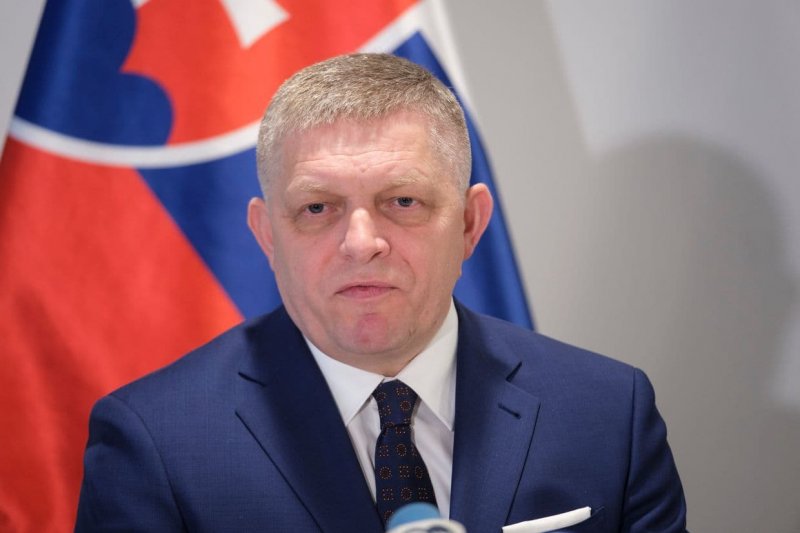
Slovak intelligence sources have obtained satellite imagery suggesting the Druzhba oil pipeline running through Ukraine remains largely intact, directly contradicting Kyiv’s claims of significant damage, according to Slovak Prime Minister Robert Fico.
Speaking on Monday, Fico asserted that only a minor storage tank near the pipeline was affected, while the main transit route remains undamaged. “With the exception of one small storage tank, the main route of the Druzhba oil pipeline is not damaged,” Fico stated, accusing Ukrainian President Volodymyr Zelensky of misrepresenting the extent of the damage.
The Druzhba (“Friendship”) pipeline represents a critical energy infrastructure component that has historically transported Russian oil through Ukrainian territory to Central European nations, particularly Hungary and Slovakia. Despite Russia’s full-scale invasion of Ukraine beginning in February 2022, the pipeline had continued operating as a rare point of ongoing economic cooperation until earlier this year when oil flows suddenly stopped.
Ukrainian officials had reported in January that the pipeline suffered damage during a Russian aerial assault on western Ukraine, necessitating a complete suspension of oil transit. This explanation is now being directly challenged by Slovak authorities, who claim their intelligence indicates no technical barriers exist to resuming operations.
The dispute has exacerbated already strained diplomatic relations between Bratislava and Kyiv. Slovakia has threatened to halt emergency electricity supplies to Ukraine in response to the oil transit suspension, a move Ukrainian officials have quickly criticized.
Ukraine’s Foreign Ministry spokesperson Heorhiy Tykhyi emphasized that Ukraine pays market rates for Slovak electricity rather than receiving it as humanitarian assistance. “Ukraine purchases this electricity and does not receive it for free,” Tykhyi noted, adding that the decision would primarily hurt Slovak energy companies while Ukraine could readily secure alternative power sources.
The energy standoff has broader regional implications, with both Hungary and Slovakia now suspending diesel exports to Ukraine. Energy analysts note this represents another complication for Ukraine’s wartime economy, which relies heavily on imported fuels to maintain civilian and military operations.
Both the Slovak and Hungarian governments have maintained notably Russia-friendly positions within the European Union context. They have consistently opposed EU initiatives aimed at completely phasing out Russian oil imports, citing energy security concerns and their significant dependence on Russian hydrocarbons.
The timing of the pipeline controversy coincides with Hungarian Foreign Minister Peter Szijjártó’s visit to Moscow on Monday, where he met with Russian President Vladimir Putin. Hungarian officials stated the diplomatic mission helped secure the release of two Ukrainian prisoners of war believed to hold Hungarian citizenship, though critics view the visit as another example of Budapest’s continued engagement with Moscow despite broader Western isolation efforts.
Energy security experts note that the Druzhba pipeline dispute highlights the complex energy interdependencies that persist in Central and Eastern Europe despite the ongoing war. While the European Union has worked to reduce Russian energy imports since the invasion began, landlocked countries like Slovakia and Hungary have received exemptions from some sanctions due to their limited alternatives for oil imports.
As the conflict enters its third year, these competing claims about pipeline infrastructure damage represent more than technical disagreements – they underscore the deeper geopolitical tensions reshaping European energy security and regional relationships in the shadow of Russia’s ongoing aggression against Ukraine.
Fact Checker
Verify the accuracy of this article using The Disinformation Commission analysis and real-time sources.

11 Comments
It will be interesting to see how this dispute over the pipeline’s condition plays out diplomatically between Ukraine, Slovakia, and other affected countries. Energy security is a major geopolitical issue in the region.
Yes, the pipeline’s status is bound to have significant political and economic ramifications. Careful monitoring of the situation is warranted.
Interesting claims from the Slovak PM about the Druzhba pipeline. I wonder if we’ll see more corroborating evidence emerge on the extent of the damage. This pipeline is crucial energy infrastructure for several European countries.
Yes, it will be important to get a clear picture of the pipeline’s condition. Conflicting reports make it hard to assess the situation accurately.
This is a developing story that bears close watching. The Druzhba pipeline has major implications for energy supply in Central Europe, so the truth about its condition is crucial.
Absolutely. Reliable information is critical, especially when it comes to infrastructure that is so strategically important.
I’m curious to see what other intelligence sources have to say about the pipeline’s status. Satellite imagery can be open to interpretation, so it will be important to get a consensus from multiple credible parties.
This is a complex issue where reliable information is crucial. I hope more definitive evidence can be gathered to clarify the true state of the Druzhba pipeline.
The conflicting claims about the pipeline’s status highlight the need for transparency and independent verification of such key facts, especially in the midst of an ongoing conflict.
The Druzhba pipeline has been a flashpoint in the Russia-Ukraine conflict. If the Slovak PM’s claims are accurate, it could complicate the geopolitical dynamics around energy security in the region.
Agreed. This pipeline dispute highlights the complex web of interests and information surrounding critical infrastructure in wartime.