


Listen to the article
Singapore Water Filter Company Penalized for Misleading Marketing Claims
Singapore water filtration company AOX has been sanctioned by the Competition and Consumer Commission of Singapore (CCS) for making false and misleading claims in its marketing materials, according to a statement released by the regulatory body on March 31.
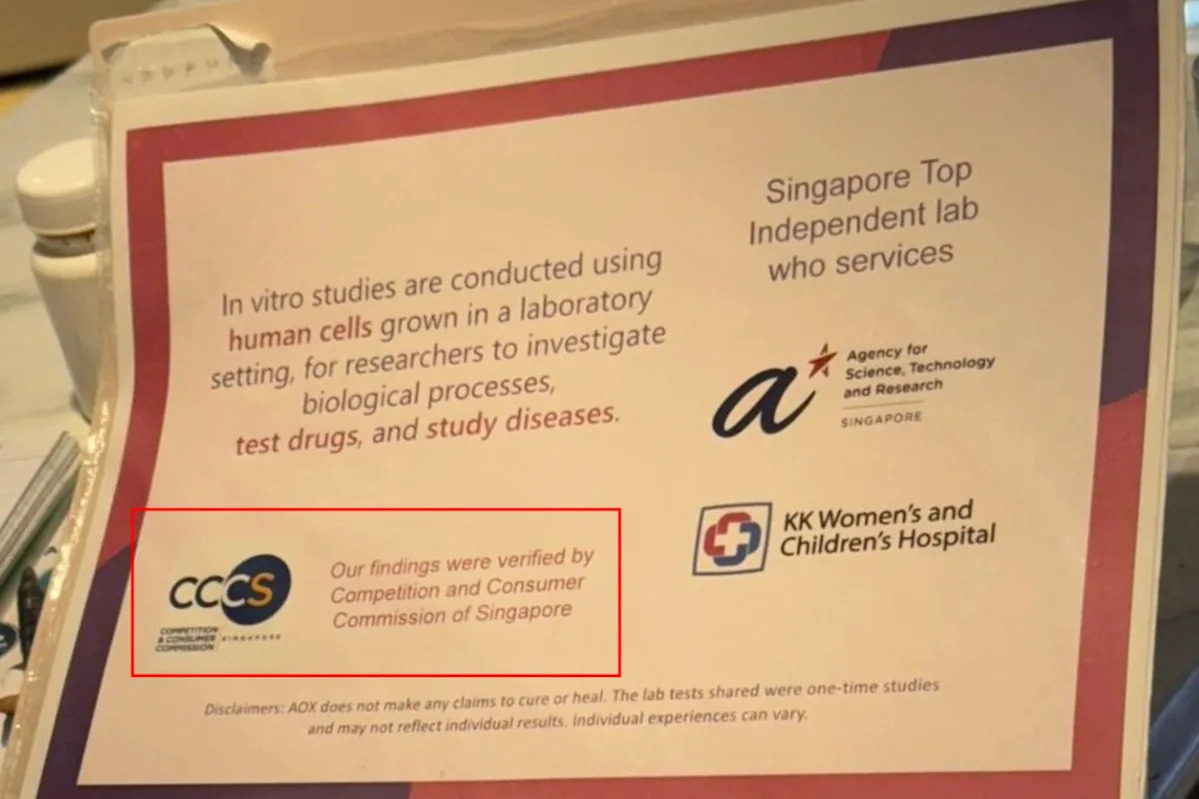
Investigations revealed that AOX had improperly displayed the CCS logo at its physical retail outlets alongside statements falsely suggesting that the watchdog had verified the company’s product findings.
“This statement was false and misleading; CCS had not verified any of the findings claimed by AOX,” the regulator stated. The commission emphasized that misuse of its official logo constitutes both an unfair trade practice and a legal offense under Singapore’s consumer protection framework.
AOX has acknowledged the violation and agreed to cease using the CCS logo immediately. As part of the settlement, the company will also refrain from engaging in similar misleading practices in the future and will publish clarifications on its website and in its physical retail locations.
CCS Chief Executive Alvin Koh took a strong position on the matter, stating, “We take a firm stance against misleading marketing practices. CCS does not accredit businesses and did not review or verify AOX’s findings as claimed in this case.” He further cautioned that “representations that CCS has verified any product-related claims when this was not done is an unfair trade practice as it misleads consumers.”
The water filtration market in Singapore has grown increasingly competitive in recent years, with consumers becoming more concerned about water quality and health benefits. This environment has led to aggressive marketing tactics as companies vie for market share, industry analysts note.
This case highlights the growing problem of companies misrepresenting endorsements from government bodies or regulatory agencies to boost consumer confidence in their products. Such practices can significantly distort market competition by conferring unearned credibility to certain products over others.
Melvin Yong, president of the Consumers Association of Singapore (CASE), addressed the issue in a Facebook post on March 31, stating that “the enforcement action taken by CCS sends a clear signal to businesses that misleading marketing practices will not be tolerated.”
Yong emphasized that consumers typically associate official logos and endorsements with credibility and quality. “When companies misuse these signals, it undermines consumer trust and distorts their ability to make informed choices,” he noted.
Consumer protection advocates have pointed out that water filtration products often make health-related claims that can be difficult for average consumers to verify independently, making official endorsements particularly influential in purchase decisions.
CASE has pledged to continue working closely with CCS to ensure businesses maintain transparency and truthfulness in their marketing approaches. The association has encouraged vigilance among consumers regarding product claims and endorsements.
The incident serves as a reminder to businesses across sectors about the importance of truthful marketing and the potential consequences of misrepresenting regulatory approvals or endorsements. Regulatory authorities have been increasing scrutiny of such practices across various industries in Singapore.
Consumers who encounter unfair trade practices are encouraged to report them to CASE at 6277-5100 or through their online complaint portal. Additionally, false or misleading advertisements can be reported to the Advertising Standards Authority of Singapore at 6461-1888 or via their website.
As Singapore continues to strengthen its consumer protection framework, regulatory bodies appear increasingly willing to publicly name companies that violate marketing standards, creating both legal and reputational consequences for non-compliance.
Fact Checker
Verify the accuracy of this article using The Disinformation Commission analysis and real-time sources.

8 Comments
Misuse of official logos is a serious offense that erodes public trust. The Singapore watchdog deserves praise for taking decisive action against AOX’s misleading marketing tactics. Responsible businesses should learn from this case.
False marketing claims like these undermine consumer trust. I’m glad the regulator took swift action to penalize AOX and force them to correct the record. Responsible businesses should always strive for transparency and honesty in their marketing.
Agreed. Misusing official logos is a serious offense that erodes public confidence. Kudos to the Singapore watchdog for holding AOX accountable.
Water filtration is an important health issue, so it’s troubling to see a company making unsubstantiated claims. I’m glad the authorities stepped in to hold AOX accountable and protect consumers. Transparency and honesty must be the industry standard.
False advertising is unethical and has no place in a well-functioning marketplace. The Singapore regulator’s crackdown on AOX’s deceptive claims sends a clear message that such behavior will not be tolerated. Consumer protection should be the top priority.
This is a cautionary tale for any company trying to game the system through deceptive marketing. The Singapore regulator took the right approach in swiftly penalizing AOX and forcing them to correct the record. Integrity should be paramount.
It’s disappointing to see a water filter company resorting to misleading tactics. Consumers deserve accurate information to make informed purchasing decisions. Hopefully this case serves as a wake-up call for the industry.
Absolutely. False advertising harms both consumers and reputable businesses that play by the rules. Strict enforcement is key to maintaining a fair marketplace.