


Listen to the article
#
Senator Ossoff Challenges DNI Gabbard on Trump’s Iran War Justification
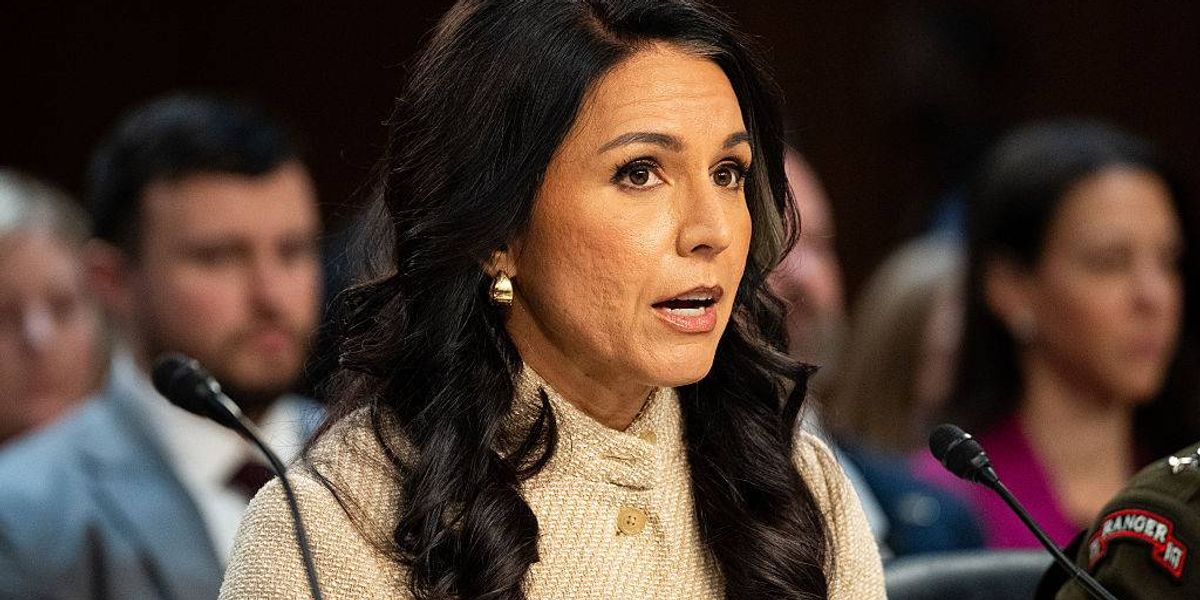
In a tense exchange during Wednesday’s Senate Select Intelligence Committee hearing, Senator Jon Ossoff (D-Ga.) pressed Director of National Intelligence Tulsi Gabbard about former President Donald Trump’s claims that Iran posed an “imminent” nuclear threat to U.S. national security—the stated justification for recent military action.
The confrontation began when Ossoff referenced Gabbard’s pre-hearing statement, which asserted that “Iran’s nuclear enrichment program was obliterated” by U.S. airstrikes conducted last year.
“So the assessment of the intelligence community is that Iran’s nuclear enrichment program was obliterated by last summer’s airstrikes?” Ossoff asked.
“Yes,” Gabbard confirmed.
The Georgia senator then noted that Gabbard’s statement had also claimed “there has been no effort since then to try to rebuild their enrichment capability,” which she again confirmed.
This acknowledgment set up the central contradiction Ossoff sought to highlight. He cited a March 4 White House statement describing the military campaign as an effort “to eliminate the imminent nuclear threat posed by the Iranian regime.”
“Was it the assessment of the intelligence community that there was an imminent nuclear threat posed by the Iranian regime?” Ossoff asked pointedly.
After a brief pause, Gabbard sidestepped the direct question, stating instead that “the intelligence community assessed that Iran maintained the intention to rebuild and to continue to grow their nuclear enrichment capabilities.”
Unsatisfied with this response, Ossoff interrupted, repeating his question about whether the intelligence community had determined Iran posed an “imminent nuclear threat.”
Gabbard’s response—”Senator, the only person who can determine what is or is not an imminent threat is the president”—drew an immediate rebuke from Ossoff.
“False,” the senator countered. “This is the worldwide threats hearing where you present to Congress national intelligence… you’ve stated today that the intelligence community’s assessment is that Iran’s nuclear enrichment program was ‘obliterated,’ and that there ‘had been no efforts since then to try to enrich their capability.'”
The exchange highlights ongoing tensions between congressional oversight and executive authority in matters of national security. It also raises questions about the factual basis for military actions taken against Iran and the role intelligence assessments play in justifying such decisions.
Gabbard, who before joining the Trump administration had frequently advocated against regime change wars in Iran, appeared to be in the difficult position of defending administration policy while maintaining her credibility as an intelligence official.
The hearing comes amid heightened scrutiny of U.S.-Iran relations and broader questions about the threshold for military intervention. Iran has long been a focal point of U.S. foreign policy, with concerns about its nuclear ambitions dating back decades. International monitoring organizations have provided varying assessments of Iran’s nuclear capabilities in recent years.
The pointed questioning also underscores the committee’s role in providing oversight of intelligence matters and ensuring that military actions are based on accurate threat assessments rather than political considerations.
As the hearing continued, the exchange between Ossoff and Gabbard illustrated the broader debate about transparency in national security decisions and the extent to which intelligence assessments should inform—and potentially constrain—presidential decision-making on matters of war and peace.
The committee is expected to continue its examination of worldwide threats in subsequent sessions, with particular focus on ensuring that intelligence assessments remain independent from political pressure.
Fact Checker
Verify the accuracy of this article using The Disinformation Commission analysis and real-time sources.

16 Comments
This exchange is a good example of the vital role of congressional oversight in holding the executive branch accountable. Rigorous questioning and probing of claims is essential to ensure the integrity of national security decision-making.
Agreed. Robust checks and balances between the branches of government are a cornerstone of American democracy, especially on issues of war and peace.
Interesting exchange. It’s important to scrutinize claims about ‘imminent’ nuclear threats, especially given the history of dubious justifications for military action. Careful analysis of the intelligence is crucial to avoid repeating past mistakes.
Agreed. Transparency and accountability around these critical national security decisions is paramount.
This exchange highlights the need for the intelligence community to maintain strict impartiality and independence, free from political influence or pressure. Their credibility and the integrity of their assessments are paramount.
Absolutely. The American people must be able to trust that our intelligence agencies are providing objective, nonpartisan analysis to policymakers, not simply validating predetermined narratives.
The confrontation between the senator and DNI Gabbard underscores the need for the intelligence community to maintain strict independence and objectivity, free from political influence or pressure. Credibility is paramount in their crucial role.
Well said. The American people deserve an intelligence apparatus that is scrupulously nonpartisan and focused solely on providing the facts, no matter the political implications.
This exchange highlights the importance of rigorous fact-checking and avoiding overstated or politicized claims, especially on matters of national security. Nuanced, evidence-based analysis should guide policymaking, not hyperbole.
Absolutely. Sober, impartial assessment of intelligence is vital to ensure sound decision-making and avoid dangerous miscalculations.
Hmm, the apparent contradiction between the White House’s and DNI’s statements is concerning. I hope they can reconcile the facts and provide a clear, consistent account of the current status and threat level of Iran’s nuclear capabilities.
Good point. Conflicting narratives from the administration undermine public trust. Transparency is crucial for informed debate on these critical issues.
The apparent discrepancy between the White House and intelligence community’s assessments is concerning. I hope they can reconcile the facts and provide the public with a clear, consistent picture of the situation. Transparency is key.
Yes, clarity and consistency from our government on crucial national security matters is critical. The American people deserve an unvarnished, fact-based account to inform the public discourse.
This highlights the need for rigorous, fact-based policymaking when it comes to complex geopolitical issues like Iran’s nuclear program. I’m glad to see senators pushing for clarity and pushing back on potentially misleading claims.
Yes, it’s refreshing to see robust oversight and scrutiny of the intelligence community’s assessments on sensitive matters like this.