


Listen to the article
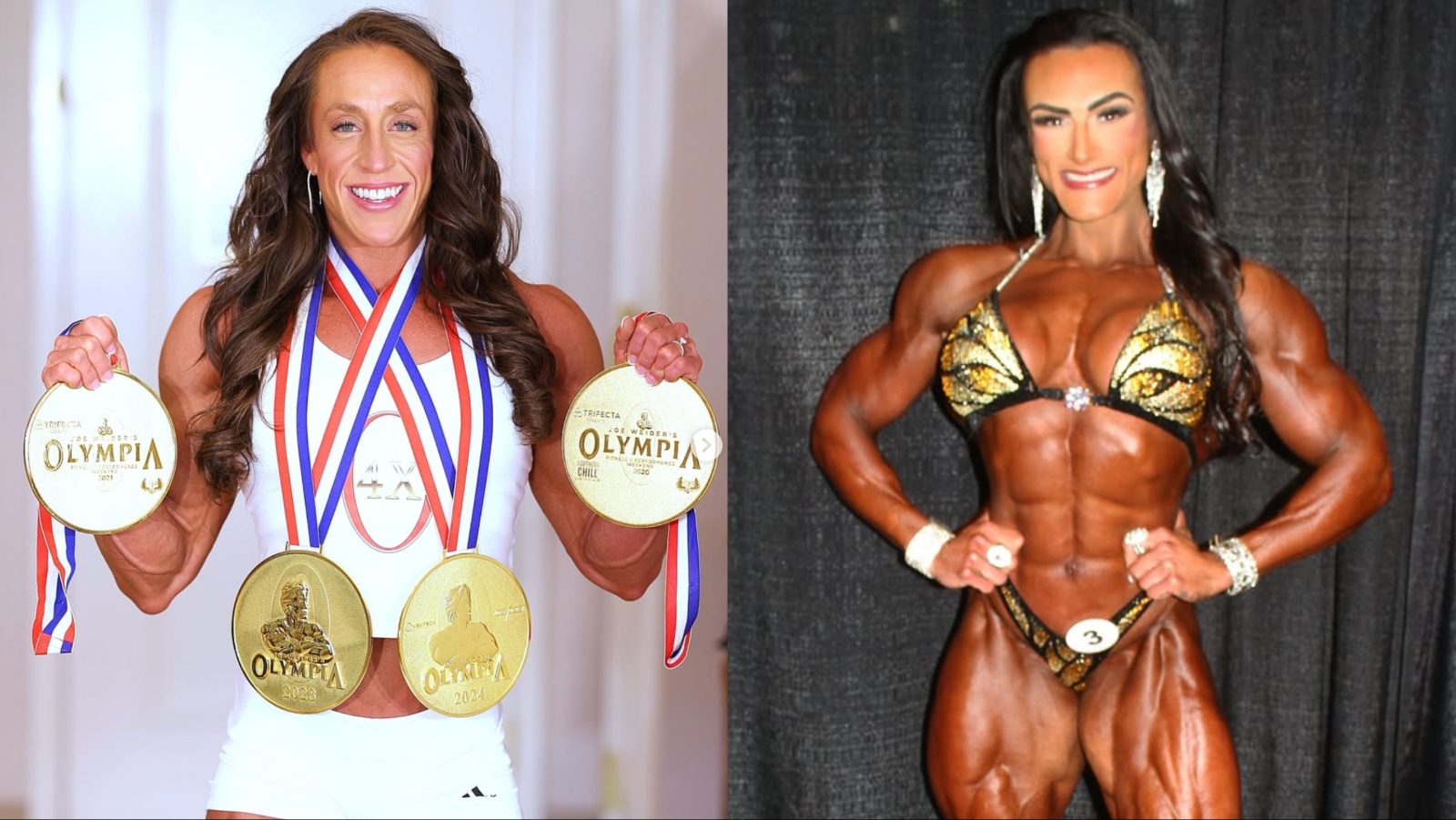
Former Olympia champion Sarah Villegas has vigorously defended herself against claims that she made baseless accusations regarding competitor Natalia Coelho’s alleged use of PMMA, a permanent synthetic filler, to enhance her physique.
The controversy stems from the 2025 Mr. Olympia competition, where Coelho defeated Villegas in the Women’s Physique category to secure her second consecutive title. Following the loss, Villegas publicly referred to Coelho as an “OIL-ympia” champion, suggesting her rival had used site enhancements rather than legitimate muscle to achieve her impressive quad development.
Industry figures Bob Cicherillo and Shawn Ray quickly denounced Villegas, accusing her of conducting a “smear campaign” against Coelho. They emphasized that technically, PMMA use does not constitute cheating under current competition rules.
In her recent statement, Villegas provided a detailed timeline to counter these accusations. She revealed that a medical professional with direct connections to a PMMA clinic in Brazil had approached her with confidential information, including specific dates of alleged procedures. Rather than making this information public, Villegas claims she exercised restraint and shared it privately with appropriate industry officials.
“I limited my public comments to avoid collateral damage and to prevent implicating multiple athletes and connected individuals,” Villegas stated. “Despite continued public pressure to release information, that information was responsibly kept private and remains private today.”
Villegas further challenged the narrative that her comments were simply a response to losing the Olympia, pointing out that she had raised concerns about site enhancements publicly on July 24, 2025, shortly after the Pittsburgh Pro—three months before the Olympia competition.
She alleges that after sharing information confidentially, “a coordinated narrative began to emerge from multiple individuals speaking with institutional authority, and with access to internal information” in an apparent effort to discredit her claims.
“When individuals who speak with institutional authority advance false statements, those statements are understood as fact, not opinion. That was not a misunderstanding. It was a choice,” her statement read.
The controversy has broader implications for bodybuilding, as PMMA use allegations have extended beyond Coelho. Similar rumors have circulated about reigning two-time Mr. Olympia champion Derek Lunsford, though his coach, Chris Aceto, has firmly denied these claims.
The bodybuilding community remains divided on the issue. While PMMA use is not explicitly prohibited by competition rules, many purists consider it a form of cheating that undermines the sport’s integrity. The synthetic filler allows athletes to permanently enhance specific muscle groups, potentially creating an uneven playing field in a sport already scrutinized for performance enhancement issues.
This controversy highlights the ongoing challenges facing competitive bodybuilding regarding regulation, fairness, and the definition of natural muscle development. As the sport continues to evolve, the debate around acceptable enhancement methods versus those considered unethical will likely intensify.
Industry insider Jose Raymond has also weighed in on the controversy, harshly criticizing Villegas by describing her as looking like “a spoiled brat” in her response to the situation. Meanwhile, respected coach Dennis James has publicly dismissed the PMMA claims against Lunsford, further complicating the narrative.
The 2025 Mr. Olympia competition, intended to showcase the pinnacle of physical development and athletic achievement, now finds itself overshadowed by accusations and counter-accusations that threaten to undermine public confidence in the judging and competitive integrity of the sport’s premier event.
Fact Checker
Verify the accuracy of this article using The Disinformation Commission analysis and real-time sources.

11 Comments
It’s good to see Villegas providing a detailed response to counter the industry’s accusations. Transparency and accountability are important, even if the rules are ambiguous. This debate highlights the need for the sport to continually review and update its regulations.
It’s good to see Villegas providing a detailed response to the industry’s accusations. Transparency and accountability are important, even if the current rules are ambiguous. This debate underscores the need for the sport to continually review and update its regulations to maintain fairness.
Interesting controversy over the alleged PMMA use in bodybuilding. I can understand both sides’ perspectives – Villegas’ desire for fairness, and the industry’s stance on current rules. It’ll be fascinating to see how this plays out and what, if any, changes come from it.
Yes, the rules around performance-enhancing substances can be murky. Villegas seems to be taking a principled stand, but the industry’s defense of the status quo is understandable as well.
This is a complex issue with valid arguments on both sides. While Villegas’ claims may have merit, the industry’s position that PMMA use doesn’t violate current rules is also reasonable. Ultimately, clear and enforceable rules will be key to ensuring fair competition.
Agreed. The sport needs to find a balance between protecting athletes’ privacy and ensuring a level playing field. Hopefully this controversy leads to constructive dialogue and policy changes if warranted.
This is a tricky situation without easy answers. I can sympathize with Villegas’ desire for fairness, but the industry’s position on the current rules also has merit. Ultimately, the sport needs clear, enforceable policies to protect the integrity of competition.
Agreed. Navigating the nuances of performance-enhancing substances is challenging, but the goal should be creating a level playing field for all athletes. Hopefully this controversy leads to productive discussions and policy improvements.
While the industry figures may technically be correct about the rules, Villegas raises valid concerns about the integrity of the sport. Ultimately, the onus is on the governing bodies to ensure fair competition, even if that means revisiting and updating the regulations.
This is a complex issue that highlights the need for clear, enforceable rules in the sport of bodybuilding. Both Villegas and the industry figures make reasonable points, but the priority should be protecting the fairness and integrity of the competitions.
Absolutely. The sport needs to strike a balance between respecting athletes’ privacy and ensuring a level playing field. Hopefully this controversy leads to productive discussions and policy changes that benefit all competitors.