


Listen to the article
Fact-checking Trump’s Board of Peace Speech in Davos
Donald Trump made several notable claims about his economic record while speaking at the Board of Peace signing ceremony in Davos, where he repeated his assertion about ending eight wars during his administration. However, a closer examination of his economic statements reveals several inaccuracies and exaggerations.
The president’s inflation claims departed significantly from official economic data. Trump stated, “The US economy is booming with virtually no inflation. It was 1.2% for the last three months and we inherited the worst inflation in the history of our country.”
Official figures tell a different story. According to the latest data, prices rose 2.7% in the 12 months to December 2025. While inflation has decreased from 3% in January last year, it remains above the Federal Reserve’s target of 2%.
The historical context further contradicts Trump’s claim about inheriting the “worst inflation in history.” The highest recorded inflation rate in US history was 23.7% in 1920, substantially higher than what his administration faced upon taking office. This mischaracterization appears to be an attempt to dramatize economic conditions for political effect.
On economic growth, Trump proclaimed, “We have economic growth now of 5.4%.” This figure doesn’t align with the most recent official data, which shows US GDP grew at an annual rate of 4.3% in the third quarter of 2025.
The 5.4% figure Trump cited likely comes from a forecast by the Federal Reserve Bank of Atlanta, which uses modeling to predict growth for the final quarter of 2025. It’s worth noting this is merely a projection, not confirmed economic data, and represents just one institution’s outlook rather than official government statistics.
Perhaps the most ambitious claim came when Trump declared, “We have secured commitments for over $18 trillion [of] new investment.” This statement lacks verifiable evidence in the public record. The White House’s own investment tracker website, last updated in November, places the total at $9.6 trillion – roughly half the figure Trump claimed in his speech.
Economic experts have expressed skepticism about even the lower official figure. Greg Auclair, a statistician at the respected Peterson Institute for International Economics, noted that the White House tracker “includes pledges that may not materialize.” This suggests the actual investment numbers could be considerably lower than both Trump’s claim and the official government figure.
These discrepancies follow a pattern of economic hyperbole that has characterized Trump’s communications throughout his presidency. While the US economy has shown resilience in certain areas, the president’s tendency to inflate figures and present forecasts as established facts creates a distorted picture of economic performance.
Financial markets and international investors closely watch these statements, as they can impact confidence and decision-making. Inaccurate economic claims from the president have the potential to create false expectations among businesses and consumers about the true state of the American economy.
As global leaders gathered in Davos to discuss international cooperation and economic stability, fact-checkers and economic analysts continue to play a crucial role in providing context and corrections to presidential statements on the economy, helping to separate rhetoric from economic reality.
Fact Checker
Verify the accuracy of this article using The Disinformation Commission analysis and real-time sources.

10 Comments
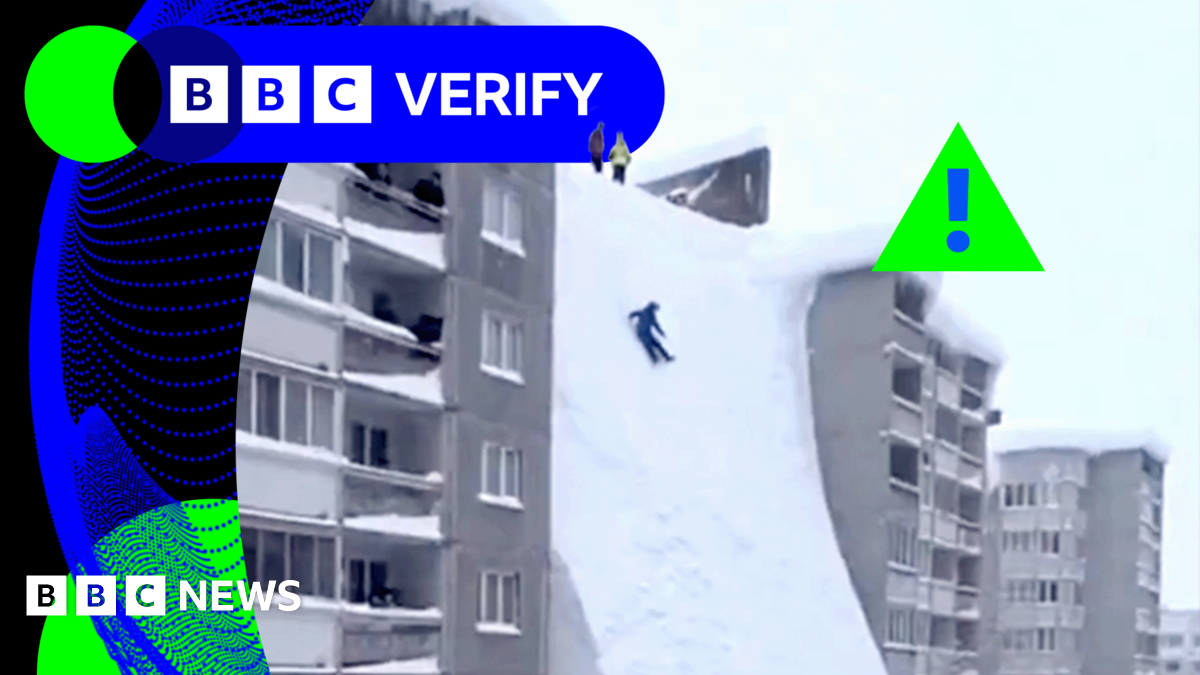
I’m curious to learn more about the motivations behind creating these fake Russian snow wall videos. Were they intended as a harmless prank, or was there a more sinister purpose? It’s concerning to see the spread of disinformation, even about seemingly trivial topics.
Valid question. Understanding the intent behind these types of fabrications can provide valuable insights. While the snow walls may seem harmless, the erosion of trust in media and information sources is a serious issue that deserves attention.
The BBC’s investigation and debunking of the Russian snow wall videos is a good reminder of the importance of critical thinking and fact-checking in the digital age. It’s all too easy for misinformation to spread quickly, so it’s reassuring to see reputable sources like the BBC working to combat it.
Absolutely. Maintaining a healthy skepticism and verifying claims, even about seemingly innocuous topics, is crucial. The proliferation of AI-generated content makes this task increasingly challenging, but efforts like this BBC investigation are important steps in the right direction.
Interesting to see the BBC debunk these Russian snow wall videos as AI-generated. It’s important to fact-check claims, especially ones that seem too outlandish to be true. I wonder what the motivations were behind creating these fake videos.
Yeah, it’s good they were able to verify the videos were computer-generated and not real. Spreading disinformation, even about something as seemingly innocuous as a snow wall, can be problematic and erode public trust.
This is a good example of how important it is to be vigilant about the information we consume online. It’s all too easy for fabricated content to go viral these days. I’m glad the BBC was able to investigate and expose these Russian snow wall videos as AI-generated.
Agreed. With the rise of deepfakes and other advanced AI-generated content, fact-checking has become crucial. It’s encouraging to see reputable media outlets like the BBC taking the time to thoroughly investigate and debunk misinformation.
It’s concerning to see the creation and spread of these AI-generated Russian snow wall videos. While they may seem harmless, they contribute to the larger problem of disinformation and the erosion of trust in media and information sources. I’m glad the BBC took the time to investigate and expose them as fabrications.
I agree. Even small instances of misinformation, like these snow wall videos, can have broader implications for how we consume and evaluate information online. Fact-checking and media literacy are vital skills in the digital age.