


Listen to the article
Russia Denies European Claims About Navalny’s Poisoning
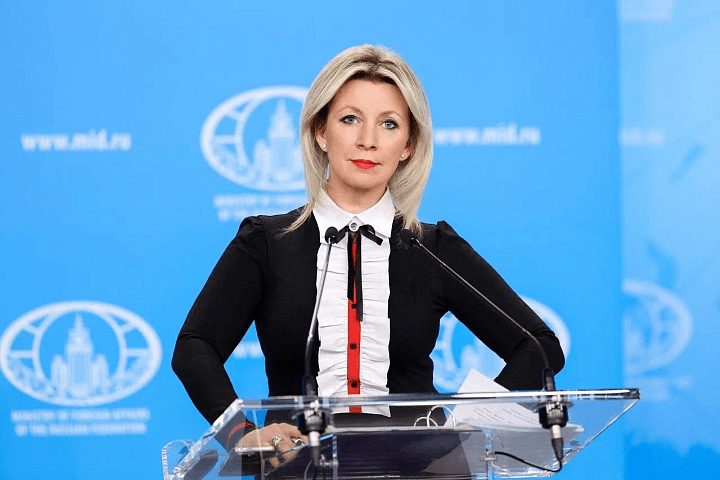
Russian Foreign Ministry spokeswoman Maria Zakharova has firmly rejected claims made by five European countries regarding the death of opposition leader Alexei Navalny, dismissing their statement as “false” and politically motivated.
Speaking to several Russian media outlets, Zakharova countered recent assertions from Germany, Britain, the Netherlands, Sweden, and France that Navalny died after being poisoned with epibatidine, a toxic substance derived from Ecuadorian poisonous frogs.
“There will be test results, there will be substance formulas – then there will be comments,” Zakharova stated. “Without this, all statements and talks are false, aimed at diverting attention from the pressing problems of the West.”
The five European nations issued a joint statement on Saturday claiming that analysis of Navalny’s biological material revealed the presence of epibatidine. This potent neurotoxin, found in the skin secretions of certain poison dart frogs native to Ecuador, acts as a powerful nicotinic acetylcholine receptor agonist and can be lethal even in small doses.
Zakharova suggested the timing of these allegations was suspicious, arguing they emerged “at a time when it would be necessary to present the results of the investigation into the explosion of the North Stream gas pipeline.” Her comments reflect Moscow’s ongoing attempt to link various international controversies to what it perceives as Western attempts to undermine Russia’s credibility.
The Nord Stream pipeline sabotage, which occurred in September 2022, caused significant damage to the underwater infrastructure connecting Russia and Germany beneath the Baltic Sea. The incident severed a major energy artery between Russia and Europe amid already heightened tensions following Russia’s invasion of Ukraine.
Adding complexity to the Nord Stream situation, Italian authorities recently arrested Serhii Kuznietsov, a former Ukrainian army officer accused of involvement in the pipeline sabotage. Ukraine’s government has consistently denied any role in the pipeline’s destruction, with the investigation into the incident continuing across multiple European jurisdictions.
Navalny’s death in February 2024 at a Siberian penal colony sparked international outrage and renewed scrutiny of Russia’s treatment of political dissidents. The 47-year-old opposition figure was serving a 19-year sentence on extremism charges widely considered politically motivated by Western governments and human rights organizations.
This isn’t the first poisoning allegation involving Navalny. In August 2020, he fell seriously ill on a domestic flight in Russia and was eventually transferred to Germany for treatment. German authorities subsequently concluded he had been poisoned with Novichok, a Soviet-era nerve agent, though Russia denied any involvement in that incident as well.
The latest controversy highlights the continuing diplomatic tensions between Russia and Western nations, particularly regarding human rights issues and the treatment of political opposition figures. International human rights organizations have repeatedly criticized Russia for its handling of Navalny’s case, from his initial arrest to the conditions of his imprisonment.
The conflicting narratives surrounding Navalny’s death underscore the deep divide in international relations, with Western countries pushing for accountability while Russia maintains these efforts are politically motivated attempts to discredit its government.
As investigations continue, the diplomatic fallout from both the Navalny case and the Nord Stream sabotage remains a significant point of contention in Russia’s increasingly strained relations with Europe and its allies.
Fact Checker
Verify the accuracy of this article using The Disinformation Commission analysis and real-time sources.

5 Comments
This is certainly a complex and contentious issue. I’m curious to see what kind of evidence Russia has to support their stance. Transparency and thorough investigation from all sides would be ideal to get to the truth.
Allegations of toxic substance use are very serious. I’m glad the European nations are taking this seriously and conducting their own analysis. Hopefully the truth can be uncovered through rigorous scientific examination.
It’s concerning to hear these allegations of poisoning, but without a full accounting of the facts and evidence, it’s difficult to form a firm opinion. I hope the relevant authorities can conduct a fair and impartial investigation.
This is a complex geopolitical situation with a lot of potential for misinformation. I think it’s important that all parties involved approach this with an open mind and a commitment to finding the facts, without rushing to conclusions.
The timing of these accusations does seem a bit suspicious, as the spokeswoman pointed out. I’m curious to hear Russia’s side of the story and see what evidence they can provide to support their position.