


Listen to the article
Agriculture Secretary Francisco Tiu Laurel issued a stern warning this week to critics making what he describes as unfounded claims against the Department of Agriculture, signaling a more aggressive approach to defending the agency’s reputation amid ongoing food price concerns.
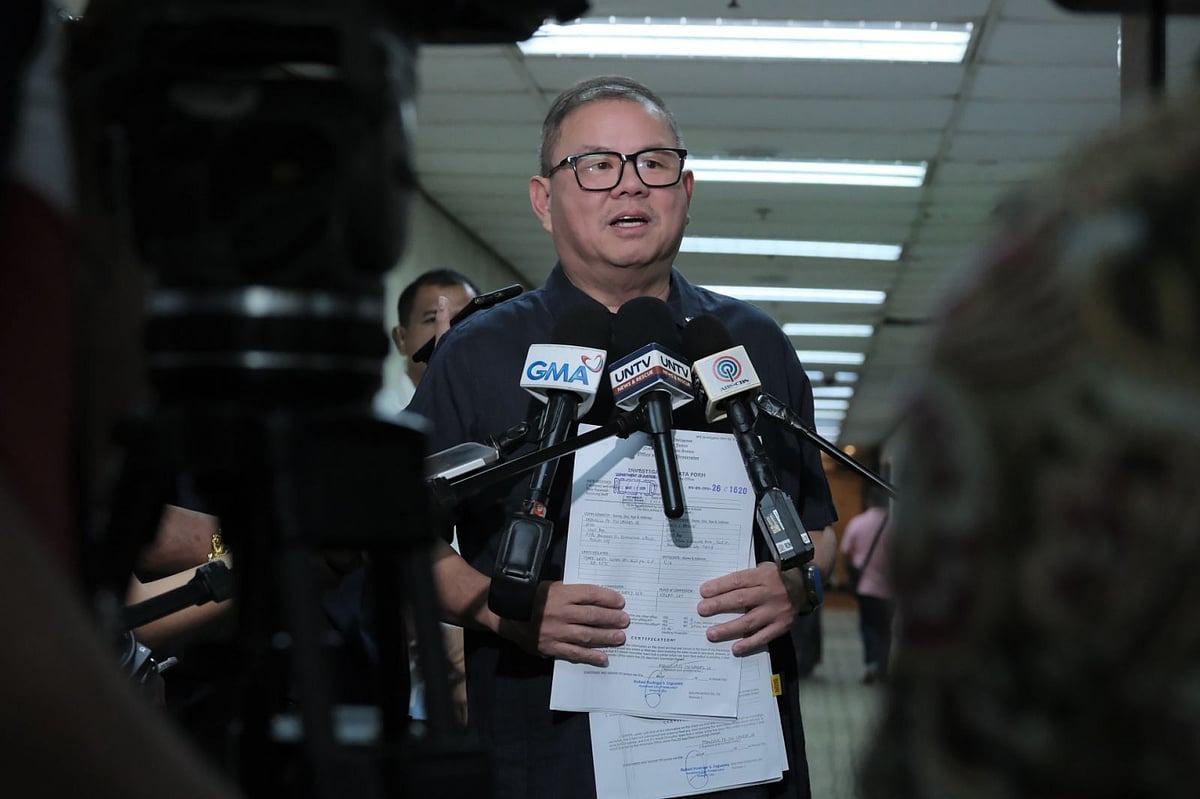
“This is also, in a way, a reminder to everybody: tell the truth,” Tiu Laurel said during a press briefing, where he addressed recent criticisms of the department’s operations. “If you plan to malign us in the DA, make sure there is at least some basis in fact—not pure fabrication.”
The agriculture chief, who took office last year amid rising food inflation concerns, emphasized that while the department welcomes public scrutiny, allegations must be supported by evidence. He noted that he does not consider himself litigious by nature but suggested that legal action could follow when claims cross into territory that undermines public confidence in government institutions.
Tiu Laurel specifically addressed accusations from an unnamed farmers’ group regarding the operations of Food Terminal Inc. (FTI) and Planters Products Inc. (PPI), two government-affiliated corporations that have been instrumental in the administration’s efforts to stabilize rice prices. Both entities have been tasked with helping distribute more affordable rice options to consumers as part of the government’s food security program.
“All those allegations are wrong, so we may consider legal action so the truth can come out,” he stated, though he did not elaborate on the specific claims made against the two corporations.
FTI, a government-owned company that operates a major food distribution hub in Taguig City, and PPI, which focuses on agricultural input distribution, have become increasingly important players in the government’s strategy to manage food prices. Their heightened role comes as the Philippines continues to grapple with inflation, particularly in essential food items like rice, which remains a politically sensitive commodity.
The Secretary questioned the credibility of the farmers’ group behind the allegations, pointing out that their public statement lacked signatures or clear attribution. “When you make accusations without identifying yourself, it raises serious questions about the reliability of your information,” he remarked.
Industry observers note that Tiu Laurel’s firmer stance reflects growing pressure on the agriculture department to deliver results on food price stability. The Philippines, which remains one of the world’s largest rice importers, has faced persistent challenges in balancing affordable prices for consumers with fair returns for local farmers.
Rice prices have been particularly volatile in recent years due to global supply chain disruptions, extreme weather events affecting domestic production, and fluctuations in international market prices. The government has implemented various measures, including increased imports and retail price caps, to mitigate these issues.
The agriculture department’s more assertive approach to countering what it considers misinformation comes at a critical time for Philippine food security policy. Analysts suggest that maintaining public confidence in government food programs is essential for their success, particularly as the administration navigates complex trade-offs between consumer affordability and supporting domestic agriculture.
The tension between government agencies and agricultural advocacy groups is not new in the Philippines, where farming remains a significant sector of the economy yet faces persistent challenges including infrastructure limitations, climate vulnerability, and competition from imports.
As the Department of Agriculture continues its work to stabilize food prices and improve agricultural productivity, Tiu Laurel’s warning signals that defending the agency’s reputation has become a priority alongside its core mission of ensuring food security for the nation’s more than 110 million citizens.
Fact Checker
Verify the accuracy of this article using The Disinformation Commission analysis and real-time sources.

14 Comments
This is a complex issue with competing interests at play. On one hand, the public has a right to scrutinize government agencies. On the other, malicious falsehoods can erode confidence. I’m curious to see how this plays out.
You raise a fair point. It’s a delicate balance between legitimate oversight and unsubstantiated claims. The prosecutor seems determined to defend the agency’s reputation, but will need to do so carefully.
While I sympathize with the prosecutor’s concerns, I worry that threats of legal action could have a chilling effect on legitimate public discourse. Constructive criticism, even if uncomfortable, is important for improving government accountability.
That’s a valid concern. The prosecutor will need to tread carefully to avoid appearing heavy-handed or suppressive. Transparency and a willingness to engage with critics in good faith may be a better approach than litigation.
As someone following the mining and commodities sector, I’m interested to see if this legal action extends to public statements about specific companies like FTI and PPI. Factual accuracy is paramount, regardless of the target.
Good observation. If the allegations involve state-affiliated enterprises, the prosecutor may feel compelled to act, even if they are not direct government agencies. Transparency and accountability should apply across the board.
As an investor in the mining and commodities space, I’ll be following this story closely. Accurate information is essential for making informed decisions. I hope the prosecutor can find a way to address false claims without resorting to heavy-handed tactics.
Well said. Investors rely on truthful, unbiased information to assess risks and opportunities. Any perception of the government suppressing criticism could erode confidence in the sector as a whole.
This is a tricky situation. While I understand the prosecutor’s desire to protect the agency’s reputation, we must be vigilant against any attempts to stifle legitimate public discourse. A balance needs to be struck.
I agree completely. The public interest must be the top priority, not just defending the agency’s image. Any legal action should be a last resort, reserved only for cases of clear-cut defamation without factual basis.
It’s good to see the prosecutor taking a firm stance against false claims. Maintaining public trust in government institutions is crucial, especially during challenging economic times. Unfounded allegations can undermine important work.
I agree. The prosecutor is right to insist that any criticisms be backed by solid evidence. Spreading misinformation helps no one.
This is an important issue that extends beyond just the agriculture sector. Across industries, we’re seeing a troubling rise in misinformation campaigns. I’m glad to see the prosecutor taking a firm stance, but the approach must be carefully considered.
Absolutely. Combating false claims is a challenge facing many government agencies and regulators. Finding the right balance between protecting institutions and upholding free speech will be crucial in this case and beyond.