


Listen to the article
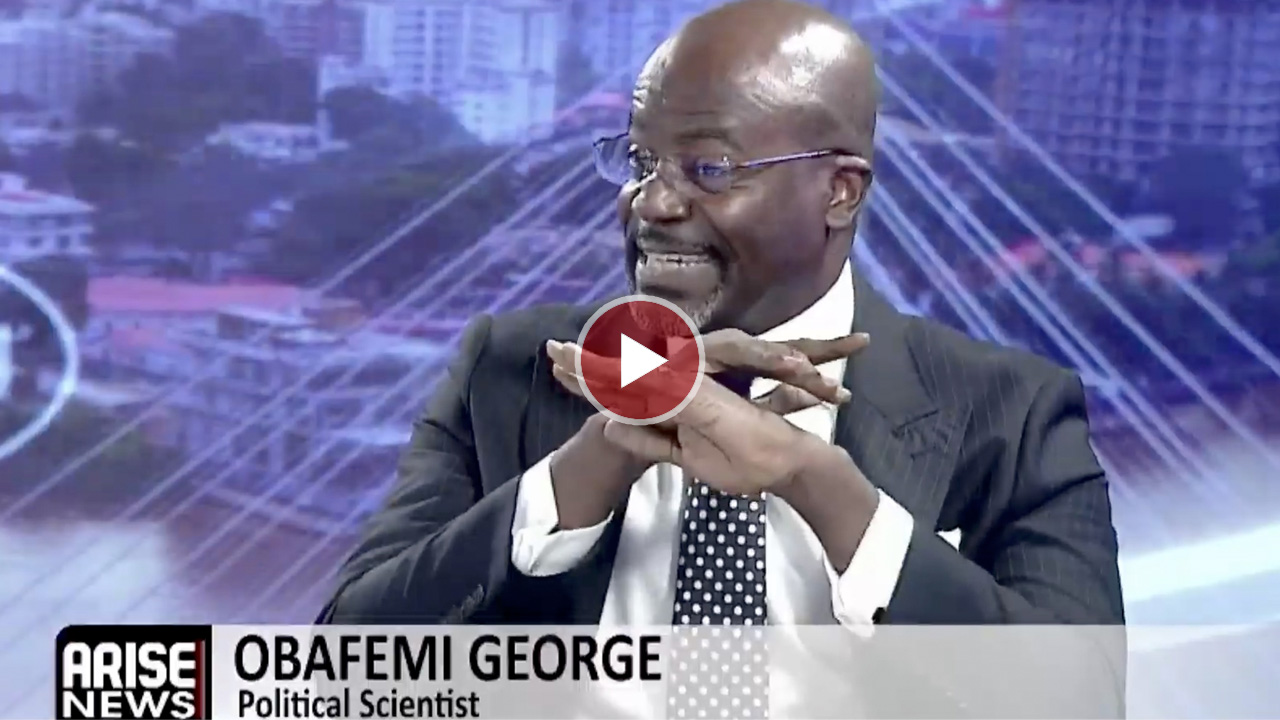
In a forceful defense against allegations targeting Nigeria’s ruling party, political scientist Obafemi George has dismissed claims that the All Progressives Congress (APC) is engineering crises within opposition political parties, characterizing such accusations as baseless misinformation.
During an interview with ARISE NEWS on Thursday, George challenged what he described as a troubling pattern in contemporary political discourse where unverified allegations gain traction through social media amplification.
“I think that allegation is false, and I’ll tell you why,” George stated. “There’s an unfolding trend in our political culture where people no longer present verifiable facts. Someone throws out a lie, it gets amplified on social media, and within hours it spreads without scrutiny.”
The political scientist emphasized that critics have failed to produce concrete evidence connecting the APC to the internal turmoil plaguing opposition groups such as the African Democratic Congress (ADC). He instead pointed to constitutional violations and leadership problems within these parties as the true sources of their instability.
“Let’s go to the facts of the matter. Nobody has come out to give one single piece of evidence to show that APC has influenced what is happening within the ADC,” he asserted, specifically highlighting how the ADC’s leadership issues stemmed from its own constitutional breaches.
George cited the case of Ralph Nwosu, who reportedly remained as ADC chairman from 2005 to 2025, serving 20 years despite the party’s constitution limiting leadership terms to four years, renewable once. “By their own constitution, anything beyond 2013 was illegal,” he argued.
Drawing historical parallels, George noted that previous allegations of ruling party interference in Nigeria’s political history had been supported by verifiable evidence. He referenced the removal of opposition governors in the South-West in 2003, President Umaru Musa Yar’Adua’s admission about electoral irregularities in 2007, and documented evidence of electoral compromise during the 2014 Ekiti election.
The contrast with current allegations, George suggested, underscores their lack of credibility. “All other parties crumbled because of their internal processes. You cannot blame the APC for that,” he maintained.
Addressing broader concerns about Nigeria potentially drifting toward a one-party state, George dismissed such worries as unfounded. He argued that the current political landscape reflects opposition failures rather than deliberate APC dominance, noting that many internal party disputes predated the 2023 general elections.
On electoral reforms, George offered support for recent changes, particularly the shift away from indirect primaries, which he credited with enhancing the credibility of Nigeria’s political process. “That provision has removed the era where the richest aspirant simply buys delegates. It has strengthened the system,” he observed.
The political scientist also defended the Independent National Electoral Commission (INEC), stating that the electoral body has acted within its constitutional mandate to safeguard the integrity of the electoral process. He pointed to INEC’s efforts to prevent situations like the 2019 Zamfara case, where court rulings overturned election results after they had been conducted.
Throughout his remarks, George consistently emphasized the need for evidence-based political discourse. “When you are talking politics, you cannot build a mountain on perception. It has to be evidence-based. That is why it is called political science—it is a science, not an art,” he insisted.
Nigeria’s political landscape has experienced significant realignment since the 2023 elections, with several opposition parties facing leadership disputes and defections. The APC, which has held federal power since 2015, has maintained its dominant position despite criticism from opposition forces and civil society groups over governance issues.
George concluded by urging opposition parties to take responsibility for addressing their internal challenges rather than attributing them to external interference, suggesting that accountability within party structures remains essential for maintaining a vibrant multi-party democracy in Nigeria.
Fact Checker
Verify the accuracy of this article using The Disinformation Commission analysis and real-time sources.

13 Comments
While the allegations against the ruling party are serious, I appreciate the political scientist’s call for a more measured and evidence-based approach. Maintaining objectivity is crucial in these situations.
The political scientist’s comments highlight the importance of separating fact from fiction in the current political climate. Unfounded claims can be damaging, so it’s crucial that we approach these issues with a critical eye.
This is a complex situation that requires a nuanced analysis. I appreciate the political scientist’s call for a more rigorous examination of the evidence before drawing conclusions. Maintaining objectivity is essential in these matters.
Well said. It’s important to avoid rushing to judgment and instead focus on understanding the underlying issues and finding constructive solutions.
The internal turmoil within the opposition parties is certainly concerning, but the political scientist makes a fair point about the need to examine the facts before jumping to conclusions. This is a nuanced issue that deserves careful consideration.
Agreed. It’s important to avoid knee-jerk reactions and instead focus on understanding the root causes of the instability within the opposition parties.
The political scientist’s emphasis on verifiable facts is commendable. In a climate of misinformation, it’s vital that we rely on credible sources and rigorous analysis when discussing sensitive political matters.
I’m curious to see if any concrete evidence emerges to support the claims against the ruling party. Transparency and accountability are essential for maintaining public trust in the political process.
Agreed. This is a complex issue, and it’s important to avoid rushing to judgment without a thorough investigation.
This is an important issue that deserves a factual discussion. While allegations should be taken seriously, it’s crucial to examine the evidence objectively before drawing conclusions.
I agree. Unfounded claims can spread quickly on social media, so it’s good to see the political scientist challenging the narrative and calling for a more rigorous analysis of the facts.
If the opposition parties are indeed facing internal turmoil, it’s concerning regardless of the cause. Resolving these issues through lawful and democratic means is crucial for a healthy political system.
That’s a fair point. The focus should be on finding constructive solutions, not just assigning blame.