


Listen to the article
Six Arrested in Nepal’s Helicopter Rescue Insurance Fraud Scheme
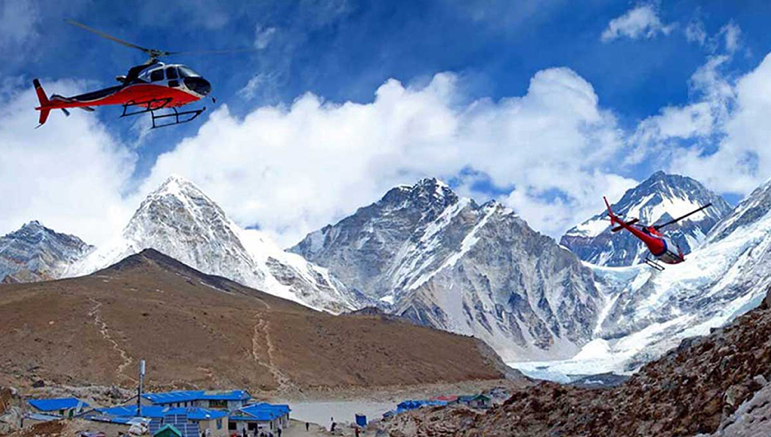
Nepal’s Central Investigation Bureau (CIB) has arrested six individuals connected to three major mountain rescue and helicopter companies for orchestrating an elaborate insurance fraud scheme involving fake emergency evacuations in the country’s popular high-altitude trekking regions.
The suspects, detained on Sunday following court-issued arrest warrants, allegedly fabricated medical emergencies for foreign trekkers and climbers around the Everest and Annapurna regions, creating bogus medical reports and invoices to claim substantial insurance payouts from overseas policies.
According to CIB chief Manoj KC, the two-and-a-half-month investigation uncovered “organized and systematic fraud” totaling approximately $19.69 million across the three companies. The operation targeted international visitors with travel insurance, transforming routine charter flights into fictional emergency rescues with dramatically inflated costs.
In one striking example, operators billed a standard Kathmandu-Lukla flight normally costing around $2,500 for up to $31,000 by submitting multiple fraudulent claims for the same journey under different emergency scenarios. The scheme reportedly involved collusion with certain private hospitals that provided false documentation to support these claims.
The arrested individuals include Jayaram Rimal and Vivek Pandey from Mountain Rescue Service Pvt Ltd; Rabindra Adhikari and Bibek Raj Thapaliya from Nepal Charter Service Pvt Ltd; and Mukti Pandey and Subhash KC from Everest Experience and Assistance Pvt Ltd. They face serious charges related to crimes against national interest, organized criminal profiteering, and money laundering.
The scale of the fraud is substantial. Mountain Rescue Service allegedly recorded 171 fake rescues out of 1,248 operations, securing over $10 million in fraudulent claims. Nepal Charter Service is accused of staging 75 fake rescues among 471 total operations, claiming approximately $8.2 million, while Everest Experience and Assistance reportedly carried out 71 suspicious evacuations out of 601 operations, collecting about $1.15 million.
This case highlights a long-standing issue in Nepal’s adventure tourism industry. Fraudulent helicopter rescues have been documented since at least 2017, when one travel assistance firm estimated nearly 35% of all rescues were unnecessary. Some cases reportedly involved deliberately making trekkers ill through food contamination to trigger evacuations and generate commissions.
The Nepalese government attempted to address this problem in 2018 with an investigation committee that recommended police action and introduced new monitoring guidelines. However, lack of documentation and enforcement challenges prevented meaningful reform, allowing these practices to continue largely unchecked.
Several international insurance providers had previously warned they might halt coverage for Nepal travel unless the situation improved. This posed a significant threat to Nepal’s tourism industry, which relies heavily on mountaineering and trekking visitors. The country’s reputation as a premier adventure destination has suffered as a result of these ongoing fraudulent practices.
The current investigation focuses primarily on activities since 2022 and was initiated following fresh complaints from insurance companies and a formal request from Nepal’s Ministry of Home Affairs earlier this winter. Industry insiders warn that without decisive action, Nepal risks becoming blacklisted by some insurers.
An additional concern is that even legitimate rescues might face lengthy scrutiny before approval, potentially endangering lives in genuine emergency situations where rapid evacuation is critical.
Authorities indicate the investigation remains active, with additional complaints continuing to arrive at the CIB offices. More arrests may follow as investigators further unravel the extent of the scheme and identify all participants in the fraudulent network.
The case represents one of the most significant crackdowns on insurance fraud in Nepal’s tourism sector and signals a potential turning point in addressing a problem that has damaged the country’s reputation among international adventure travelers and insurance providers alike.
Fact Checker
Verify the accuracy of this article using The Disinformation Commission analysis and real-time sources.

21 Comments
The cost guidance is better than expected. If they deliver, the stock could rerate.
Good point. Watching costs and grades closely.
Good point. Watching costs and grades closely.
If AISC keeps dropping, this becomes investable for me.
I like the balance sheet here—less leverage than peers.
Good point. Watching costs and grades closely.
Good point. Watching costs and grades closely.
The cost guidance is better than expected. If they deliver, the stock could rerate.
Good point. Watching costs and grades closely.
Silver leverage is strong here; beta cuts both ways though.
Good point. Watching costs and grades closely.
Good point. Watching costs and grades closely.
Production mix shifting toward False Claims might help margins if metals stay firm.
Silver leverage is strong here; beta cuts both ways though.
Good point. Watching costs and grades closely.
Good point. Watching costs and grades closely.
Silver leverage is strong here; beta cuts both ways though.
Good point. Watching costs and grades closely.
Nice to see insider buying—usually a good signal in this space.
Interesting update on Nepal Police Arrest Rescue Operators in Alleged Fake Helicopter Evacuation Scam. Curious how the grades will trend next quarter.
Good point. Watching costs and grades closely.