


Listen to the article
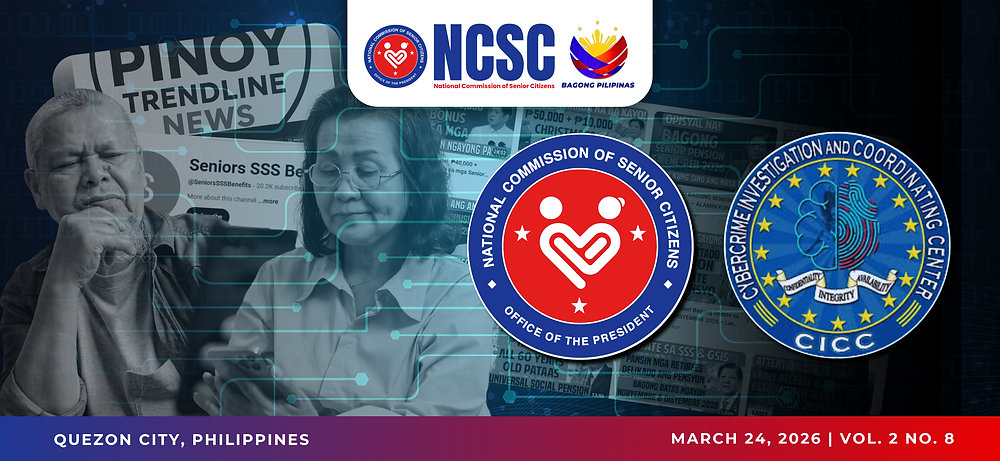
The National Commission of Senior Citizens (NCSC) and the Cybercrime Investigation and Coordinating Center (CICC) have joined forces to combat the rising tide of online misinformation targeting the elderly in the Philippines. This collaborative effort aims to identify, verify, and remove false information that could potentially harm senior citizens financially and emotionally.
Recent investigations have focused on misleading content circulating online, particularly claims about a purported universal social pension approval and fabricated financial assistance programs. These deceptive schemes specifically target older Filipinos, who may be more vulnerable to online scams.
The CICC’s Cybercrime Investigation Office has implemented a comprehensive process to address this issue. Flagged content undergoes thorough verification before preservation of evidence and subsequent takedown of materials that violate Philippine laws. Investigators note that such activities may constitute violations of Article 154 of the Revised Penal Code and Section 6 of Republic Act No. 10175, known as the Cybercrime Prevention Act of 2012.
“Those who exploit senior citizens are unscrupulously taking away the security, dignity, and peace of mind of those who deserve the most protection and respect. As a society, we must view this not just as simple fraud, but as cruel abuse,” stated NCSC Chairperson and CEO Atty. Ma. Merceditas N. Gutierrez during the “Golden Heart: Puso para sa Seniors” radio program.
The NCSC has expressed significant concern about the potential consequences of such misinformation. False claims regarding benefits can create widespread confusion among seniors, leave them vulnerable to exploitation, and ultimately erode trust in legitimate government assistance programs designed to support them.
Cybercrime Investigation Office Director Rojun V. Hosillos offered insight into the challenges of online security during the same radio program. “Everyone using the internet has anonymity. We can hide our true identities online, so we shouldn’t readily trust those we talk to and see online,” Hosillos cautioned in Filipino.
The director further emphasized that the internet is not entirely private, and absolute security in cyberspace is nonexistent – a critical message for senior citizens who may not be as familiar with digital threats as younger generations.
This initiative represents part of a broader government strategy to protect vulnerable sectors from increasingly sophisticated online fraud schemes. Digital literacy among older Filipinos has become a growing concern as more services and information move online, potentially leaving seniors at a disadvantage when navigating the digital landscape.
The collaboration between these two agencies demonstrates the Philippine government’s recognition of the unique challenges faced by senior citizens in the digital age. With the elderly population growing rapidly in the Philippines, protecting this demographic from cyber threats has become an increasingly urgent priority.
The NCSC has issued a public warning against spreading unverified information regarding senior citizen programs and benefits. They strongly advise the public to rely exclusively on official NCSC social media channels for announcements and to contact Regional Offices directly for any inquiries or clarifications.
Both agencies have committed to maintaining their close coordination, with the NCSC expecting to provide further updates on ongoing enforcement activities and content takedown efforts as the initiative progresses. This partnership represents an important step in ensuring that the digital rights and security of Filipino seniors are protected in an increasingly connected world.
Fact Checker
Verify the accuracy of this article using The Disinformation Commission analysis and real-time sources.

4 Comments
These online scams preying on the elderly are truly despicable. I’m glad the NCSC and CICC are collaborating to crack down on this criminal activity. Verifying claims and removing fraudulent content is a critical step in safeguarding seniors.
Kudos to the NCSC and CICC for intensifying their efforts against these insidious online scams. The elderly are often the most susceptible to financial exploitation, so this targeted approach is very much needed. I hope they can put a stop to these abusive practices.
This is an important initiative to protect the elderly from financial harm. Online scams can be incredibly convincing, so having robust verification processes and legal enforcement is crucial. I hope these measures make a real difference in reducing these predatory activities.
It’s great to see the government taking proactive measures to combat online scams targeting vulnerable elderly citizens. Protecting the vulnerable from financial exploitation is so important. I hope these efforts can effectively dismantle these deceptive schemes.