


Listen to the article
NASA Lunar Mission Faces False Green Screen Accusations as Crew Makes History
NASA’s groundbreaking Artemis II mission, which sent astronauts farther from Earth than any humans before during its historic lunar fly-by in April 2026, has become the target of conspiracy theories on social media. Users are claiming the mission was staged, pointing to a video anomaly as supposed evidence.
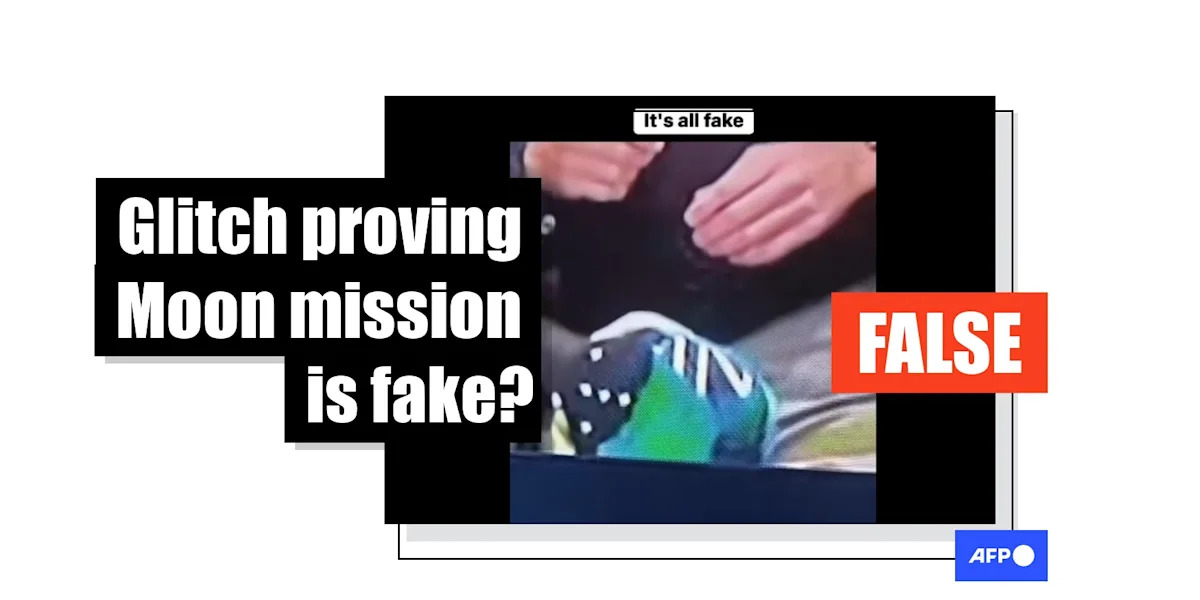
The controversy centers around footage showing text appearing to bleed through the mission’s official plush mascot during a crew interview broadcast. However, digital forensics experts have confirmed this was simply a technical glitch from the news station that syndicated NASA’s official feed.
“Green screen??? this is from Artemis live on YouTube!” reads text overlaid on a viral Facebook video shared on April 6, 2026. The clip shows a smartphone recording of a television broadcast featuring the Artemis II crew floating in microgravity. In the background, a woman can be heard questioning “what’s up with the lettering behind this ball?” as the camera zooms in on what appears to be captions superimposed on the mission’s Moon mascot.
This single video glitch has racked up over 1.5 million views across social media platforms, fueling baseless claims similar to the persistent conspiracy theories that NASA’s 1969 Apollo 11 Moon landing was filmed in a Hollywood studio.
The original, unaltered footage was streamed on YouTube by CNN on April 5, titled “Artemis II crew speaks while headed to the moon.” When reviewing this source material at the 4:36 mark, no text appears through the floating object. The same unblemished footage was also published on the verified VideoFromSpace YouTube channel.
Hany Farid, co-founder of GetReal Security and professor at the University of California, Berkeley, explained to AFP on April 7 that the anomaly was merely “a failed text overlay on the part of the broadcaster.”
“Because we only see the text on the blue part of the spinning object, I hypothesize that the broadcaster didn’t lay down a blue banner on which the text should have been overlaid,” Farid said.
The object in question is “Rise,” the Artemis II mission’s official mascot and zero-gravity indicator. The smiling blue plush toy was designed by a child and draws inspiration from the iconic Earthrise moment captured during a previous lunar mission.
Meanwhile, the actual Artemis II mission represents a monumental achievement in space exploration. The four-person crew — NASA astronauts Reid Wiseman, Victor Glover, and Christina Koch, along with Canadian Space Agency astronaut Jeremy Hansen — became the first humans to fly around the Moon in half a century.
Their journey has taken them deeper into space than any previous human mission, allowing them to collect invaluable celestial observations of little-known lunar craters, a solar eclipse, and meteor strikes on the lunar surface. Scientists anticipate these findings will significantly advance our understanding of Earth’s natural satellite.
The 10-day mission launched on April 1, 2026, from Kennedy Space Center in Cape Canaveral, Florida, following years of planning and preparation. It marks a crucial step in NASA’s broader Artemis program, which aims to eventually return humans to the lunar surface and establish a sustainable presence there as a stepping stone for future Mars missions.
Despite the clear technical explanation for the video anomaly and the mission’s well-documented scientific importance, this incident highlights how even momentary broadcast glitches can quickly spawn conspiracy theories in today’s social media landscape.
Fact Checker
Verify the accuracy of this article using The Disinformation Commission analysis and real-time sources.

21 Comments
While I understand the public’s skepticism given past space program controversies, the evidence here clearly shows this was just a technical glitch, not a conspiracy. Dismissing the entire Artemis II mission over a single video anomaly is an overreaction not supported by the facts.
Agreed. Maintaining trust in NASA’s work is important, and the experts have done a good job of investigating this issue and providing a reasonable explanation. Unfounded conspiracy theories only serve to undermine the remarkable achievements of the Artemis program.
While I understand the public’s skepticism, the digital forensics experts have clearly confirmed this was a simple broadcast error, not evidence of a conspiracy. Dismissing the entire Artemis II mission over a single video anomaly is an unfounded and counterproductive reaction.
Agreed. NASA has consistently demonstrated transparency with its space programs, and the Artemis missions are no exception. This type of misinformation only serves to undermine the remarkable progress being made in human spaceflight exploration.
Wow, it’s amazing that NASA’s Artemis II mission has sparked so much interest, even if some of the online chatter is misguided. Technical glitches can happen during live broadcasts, and it’s good to see the experts have confirmed this was just an issue with the news feed, not anything nefarious.
This seems like a straightforward technical glitch, not evidence of a conspiracy. Broadcast errors happen, and NASA has consistently demonstrated transparency with its Artemis missions. I’m glad the experts confirmed it was just an issue with the news station’s feed.
Exactly. Dismissing the entire Artemis II mission as staged over a minor video issue is an overreaction. NASA has a long history of successful lunar programs – no need to jump to wild conclusions here.
I’m really excited about the progress of the Artemis program and the future of space exploration. While it’s understandable that some people may be skeptical, it’s important to rely on factual information from reputable sources rather than unsubstantiated conspiracy theories.
I’m not surprised to see conspiracy theories emerge, even for a landmark mission like Artemis II. Some people will grasp at any perceived anomaly to push false narratives. But the fact-checking here is reassuring – the experts have spoken, and there’s no credible evidence of a hoax.
Agreed. Conspiracy theories often gain traction in the absence of clear information. NASA providing a transparent explanation, backed by digital forensics, helps dispel the unfounded claims. The Artemis program is making important progress in human spaceflight.
While the video glitch is certainly unusual, I think it’s important not to jump to conclusions. The experts have confirmed it was just a technical issue, and we should focus on the incredible achievements of the Artemis II crew rather than unsubstantiated claims.
Agreed. The Artemis II mission is a historic accomplishment, and we should celebrate the hard work and dedication of the astronauts and NASA team rather than get distracted by online conspiracy theories.
I’m really impressed by the Artemis II mission and the progress NASA is making in space exploration. It’s unfortunate to see the spread of misinformation and conspiracy theories, but I trust the experts will continue to provide accurate information and debunk any false claims.
Absolutely. It’s important to stay vigilant and rely on authoritative sources when it comes to space news and technology. Conspiracy theories can be tempting, but we should strive for objectivity and facts.
It’s unfortunate to see conspiracy theories emerge around the Artemis II mission, which represents a significant milestone in space exploration. However, the expert analysis confirming this was a technical glitch, not a staged event, is reassuring. We should focus on the facts, not unsubstantiated claims.
Agreed. While healthy skepticism is understandable, dismissing the entire Artemis program over a minor video issue is an overreaction not supported by evidence. NASA has a long track record of transparency, and this incident doesn’t change the remarkable progress they’re making.
It’s disappointing to see the Artemis II mission, a historic accomplishment for human spaceflight, become the target of conspiracy theories. But I’m glad the authorities were able to quickly address the concerns and reaffirm the integrity of the broadcast. Fact-checking is crucial in these situations.
Absolutely. NASA has a long track record of transparency, and this incident doesn’t change the remarkable progress they’ve made with the Artemis program. Dismissing the entire mission over a minor technical glitch is an overreaction not supported by the evidence.
This is an interesting development, but I’m not surprised to see the conspiracy theories emerging. It’s important to remain objective and wait for official explanations from NASA and other credible sources before drawing any conclusions about the Artemis II mission.
It’s disappointing to see this type of misinformation take hold, especially around such a historic mission. But I’m glad the authorities were able to quickly address the concerns and reaffirm the integrity of the Artemis II broadcast. Focusing on facts is crucial to counter conspiracy theories.
Absolutely. In the age of social media, unsubstantiated claims can spread rapidly. But NASA’s transparency and the expert analysis demonstrate the real work being done to advance space exploration. Hopefully this will help shut down the conspiracy theories before they gain more traction.