


Listen to the article
AI-Generated Images Falsely Show Migrants Disguised as Sheep, Investigation Reveals
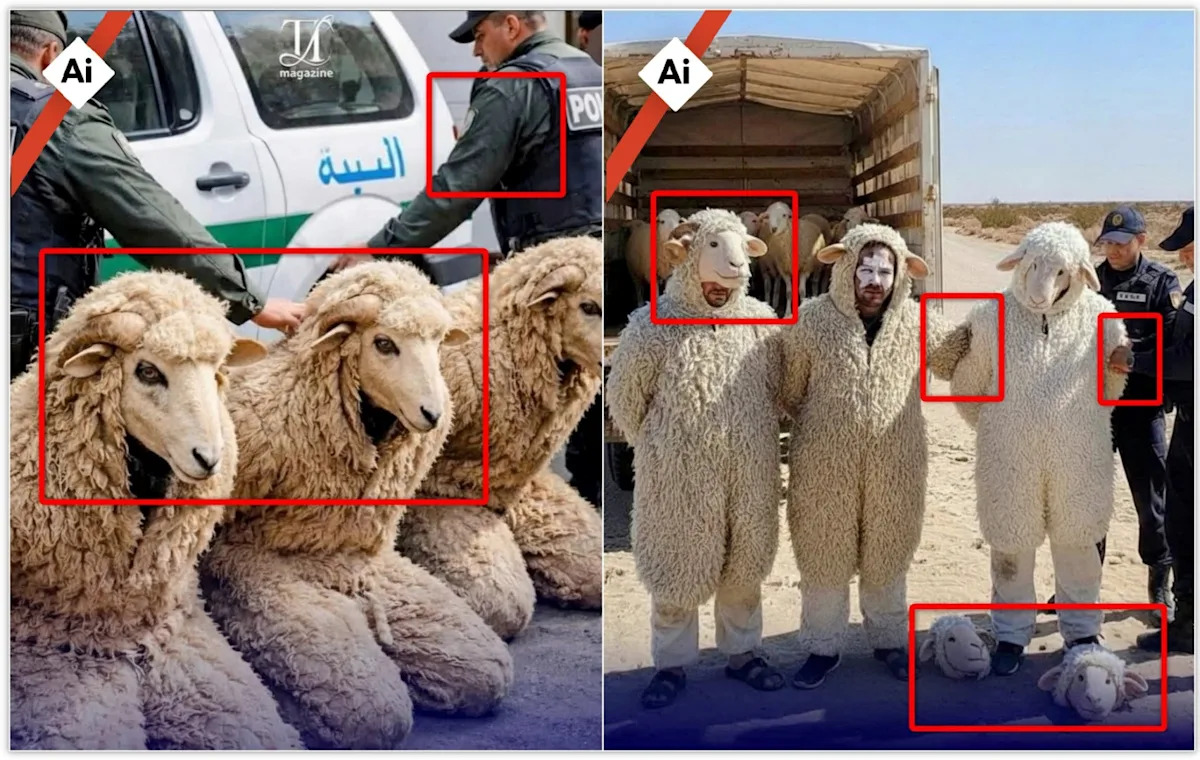
Viral images allegedly showing migrants disguised as sheep attempting to cross from Algeria to Spain have been confirmed as fake, according to a comprehensive investigation. The images, which were shared thousands of times across social media platforms in February 2026, purported to show three men arrested while wearing sheep costumes in a bizarre smuggling attempt.
“These guys were arrested in Algeria as they tried to cross to Spain disguised as sheep. This should go into the Guinness World Book of Records as the innovation of the century!” claimed one widely-shared Facebook post from February 20. The post featured images of police officers supposedly apprehending three men in woolly costumes, with some variations showing them standing and others kneeling.
Digital forensics experts have conclusively determined the images were created using artificial intelligence tools. Analysis using specialized detection software, including Hive Moderation and InVID WeVerify, found a 99 percent probability that the images were fabricated.
Close examination reveals numerous telltale signs of AI generation. The images contain significant inconsistencies, including police uniforms that change color between photos – blue in one image and dark green in another. Officers’ fingers appear distorted, a common flaw in AI-generated content. Additionally, costume details vary illogically between images, with sheep masks featuring different horn shapes and sizes.
The viral posts emerged amid Spain’s recent announcement of a plan to legalize approximately 500,000 undocumented migrants, approved on January 27, 2026. This policy shift has intensified public discourse around migration issues in the region.
The Western Mediterranean Route has become Spain’s primary entry point for migrants, with more than 19,400 arrivals recorded in 2025, according to data from the Mixed Migration Centre. Algeria has emerged as a key departure point despite not sharing a land border with Spain. The dangerous journey claims hundreds of lives annually due to harsh conditions and unsafe vessels used by smugglers.
This isn’t the first time similar false claims have circulated. Fact-checkers debunked comparable stories in 2025, when different images were used to support the same narrative. Those earlier images were actually taken from a July 2024 TikTok video showing people in costumes dancing to the Ukrainian version of the theme song from “Shaun the Sheep,” a children’s animated series.
Spain continues to be a destination for migrants seeking better opportunities. According to the country’s National Statistics Institute, more than seven million foreigners currently reside in Spain, comprising a significant portion of the nation’s 49.4 million population.
The spread of such fabricated content highlights growing concerns about AI-generated misinformation targeting migration issues. Digital literacy experts emphasize the importance of critical assessment of unusual or sensational claims, particularly those featuring images that may appear slightly distorted or contain logical inconsistencies.
North African countries along the Mediterranean coast remain key transit points for migrants attempting to reach Europe, with legitimate challenges in border management and humanitarian concerns. However, this particular sheep disguise story joins a growing list of debunked claims about migration that continue to circulate online.
As AI technology becomes more sophisticated and accessible, the challenge of distinguishing between authentic and fabricated content grows more complex, requiring increased vigilance from social media users and enhanced detection tools from platform providers.
Fact Checker
Verify the accuracy of this article using The Disinformation Commission analysis and real-time sources.

10 Comments
While the idea of migrants in sheep costumes is certainly an amusing mental image, it’s clear these images were completely fabricated. We should be wary of falling for such obvious hoaxes, no matter how convincing they may seem.
The fact that these images were generated by AI rather than captured in real life is quite alarming. We must remain vigilant against the growing threat of synthetic media being used to spread disinformation.
Fabricated imagery can be a powerful tool for manipulating public opinion. I hope this serves as a lesson on the importance of media literacy and verifying visual sources, especially when they go viral.
AI-generated images can be incredibly convincing, but it’s critical we carefully fact-check them before sharing. This investigation shows the importance of applying digital forensics to identify fabricated content.
While the idea of migrants disguising themselves as sheep is certainly an amusing mental image, it’s clear these images were completely fabricated. We should be wary of falling for such obvious hoaxes.
This investigation serves as an important reminder that not everything we see online is real. I’m glad the authorities were able to thoroughly examine these images and expose them as AI-generated fakes.
Trying to cross borders in sheep costumes sounds like the plot of a bad comedy film, not reality. I’m glad the authorities were able to investigate and debunk this false claim.
The use of AI to create false visuals is a troubling trend that can have serious consequences. We must remain vigilant and apply rigorous fact-checking to ensure we don’t inadvertently spread disinformation.
This is a concerning case of misleading AI-generated images being used to spread false claims. We need to be vigilant about verifying visual content, especially on social media, to prevent the spread of disinformation.
It’s concerning to see how quickly these AI-generated images spread on social media, highlighting the need for better tools to detect synthetic media. Fact-checking and media literacy are crucial to combat the rise of digital deception.