


Listen to the article
Oil Price Surge Revives Memories of Scottish Independence Debate
The recent uptick in Brent crude oil prices, which have flirted with the $100 per barrel mark this week, has resurrected memories of Scotland’s 2014 independence referendum and the economic projections that underpinned it. With Iranian tensions threatening to push prices even higher, the parallels to claims made in the Scottish Government’s independence White Paper are striking.
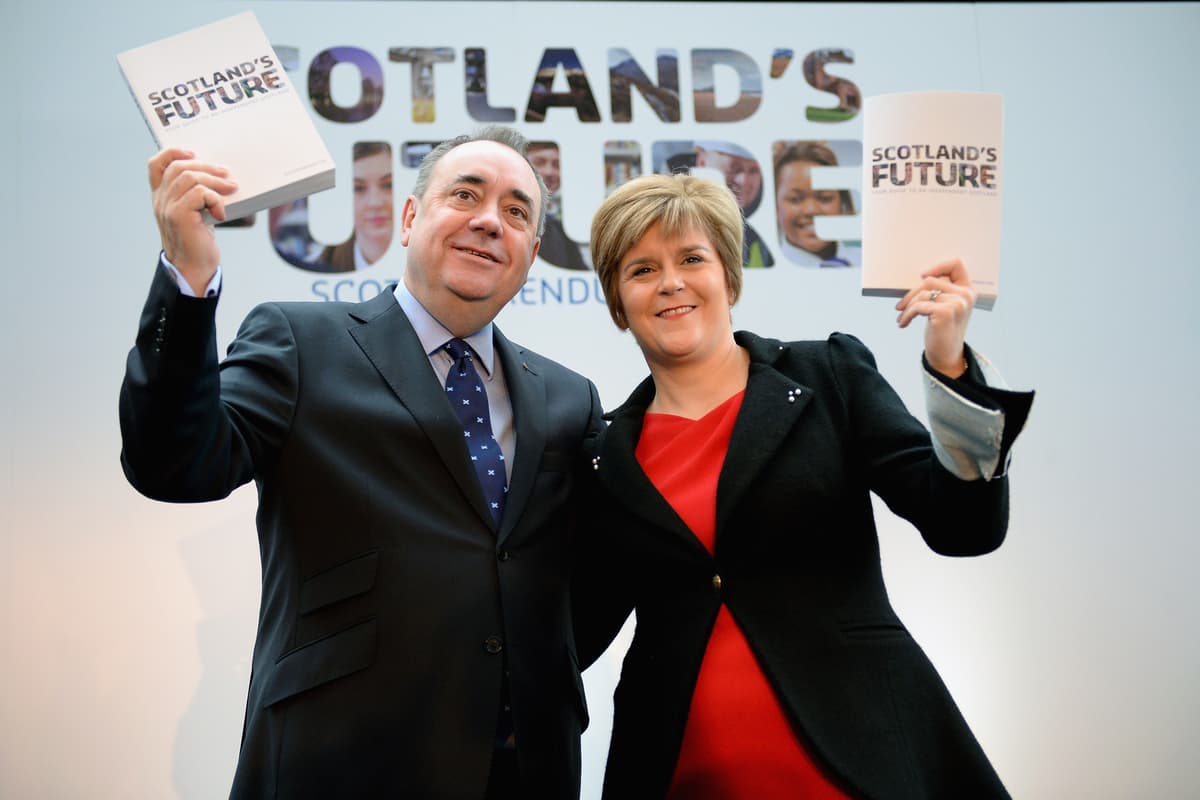
In 2014, under Alex Salmond’s leadership, the Scottish Government presented a White Paper that boldly predicted an “average price” of “approximately $113 a barrel” for oil over the subsequent five years. This figure was pivotal to making Scotland’s financial case for independence appear viable. Reality proved far different – oil never approached that price during the period specified, except briefly during the Russia-Ukraine conflict.
The discrepancy between projected and actual oil prices highlights a significant vulnerability in the economic case that was presented to Scottish voters. John Swinney, who served as Finance Secretary at the time, had privately circulated a briefing to colleagues warning that declining oil revenues would seriously jeopardize an independent Scotland’s capacity to fund pensions and benefits. This crucial information was withheld from the public until it was leaked.
The political maneuvering around oil prices illustrates a pattern that extends beyond energy economics. Recent revelations from Peter Mandelson’s brief diplomatic tenure have exposed another instance of what critics call political opportunism by current First Minister Swinney.
According to diplomatic papers, Swinney traveled to Washington last year to lobby the U.S. administration on whisky tariffs. Former ambassador Mandelson reportedly provided strategic guidance, orchestrating a White House meeting between Swinney and Donald Trump, with Swinney staying at the Ambassador’s residence during his visit. UK and Scottish government officials cooperated closely on presenting the case for Scotch whisky.
However, upon returning to Scotland, Swinney’s public narrative shifted dramatically. He called a press conference criticizing the UK Government, claiming that a better deal for Scotch was “not previously on the agenda” and that he had personally put the issue “on the radar” of the former president. This characterization reportedly astonished and angered the British officials who had collaborated with him in Washington.
The ongoing tension between the UK and Scottish governments was further highlighted this week when a memo from Prime Minister Keir Starmer emerged, instructing ministers to feel confident about spending money in Scotland, Wales, and Northern Ireland “even when devolved governments may oppose this.” The statement sparked controversy, with Swinney responding that “Labour is a threat to devolution, and the only way that self-government can be protected is through the fresh start that independence would bring.”
Critics argue this response reveals a fundamental perspective that devolution can only function if it leads to independence. An alternative view suggests that devolution works best when two governments operate collaboratively rather than competitively.
The current oil price surge serves as a reminder of past economic projections that failed to materialize. With Brent crude approaching $100 again due to geopolitical tensions rather than sustained market fundamentals, questions about economic forecasting and political transparency remain relevant to Scotland’s constitutional debate.
For now, the oil price increase represents both an economic indicator and a political memory, reminding voters of the high-stakes claims made during the independence campaign and raising questions about how such projections might be treated in future constitutional discussions.
Fact Checker
Verify the accuracy of this article using The Disinformation Commission analysis and real-time sources.

8 Comments
I’m curious to hear more about the specific private warnings shared by the Finance Secretary at the time. Were there concerns raised internally about the robustness of the oil price assumptions?
It’s interesting to see how the current oil price dynamics are drawing comparisons back to the 2014 Scottish independence debate. The economic assumptions made then are certainly getting stress-tested by real-world events.
Hindsight is 20/20, but it does seem the SNP’s projections were overly optimistic. Prudent planning requires accounting for potential downside risks, not just best-case scenarios.
The energy market complexities highlighted here underscore why robust economic modeling is so crucial for major policy decisions like Scottish independence. Relying on volatile commodity forecasts as a central pillar seems risky in retrospect.
It’s a good lesson in the importance of prudent, conservative forecasting when dealing with inherently unpredictable commodity markets. Overconfident projections can undermine the credibility of even the most well-intentioned policy proposals.
The volatility in oil prices certainly highlights the challenges in relying on commodity forecasts when making long-term economic plans. While Scotland’s independence case hinged heavily on oil revenue projections, the actual price fluctuations have proven those assumptions too optimistic.
The Middle East tensions certainly complicate the energy outlook. While the SNP’s independence case relied heavily on high oil revenues, the recent volatility reveals how quickly those assumptions can be upended by geopolitical events.
That’s a good point. Commodity-dependent economies are inherently vulnerable to supply shocks and price swings beyond their control.