


Listen to the article
Former Monrovia Mayor Claims Vindication from Political Accusations
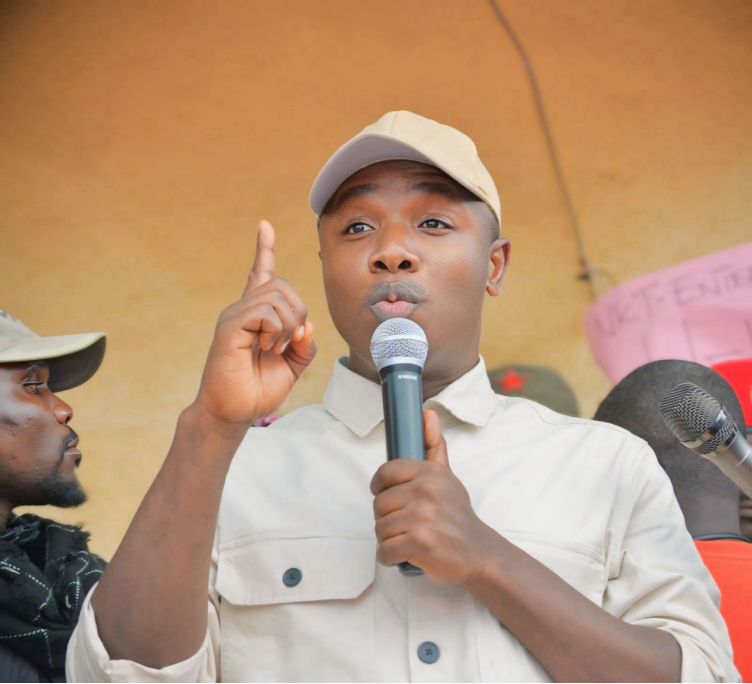
Jefferson T. Koijee, the former Mayor of Monrovia and current Secretary-General of Liberia’s opposition Congress for Democratic Change (CDC), has publicly declared himself vindicated against what he describes as years of politically motivated accusations. In a comprehensive statement released Thursday, Koijee claimed that several of his former critics have now admitted the allegations against him were fabricated as part of a coordinated smear campaign.
Koijee, who served as Monrovia’s mayor from 2018 to 2024, faced persistent accusations of administrative misconduct and corruption throughout his tenure—charges he consistently denied. His political standing suffered a significant blow in 2022 when the United States government imposed sanctions against him, intensifying both domestic and international scrutiny of his leadership.
“They believed that if they talked long enough, loud enough, convincingly enough, the world would turn against me,” Koijee stated. “But here I am, still standing, still moving, and that is what disturbs them the most.”
The former mayor’s statement represents his most extensive public response to the allegations since leaving office nearly two years ago. He characterized himself as a victim of “malicious and vicious lies and propaganda” orchestrated by political opponents who underestimated his resilience.
Liberian political analysts note that Koijee’s tenure as mayor was controversial from the start. As a prominent and youthful figure in the CDC—the party of former President George Weah—Koijee became a lightning rod for criticism from opposition parties. His management of Monrovia’s chronic waste management issues and urban development challenges drew particular criticism during his six-year term.
The U.S. sanctions against Koijee came amid broader international concerns about governance in Liberia during the Weah administration. The sanctions significantly impacted Koijee’s ability to travel internationally and access financial systems, complications that continue to affect him today despite being out of public office.
In his statement, Koijee took aim at the current administration of President Joseph Boakai and Vice President Jeremiah Koung, accusing them of spending “significant resources” to lobby for his sanctioning as part of a strategy to eliminate him politically.
“Unfortunately for them, God alone is the author and finisher of my destiny,” Koijee declared, suggesting divine protection against what he perceives as orchestrated persecution.
The political context surrounding Koijee’s claims is important for understanding Liberia’s current landscape. The CDC lost power in 2023 when George Weah conceded defeat to Joseph Boakai in a closely contested presidential election. Since then, the CDC has repositioned itself as the primary opposition force, with Koijee playing a central role in its organizational structure as Secretary-General.
Koijee contrasted his personal situation with what he characterized as deteriorating international relations under the Boakai administration, suggesting that the entire country now faces diplomatic challenges that transcend his individual case.
“I did not argue with lies; I outgrew them,” Koijee stated. “I did not chase revenge; I chased results.”
His statement was strategically distributed to multiple international bodies, including the African Union, ECOWAS, the European Commission, and the U.S. Embassy in Monrovia—a move that political observers interpret as an attempt to rehabilitate his image on the international stage.
Koijee’s claims of vindication come at a time when Liberia continues to face significant governance and economic challenges. The country, still recovering from devastating civil wars and the 2014-2016 Ebola epidemic, struggles with poverty, infrastructure deficiencies, and institutional weakness—issues that transcended both the Weah administration and now confront President Boakai’s government.
Neither the Boakai administration nor U.S. officials have publicly responded to Koijee’s claims of vindication or his allegations regarding the motivations behind his sanctioning.
Fact Checker
Verify the accuracy of this article using The Disinformation Commission analysis and real-time sources.

7 Comments
This is an interesting case of political accusations and retractions. It will be important to see if the former mayor can rebuild public trust after these allegations, or if the damage has already been done to his reputation.
I appreciate the former mayor’s statement, but questions remain about the underlying motivations and evidence behind this case. Reputations can be difficult to restore, especially in the realm of politics, so this will be an important test of accountability and transparency.
This seems like a nuanced situation that warrants further investigation. The retraction of accusations is significant, but the public should be able to access the full facts to determine if justice has been served. Rebuilding trust will be a challenge for all parties involved.
Allegations of corruption and misconduct must be taken seriously, but the retractions in this case raise new questions. I hope the relevant authorities will provide a thorough and impartial assessment of the situation to ensure the public interest is upheld.
The political dynamics at play here seem quite complex. While the former mayor may feel vindicated, the public deserves a clear accounting of what transpired and why the initial accusations were withdrawn. Maintaining trust in government institutions is crucial.
Allegations of corruption and misconduct are always serious matters, so I’m curious to learn more about the specifics of this case and why the accusers ultimately retracted their claims against the former mayor.
You raise a good point. Without more details, it’s hard to determine if the retractions were justified or if there are still unresolved issues. Transparency from all sides would be helpful to understand the full context.