


Listen to the article
President Lee Jae Myung launched a scathing critique of South Korean media outlets Wednesday, condemning what he described as irresponsible reporting that has linked him to organized crime without substantial evidence.
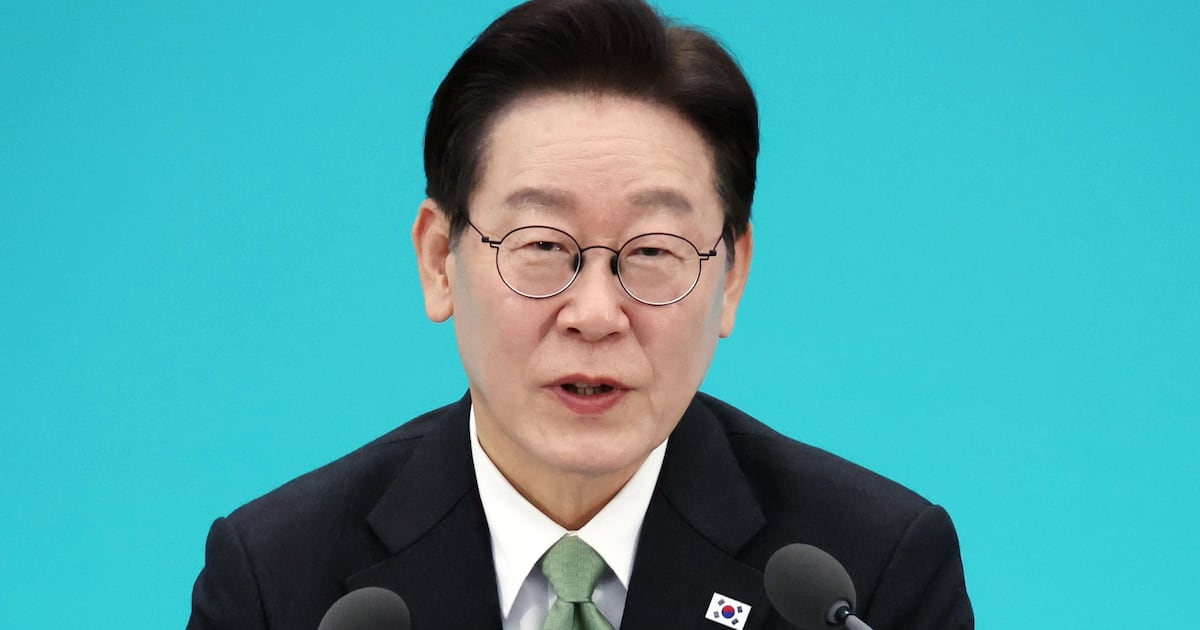
Speaking at a hastily arranged press conference at the presidential Blue House in Seoul, Lee expressed frustration over what he called a “coordinated smear campaign” that has intensified in recent weeks.
“These allegations are not just false—they represent a dangerous erosion of journalistic integrity that undermines our democratic institutions,” Lee said, visibly frustrated as he addressed reporters. “Media organizations have a responsibility to verify information before publication, especially when making such serious accusations against public officials.”
The controversy stems from a series of reports published in several major news outlets, including some that suggested connections between Lee’s former aides and organized crime syndicates operating in Gyeonggi Province, where he previously served as governor. The reports cited anonymous sources claiming financial transactions between Lee’s campaign staff and known criminal enterprises during his presidential bid.
Lee’s administration has filed defamation complaints against three media companies, including the prominent conservative newspaper Chosun Ilbo, which published the most detailed allegations last month.
“We welcome scrutiny and criticism—these are essential to a healthy democracy,” Lee stated. “But what we’ve witnessed is not journalism; it’s character assassination based on innuendo and unverified claims.”
Media watchdog organizations have weighed in on the controversy, with some expressing concern about the potential chilling effect of legal action against news organizations, while others acknowledge legitimate questions about the sourcing in the original reports.
Kim Sung-hoon, director of the Korea Press Foundation, noted that the situation highlights the tension between press freedom and accountability. “Media outlets must maintain rigorous fact-checking standards, particularly when reporting on public figures, but we must also protect their ability to investigate those in power without fear of retribution,” Kim said in a statement.
The allegations come at a politically sensitive time, as Lee’s administration approaches its midterm with approval ratings hovering around 42 percent. His Democratic Party faces strong opposition in the National Assembly, where rivals have seized on the controversy to call for a parliamentary investigation.
Opposition leader Park Min-joo criticized Lee’s response as “an attempt to intimidate the press” and called for an independent prosecutor to investigate the original allegations. “If the president has nothing to hide, he should welcome a thorough investigation rather than attacking those who raise questions,” Park said during a party meeting Thursday.
South Korea has a complex relationship with press freedom. While the country has a vibrant media landscape, it has sometimes struggled with political polarization in reporting and pressure on journalists from both government and corporate interests. The World Press Freedom Index ranked South Korea 42nd globally in its 2022 assessment, noting improvements in recent years but ongoing concerns about political influence on media.
Legal experts suggest that the dispute highlights broader issues in South Korean media law. Professor Jung Hee-sung of Seoul National University’s Law School noted that defamation laws in the country can be more restrictive than in some Western democracies. “Public figures in Korea can more easily pursue legal remedies against reporting they consider defamatory, creating a potentially restrictive environment for investigative journalism,” Jung explained.
The Blue House has announced that it will establish a task force to address what it terms “false reporting,” but emphasized that this would focus on establishing clear channels for requesting corrections rather than restricting media access or pursuing punitive measures.
As the controversy continues to unfold, it underscores the delicate balance between holding media accountable for accuracy and protecting the essential role of a free press in democratic governance—a tension that remains at the heart of South Korea’s evolving media landscape.
Fact Checker
Verify the accuracy of this article using The Disinformation Commission analysis and real-time sources.

20 Comments
The media must be more diligent in verifying information before publishing stories that could damage the reputation of public officials. Unsubstantiated claims about organized crime links are very concerning and undermine trust in democratic institutions.
I agree. Responsible journalism is essential for a healthy democracy. The media has a duty to report the facts accurately and avoid sensationalism, even when it comes to high-profile figures.
This is a concerning situation. The media must be more diligent in verifying information before publishing stories that could damage the reputation of public officials. Unsubstantiated claims undermine democratic institutions.
Absolutely. Responsible journalism is crucial for a healthy democracy. The media has a duty to report the facts accurately and avoid sensationalism, even when it comes to powerful figures.
It’s troubling to see the media making these kinds of claims without solid evidence. The president is right to call out this irresponsible reporting and demand higher standards of journalistic integrity.
Absolutely. Journalists have a duty to the public to report the facts accurately and avoid sensationalism. Unsubstantiated allegations can be very damaging, especially when they target public officials.
This is a serious issue that deserves careful, thorough investigation. The president is right to call out the media for making unsubstantiated claims that undermine public trust. Responsible journalism is crucial for a functioning democracy.
Absolutely. Journalists must be held to high standards, especially when reporting on powerful figures and sensitive topics like organized crime. Unfounded accusations can have far-reaching consequences.
The president makes a fair point. Unsubstantiated claims about links to organized crime undermine public trust in both the media and the government. Rigorous fact-checking is essential for responsible journalism.
Agreed. The media must be held accountable for verifying information, especially when making such serious allegations. Unfounded accusations can have far-reaching consequences.
This seems like a concerning situation. The media should be responsible and verify information before making such serious accusations against public officials. Unsubstantiated claims undermine trust in democratic institutions.
I agree. Journalists have a duty to uphold high standards of reporting, especially when it comes to powerful figures. Relying on anonymous sources is risky without proper fact-checking.
The president raises valid concerns about the media’s handling of these allegations. Journalists must uphold high standards of integrity and avoid spreading unverified claims, especially those related to organized crime. Public trust is at stake.
I agree. The media’s role is to inform the public, not engage in unsubstantiated smear campaigns. Rigorous fact-checking and transparency are essential for maintaining the credibility of news reporting.
Organized crime allegations are very serious, and the media should be extremely cautious about reporting them without robust proof. It’s concerning to see this kind of ‘smear campaign’ against the president.
I share your concern. Journalists have a responsibility to uphold ethical standards and avoid sensationalism, especially when it comes to high-profile political figures.
It’s troubling to see allegations of organized crime links being made without solid evidence. The president is right to call out this kind of irresponsible journalism. The public deserves the truth, not unverified rumors.
Absolutely. Making unsubstantiated claims about public officials can have serious consequences. The media must be more vigilant in verifying information before publication.
The media’s responsibility is to inform the public, not engage in unverified ‘smear campaigns’. The president is right to demand accountability and higher standards of reporting, especially on such serious issues.
I agree. Journalists must be extremely careful when making accusations, especially against high-profile figures. Rigorous fact-checking and transparency are essential to maintain public trust.