


Listen to the article
Health Secretary Kennedy Claims Diet Change Can Cure Diabetes During Tribal Conference
U.S. Health and Human Services Secretary Robert F. Kennedy Jr. told Native American leaders on Wednesday that eliminating “ultra-processed” foods would reverse high rates of diabetes in their communities, a claim medical experts say is misleading.
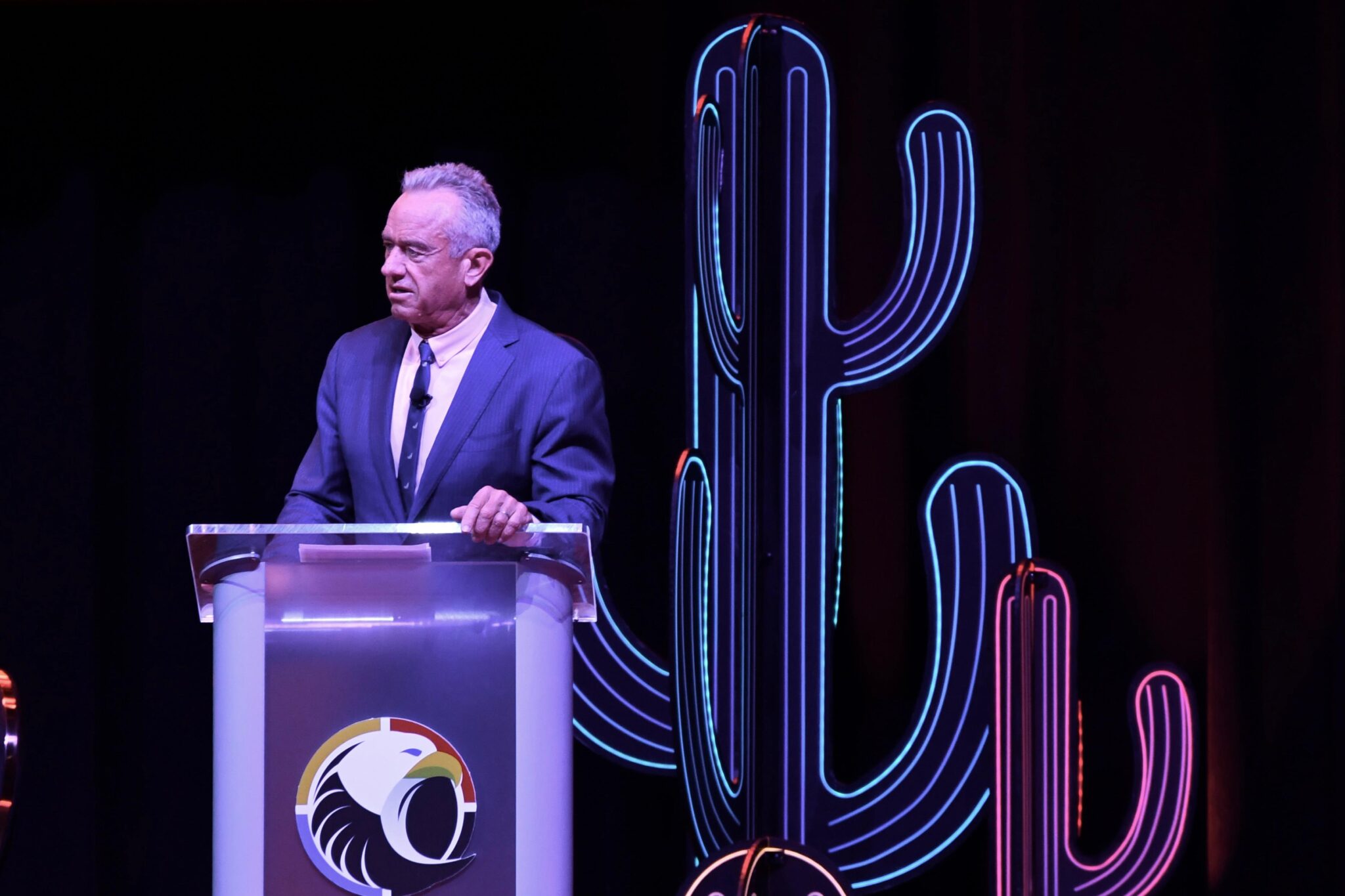
Speaking at Gila River Indian Community’s Wild Horse Pass Casino during the annual Tribal Self Governance Conference, Kennedy presented his controversial upside-down food pyramid while addressing the high incidence of Type 2 diabetes among Arizona’s Indigenous communities.
“Type 2 diabetes is curable,” Kennedy claimed. “You can reverse the diagnosis by changing the food source.”
Medical research contradicts this assertion. While studies have established a correlation between ultra-processed food consumption and increased Type 2 diabetes risk, and dietary changes can help manage symptoms, they cannot cure the disease. Kennedy, who has a history of promoting controversial medical theories, including anti-vaccine positions, has frequently been criticized by health experts for spreading pseudoscientific claims.
During his address, Kennedy highlighted his administration’s commitment to Indian Health Services (IHS), an agency within HHS that provides free healthcare to members of federally recognized tribes. He noted that under President Trump’s budget proposal, IHS would receive a $1.1 billion increase, bringing its total funding to $9.1 billion.
“There is no other group in my agency that’s receiving an 11% raise this year,” Kennedy said. “That is an emblem of my personal commitment to the Indian Health Services.”
Kennedy claimed to have visited Indigenous communities more frequently than any previous HHS secretary and pointed to investments in public health programs targeting hepatitis, HIV, and sexually transmitted diseases in Native communities. He also mentioned efforts to address chronic staffing shortages at IHS facilities.
However, his remarks overlooked significant cuts to other federal health programs that directly impact Indigenous Americans. ProPublica reported last year that under Kennedy’s leadership, IHS reduced its efforts to encourage childhood vaccinations, framing them as personal choices rather than public health necessities. This shift occurred despite the Centers for Disease Control and Prevention—also under Kennedy’s oversight—declaring declining vaccination rates in rural communities a critical public health issue.
Kennedy promoted the Rural Health Transformation Program’s $50 billion investment in rural healthcare while not addressing simultaneous Medicaid cuts. Importantly, tribal nations cannot directly apply for these program funds and must rely on states to consider their needs when allocating resources.
Latisha Miller, vice chair of the Paskenta Band of Nomlaki Indians, expressed skepticism about Kennedy’s promises. Having attended self-governance conferences for approximately 30 years, Miller noted, “Now, I’m a tribal leader, and we’re still having the same conversations.”
Miller was particularly critical of Kennedy’s dietary recommendations, noting the historical context behind processed food consumption in Native communities. “I grew up on commodities, processed foods that (the government) gave us,” she said. “Some of my older relatives back in the day weren’t allowed to leave the reservation to go hunt.”
The HHS Secretary’s presentation also neglected to address numerous proposed budget cuts that could significantly impact Indigenous communities in areas like education, lending, and housing programs.
In an official statement, Kennedy said, “Tribal nations know how to care for their people — and we are expanding their authority to drive better outcomes. At HHS, we are investing in infrastructure, incorporating traditional foods into federal nutrition policy, and delivering results in Indian Country while upholding tribal sovereignty.”
As Kennedy concluded his five-day “Take Back Your Health” trip to Arizona, tribal leaders in attendance remained cautiously optimistic but emphasized that meaningful support would require actions beyond promises.
Fact Checker
Verify the accuracy of this article using The Disinformation Commission analysis and real-time sources.

11 Comments
The Secretary’s statements about diabetes seem to be at odds with the medical consensus. While diet and lifestyle changes can help manage the condition, the claim that it can be ‘cured’ is not supported by scientific evidence. I hope tribal leaders were able to get accurate information from health experts.
It’s troubling to see a government official making such definitive claims about ‘curing’ a complex chronic disease like diabetes. I hope the tribal leaders at the conference were able to get accurate information from qualified medical professionals on the management and treatment of this condition.
I agree completely. Promoting unsubstantiated medical theories can be very harmful, especially for vulnerable communities. It’s crucial that public officials rely on established scientific consensus when discussing health matters.
While dietary changes can certainly help manage diabetes, the Secretary’s assertion that it can ‘cure’ the disease is simply inaccurate. I hope he takes the time to better understand the complexities of this condition before making such bold statements.
The Secretary’s statements about diabetes seem to be at odds with established medical research. While diet and lifestyle changes can help manage the condition, the claim that it can be ‘cured’ is simply not supported by scientific evidence.
It’s concerning to see a public official with a history of promoting controversial medical theories making claims about ‘curing’ diabetes. I hope the tribal leaders at the conference were able to get accurate information from medical experts on the management of this chronic condition.
Absolutely. Spreading misinformation, especially on critical health issues, can have serious consequences. Tribal communities deserve access to reliable, evidence-based information to make informed decisions about their healthcare.
It’s concerning that the Health Secretary is making inaccurate statements about diabetes, a serious chronic condition. While diet and lifestyle changes can help manage symptoms, they cannot ‘cure’ diabetes. I hope he consults medical experts before making such claims in the future.
Absolutely, public officials need to be very careful about spreading misinformation, especially on health matters. Diabetes is a complex disease that requires proper medical treatment and management.
The Secretary’s promotion of his ‘upside-down food pyramid’ is questionable, given the lack of scientific evidence behind it. I’m curious to hear from medical professionals on the validity of his claims about reversing diabetes through diet alone.
Good point. Making unsupported health claims, especially around chronic conditions, can be quite harmful. I hope the relevant health authorities address this issue and provide the public with accurate, evidence-based information.