


Listen to the article
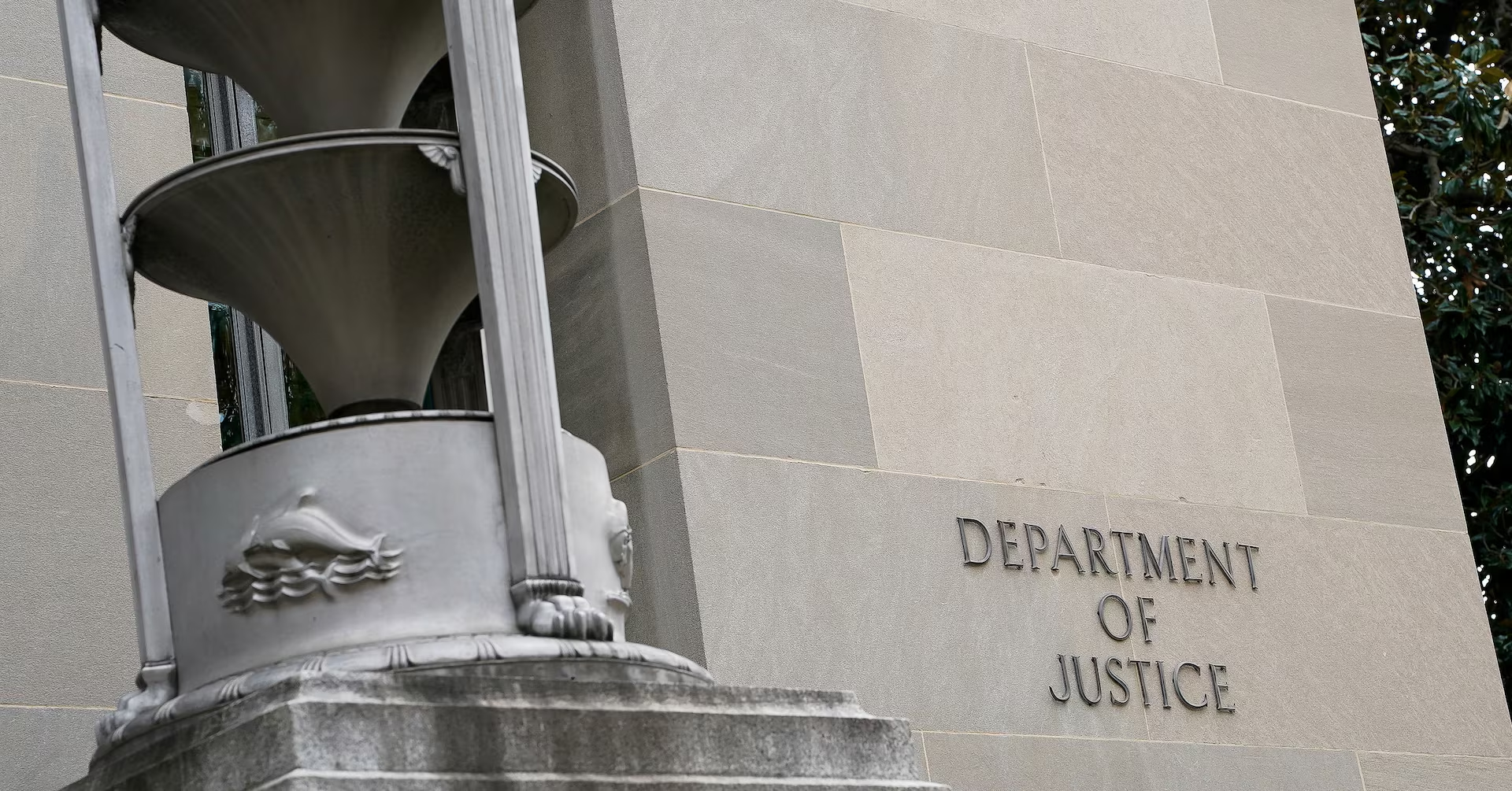
In a significant legal settlement, five Kaiser Permanente affiliates will pay $556 million to resolve allegations they submitted false diagnosis codes to inflate Medicare payments from the federal government. The settlement, announced Wednesday by the U.S. Department of Justice, closes two whistleblower lawsuits that accused the healthcare giant of violating the federal False Claims Act.
The accused Kaiser affiliates, operating in California and Colorado, allegedly pressured physicians to add diagnosis codes to patients’ medical records for conditions that were never actually considered during patient visits. This practice, which reportedly occurred between 2009 and 2018, artificially boosted payments received through Medicare Advantage programs.
“Fraud on Medicare costs the public billions annually, so when a health plan knowingly submits false information to obtain higher payments, everyone – from beneficiaries to taxpayers – loses,” said Craig Missakian, U.S. Attorney for the Northern District of California, in a statement addressing the settlement.
The affiliates involved in the settlement include Kaiser Foundation Health Plan, Kaiser Foundation Health Plan of Colorado, Colorado Permanente Medical Group, Permanente Medical Group, and Southern California Permanente Medical Group. While agreeing to the substantial payment, Kaiser Permanente did not admit wrongdoing, characterizing the settlement as a way to avoid prolonged litigation with its associated uncertainty and costs.
Kaiser further suggested that the case reflected “industrywide challenges” in applying Medicare Advantage risk adjustment standards and practices, indicating that the issues extend beyond their organization.
At the heart of the case is Medicare Advantage, also known as Medicare Part C, which allows beneficiaries to opt out of traditional Medicare and enroll in private health plans. Under this system, Medicare Advantage Organizations (MAOs) like Kaiser receive higher payments for sicker patients, with diagnosis codes serving as the mechanism for determining payment levels.
The Justice Department alleged that Kaiser engaged in several improper practices to maximize these payments. These included having doctors “mine” patients’ medical histories for potential diagnoses to add to records and establishing bonus structures tied to meeting diagnosis goals – effectively creating financial incentives for physicians to add more diagnostic codes.
The settlement rewards two whistleblowers who brought the allegations to light: Ronda Osinek, a former Kaiser medical coder, and James Taylor, a physician who previously oversaw risk adjustment programs and coding governance at the organization. Under provisions of the False Claims Act, which allows individuals to sue on behalf of the government and share in recoveries, the pair will receive approximately $95 million from the settlement.
This case highlights ongoing concerns about Medicare Advantage billing practices. As enrollment in Medicare Advantage plans continues to grow – now covering over 30 million Americans, or roughly half of all Medicare beneficiaries – scrutiny of payment practices has intensified. The Justice Department has pursued similar cases against other major healthcare organizations in recent years, suggesting systematic issues with how risk adjustment payments are handled across the industry.
For Kaiser Permanente, one of the nation’s largest integrated health systems serving nearly 12.7 million members, the settlement represents one of the largest Medicare Advantage fraud settlements to date. The organization continues to expand its Medicare Advantage offerings despite this legal challenge.
Healthcare experts note that these types of settlements may ultimately lead to stricter oversight of Medicare Advantage billing practices and potentially reforms to how risk adjustment payments are calculated and verified. The case also underscores the critical role that whistleblowers play in exposing healthcare fraud and protecting public funds.
The settlement comes at a time when healthcare costs remain a significant concern for both policymakers and the public, with Medicare spending accounting for a substantial portion of the federal budget.
Fact Checker
Verify the accuracy of this article using The Disinformation Commission analysis and real-time sources.

16 Comments
This case highlights the importance of strong whistleblower protections and the vital role they play in exposing fraud and holding bad actors accountable. It’s good to see the DOJ taking these allegations seriously and pursuing justice on behalf of Medicare beneficiaries and taxpayers.
Yes, the whistleblowers who came forward deserve recognition for their courage in shining a light on this misconduct. Their actions helped recover a significant amount of funds that were improperly taken from the Medicare program.
This case serves as a sobering reminder that even respected healthcare organizations are not immune to the temptation to exploit the system for financial gain. It’s crucial that regulators and the public remain vigilant in monitoring the industry to protect the integrity of public healthcare programs.
Absolutely. The public trust has been betrayed here, and it will take time and sustained effort to rebuild confidence in the healthcare system. Continued oversight and transparency will be key to ensuring similar abuses don’t occur in the future.
While it’s good to see some accountability, the $556 million settlement seems quite low given the long-running and large-scale nature of the fraud. I wonder if there were any criminal charges brought against the individuals responsible for orchestrating this scheme.
That’s a fair point. The monetary penalty may not be enough of a deterrent, especially if the executives involved faced no personal consequences. Hopefully, the settlement at least sets a precedent to discourage similar fraudulent practices in the future.
While the settlement amount is substantial, I worry that it may not be enough to truly deter future fraudulent behavior, especially for a large healthcare provider like Kaiser Permanente. Stronger penalties and more rigorous compliance monitoring could be warranted in cases like this.
That’s a valid concern. Significant monetary penalties alone may not be enough to change the calculus for companies that can afford to pay them. Exploring additional deterrents, such as exclusion from federal healthcare programs, could be an important next step.
This is a significant settlement, but it’s concerning to hear about these fraudulent practices being carried out over such an extended period. Pressuring doctors to falsify records in order to inflate Medicare payments is a serious breach of trust and misuse of public funds.
I agree, the scale and duration of the alleged fraud is very troubling. It’s good to see the DOJ taking strong action to recoup the ill-gotten gains and hold the healthcare providers accountable.
This case is a stark reminder that healthcare fraud can have significant consequences, both in terms of financial losses and eroded public trust. It’s critical that regulators and law enforcement maintain vigilance in monitoring the industry and swiftly addressing any abuses of the system.
Agreed. Proactive oversight and tough enforcement are essential to deter future fraud and ensure the integrity of public healthcare programs. Continued diligence and a willingness to hold both organizations and individuals accountable will be key going forward.
It’s appalling to see a major healthcare provider like Kaiser Permanente engaging in such blatant fraud against the Medicare program. Patients and taxpayers deserve much better from the companies and individuals entrusted with managing public healthcare funds.
Absolutely. This type of abuse of the system undermines public confidence in the healthcare industry as a whole. Robust oversight and tougher penalties are needed to prevent these kinds of egregious violations from happening again.
While the settlement amount is substantial, I’m curious to know more about the specific tactics used by Kaiser Permanente to defraud the Medicare program. Were there any individual executives held accountable, or was the penalty solely a corporate-level fine?
Those are good questions. The details around individual culpability and any potential criminal charges would be important to understand the full scope of the misconduct and the adequacy of the settlement. Transparency from the DOJ on those aspects would help provide a more complete picture.