


Listen to the article
From the Fifth Circuit: Judge Ho Questions Constitutional Basis of False Claims Act Whistleblower Provisions
A prominent Fifth Circuit judge has raised significant constitutional concerns about the whistleblower provisions in the False Claims Act (FCA), potentially setting the stage for future challenges to one of the federal government’s most powerful anti-fraud tools.
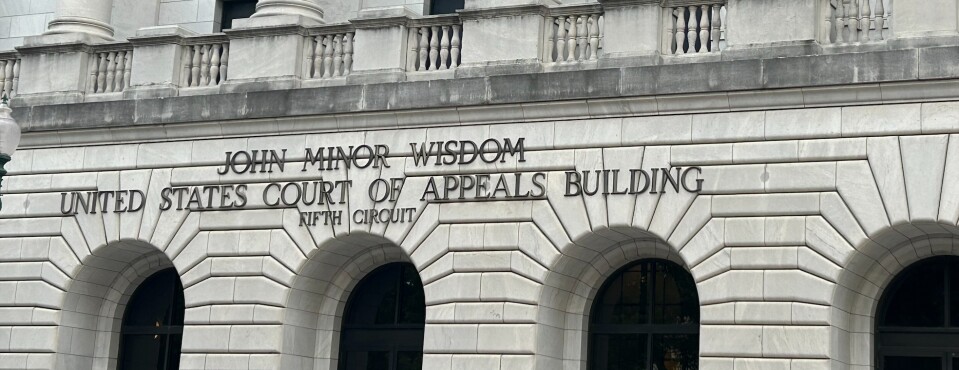
Judge James Ho, known for his conservative judicial philosophy, expressed his reservations in a concurring opinion issued Monday as the U.S. Court of Appeals for the Fifth Circuit rejected a whistleblower lawsuit against Encompass Health Rehabilitation Hospital of Pearland LLC. While agreeing with the court’s decision in this specific Medicare fraud case, Ho suggested the court should examine whether the FCA’s qui tam provisions face “serious constitutional problems” under Article II of the Constitution.
“Whistleblowers act like representatives of the federal government in court and seek to combat federal fraud,” Ho wrote in his concurrence, adding that these private individuals “are neither appointed by, nor accountable to, the President.”
The case highlights growing judicial scrutiny of the FCA, a Civil War-era statute that allows private citizens to file lawsuits on behalf of the government against entities that allegedly submitted false claims for federal funds. Successful whistleblowers, known as “relators” under the law, can receive up to 30 percent of any recovered funds.
The FCA has been a cornerstone of the federal government’s fraud recovery efforts, particularly in healthcare. Since 1986, when Congress strengthened the law’s whistleblower provisions, the Justice Department has recovered more than $70 billion in FCA cases, with whistleblowers initiating the vast majority of these actions.
Ho’s constitutional concerns center on the separation of powers doctrine. Under Article II of the Constitution, the executive branch holds responsibility for ensuring laws are faithfully executed. Ho suggests that private individuals bringing cases under the FCA’s qui tam provisions may improperly assume executive branch functions without proper presidential oversight or accountability.
The Medicare fraud allegations against Encompass Health, a major provider of post-acute healthcare services, were ultimately dismissed by the Fifth Circuit panel. The court found the whistleblower failed to meet the FCA’s rigorous standards for pleading fraud with particularity.
This is not the first time the constitutionality of the FCA’s whistleblower provisions has been questioned. In 2000, the Supreme Court upheld these provisions against a different constitutional challenge in Vermont Agency of Natural Resources v. United States ex rel. Stevens. However, that case focused primarily on Article III standing requirements rather than the Article II concerns raised by Judge Ho.
Legal experts note that Ho’s comments signal potential future challenges to the FCA. Stephen Kohn, a leading whistleblower attorney with the National Whistleblower Center, expressed concern about the implications.
“The FCA’s qui tam provisions have been vital in combating fraud against the government and returning billions to taxpayers,” Kohn said in a statement to reporters. “Any constitutional challenge that weakens this mechanism could severely hamper fraud detection and recovery efforts.”
The healthcare industry, which accounts for the majority of FCA settlements and judgments, is watching these developments closely. For companies like Encompass Health, which operates 155 rehabilitation hospitals across 37 states, clarity on the legal framework governing whistleblower actions is crucial for compliance efforts.
The Department of Justice has consistently defended the constitutionality of the FCA’s whistleblower provisions, arguing they serve as a critical force multiplier in the government’s anti-fraud efforts.
As the judicial debate over the FCA’s constitutionality continues, stakeholders across government, healthcare, defense contracting, and other industries that receive federal funding will be monitoring how courts, including potentially the Supreme Court, address these fundamental questions about who can legally act on behalf of the United States in fraud cases.
Fact Checker
Verify the accuracy of this article using The Disinformation Commission analysis and real-time sources.

14 Comments
The False Claims Act’s whistleblower provisions have been a powerful tool, but Judge Ho’s concerns about their constitutionality deserve close examination. This could have far-reaching consequences for how the government combats fraud.
Any changes to the FCA’s qui tam structure would need to carefully balance the benefits of whistleblower incentives with the constitutional issues raised. It’s a complex issue with significant implications.
This is an important issue as the False Claims Act has been crucial for exposing fraud involving government funds and programs. Judge Ho’s concerns about the constitutionality of the qui tam provisions deserve close examination.
The FCA has been a vital tool, but the points raised about presidential accountability are worth considering. Any changes would need to carefully weigh the benefits of whistleblower incentives against potential constitutional issues.
The False Claims Act has been an effective way to combat fraud, but Judge Ho’s critique of the whistleblower provisions as potentially unconstitutional is thought-provoking. This could have significant implications for future enforcement efforts.
It will be crucial for the courts to thoroughly examine the constitutional basis for the FCA’s qui tam structure. Maintaining an effective anti-fraud tool while respecting the separation of powers is a delicate balance.
Judge Ho’s critique of the False Claims Act’s whistleblower provisions raises important questions about their constitutional basis. The FCA has been crucial for exposing fraud, but the separation of powers issues he highlights merit consideration.
This is an issue that will likely see continued scrutiny and debate. Maintaining the FCA’s effectiveness while addressing any constitutional problems is a delicate challenge for policymakers and the courts.
Judge Ho’s concurring opinion raises some thought-provoking points about the constitutional basis for False Claims Act whistleblower lawsuits. The implications for future anti-fraud enforcement efforts could be significant.
It will be important for the courts to thoroughly examine the constitutional issues highlighted by Judge Ho. Maintaining the FCA’s effectiveness while ensuring proper oversight is a critical challenge.
Interesting perspective from Judge Ho. The whistleblower provisions in the False Claims Act have long been a powerful tool against fraud, but the constitutional issues he raises merit careful consideration.
It will be interesting to see if this sets the stage for future challenges to the FCA’s whistleblower mechanisms. The balance between empowering whistleblowers and ensuring proper oversight is a delicate one.
The potential constitutional issues with the False Claims Act’s whistleblower provisions raised by Judge Ho are worth exploring further. Whistleblowers play a crucial role, but ensuring proper oversight and accountability is also important.
This is a complex issue with valid concerns on both sides. Any changes to the FCA would need to be carefully considered to preserve the law’s effectiveness while addressing any constitutional problems.