


Listen to the article
J&J Unit Appeals $1.6 Billion False Claims Act Judgment in High-Stakes Court Battle
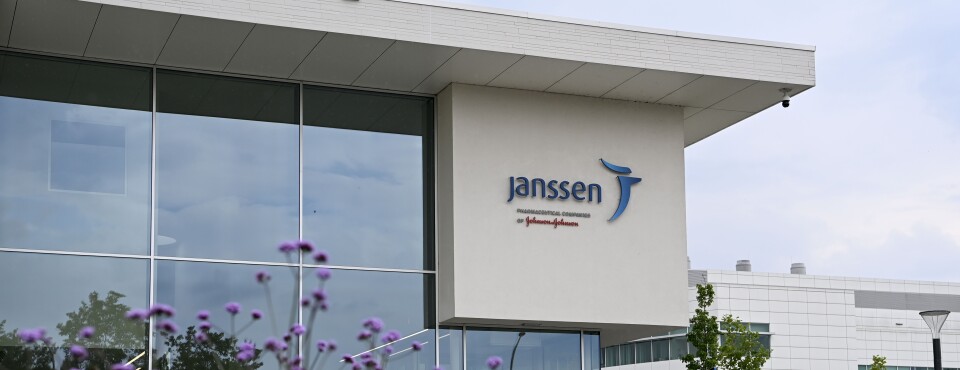
Janssen Products LP, a Johnson & Johnson unit, is mounting an aggressive legal challenge against the largest False Claims Act judgment in U.S. history – a staggering $1.6 billion award related to its marketing of HIV drugs Prezista and Intelence.
The case moves to the U.S. Court of Appeals for the Third Circuit in Philadelphia today, where judges will hear arguments that could potentially reshape how whistleblower lawsuits against alleged government fraudsters proceed.
The massive penalty, which includes $1.28 billion in penalties and $360 million in treble damages, stems from a jury verdict finding Janssen responsible for submitting nearly 160,000 false claims to the federal government through unlawful drug promotion. A federal judge in New Jersey upheld the verdict earlier this year.
Legal experts suggest Janssen’s strongest argument centers on materiality – whether the alleged fraud actually influenced government payment decisions. The company points to the fact that federal health programs continued paying for the drugs despite knowledge of the whistleblowers’ allegations.
“The undisputed evidence that the government has continued to pay Prezista and Intelence claims with full knowledge of the allegations is a significant challenge to the relators’ materiality case,” noted Nadia Patel of ArentFox Schiff LLP.
The case originated in 2012 when whistleblowers Jessica Penelow and Christine Brancaccio filed suit alleging that Janssen’s marketing tactics caused federal healthcare programs to improperly reimburse claims for the HIV medications. In 2021, a federal district judge allowed the case to proceed, finding sufficient evidence that Janssen’s off-label promotion misled doctors about the drugs’ appropriateness for patients with lipid conditions.
The stakes are exceptionally high for both sides. The $1.6 billion judgment represented nearly one-quarter of the Justice Department’s record-breaking $6.8 billion recovery from False Claims Act suits in 2025.
Janssen, now operating as Johnson & Johnson Innovative Medicine, has also raised constitutional concerns, arguing the award is excessive under the Eighth Amendment and that Article II of the Constitution doesn’t permit such whistleblower suits in the first place.
However, legal observers believe the Third Circuit is unlikely to be the first appeals court to strike down the qui tam provision of the False Claims Act, which allows whistleblowers to sue on behalf of the government.
“The Third Circuit faces significant institutional pressure not to be the first circuit to strike down the qui tam provision, particularly where every other circuit that has addressed the issue has upheld it,” Patel explained. “As such, the Third Circuit is likely to resolve the appeal on other grounds.”
Janssen has characterized the $1.6 billion award as “astronomical” and argues that the lower court violated constitutional protections against excessive fines by failing to consider the company’s investment in lifesaving drugs.
James Miller of Miller Shah LLP, who represents FCA whistleblowers, counters that the penalties are “within the bounds of reasonableness, as well as the statutory structure designed by Congress,” making it unlikely the Third Circuit will be sympathetic to this argument.
Interestingly, the U.S. government, while supporting the whistleblowers overall, has acknowledged one potential error in the case. In court filings, government attorneys agreed with Janssen that the district court incorrectly instructed the jury on the element of falsity by suggesting FDA approval was necessary for Medicare reimbursement.
“If the Third Circuit agrees that the district court gave an incorrect jury instruction by inserting the ‘on the label’ concept, that could be a strong basis for the court to question the verdict,” said Martin Weinstein of Cadwalader, Wickersham & Taft LLP, who represents FCA defendants.
The whistleblowers are represented by Reese Marketos LLP; Kellogg, Hansen, Todd, Figel & Frederick PLLC; and Berger Montague PC, while Covington & Burling LLP represents Janssen.
The court’s decision will have far-reaching implications not only for Johnson & Johnson but also for pharmaceutical marketing practices and the government’s ability to combat healthcare fraud through whistleblower litigation.
Fact Checker
Verify the accuracy of this article using The Disinformation Commission analysis and real-time sources.

5 Comments
The pharma industry will be watching this case closely. A ruling in Janssen’s favor could make it harder for whistleblowers to succeed in these types of fraud allegations going forward.
A $1.6 billion judgment is an eye-watering penalty. I’m curious to see if Janssen can get the verdict overturned or significantly reduced on appeal. The outcome could have major implications for the pharma industry.
This is a high-stakes case that could reshape False Claims Act litigation. The materiality argument around whether the alleged fraud influenced government payments seems like Janssen’s strongest defense.
This case highlights the high stakes and complex legal issues around False Claims Act cases. It will be worth following the appeals court proceedings and any potential Supreme Court review down the line.
Interesting that the government continued paying for the drugs even with the whistleblower allegations. That may undercut the materiality of the alleged fraud. We’ll see how the appeals court rules on this.