


Listen to the article
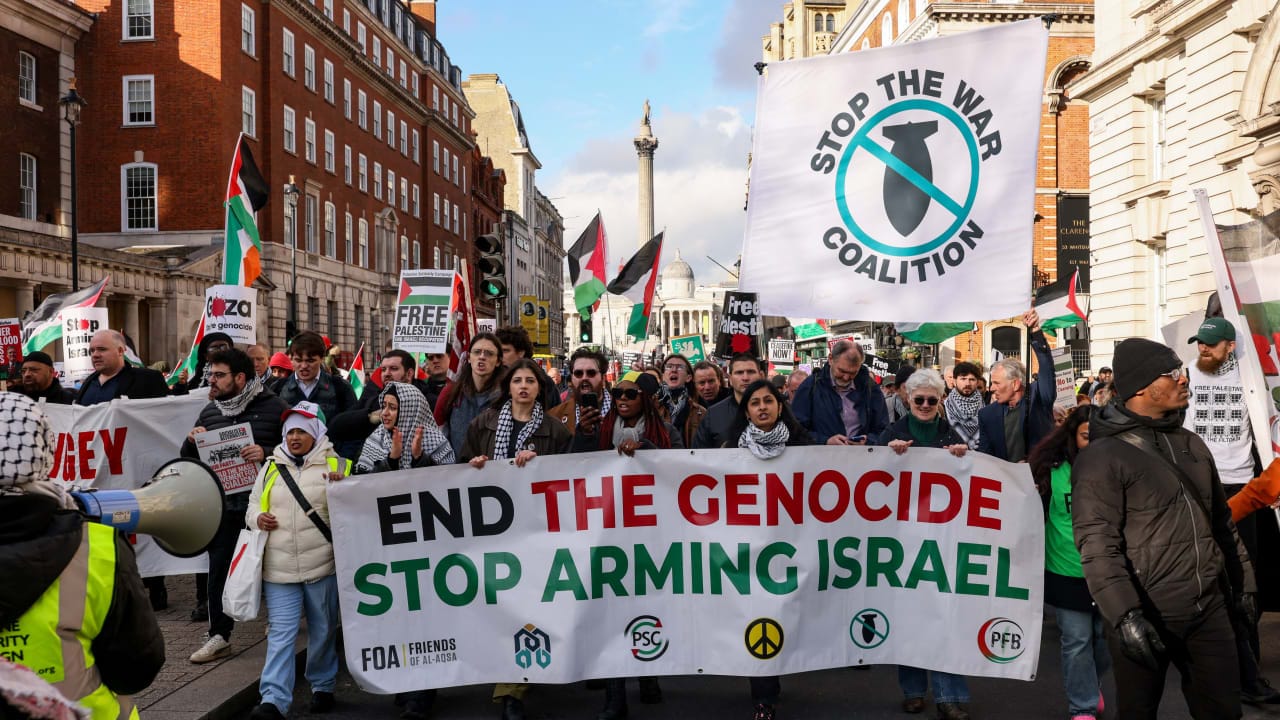
The accusation of genocide against Israel has become a deeply contentious issue in global discourse, raising serious concerns about historical accuracy and the impact of such allegations on Jewish communities worldwide. The characterization of Israel’s military operations in Gaza as “genocide” is increasingly being challenged by those who see it as a dangerous falsehood with far-reaching consequences.
This narrative gained significant attention recently when Rep. Alexandria Ocasio-Cortez (D-New York) made statements at the Munich Security Conference suggesting that U.S. aid to Israel had “enabled a genocide in Gaza.” Speaking with Haaretz reporter Hagar Shezaf, AOC, who is considered a potential Democratic presidential candidate for 2028, claimed that unconditional aid had led to thousands of avoidable civilian deaths in Gaza.
The timing and location of her remarks—in the city where Adolf Hitler’s Nazi movement was born—added a layer of historical irony that many found troubling. Critics point out that this represents how deeply the genocide accusation has penetrated mainstream diplomatic conversations.
In response to such allegations, a group of respected Jewish thinkers, teachers, and writers has launched an online campaign to challenge what they view as dangerous misinformation. Notable Israeli signatories include Rabbi Irving “Yitz” Greenberg, journalist Yossi Klein Halevi, and Rabbi Micha Odenheimer of the nonprofit Tevel b’Tzedek.
Their statement addresses several key factors that they believe contradict genocide allegations. They note the unprecedented combat conditions in Gaza, including the extensive tunnel networks and booby-trapped buildings that complicate military operations. The statement also highlights Hamas’s tactics of embedding combatants among civilians, including those identified as journalists or human rights workers.
The signatories emphasize that a crucial distinction between war’s tragic consequences and genocide lies in intent. “In this war, only one side intended to commit genocide, and that is Hamas,” they assert, referring to the October 7, 2023 attack on Israel that triggered the current conflict.
They argue that accusations of genocide began emerging as early as October 8, even before Israel had begun burying its dead or launched major military operations in Gaza. According to the statement, this narrative deliberately downplays the October 7 massacre while distorting and amplifying Israel’s defensive actions.
The consequences of these accusations extend beyond rhetoric. The petitioners warn that genocide allegations have become pretexts for excluding, attacking, and even murdering Jews worldwide. They suggest the real purpose behind these claims is to delegitimize Jewish self-determination and transform Israel into an international pariah.
Military experts have noted that despite the high civilian casualties in Gaza, the ratio of civilian-to-combatant casualties remains relatively low for asymmetrical urban warfare. They also point to Israel’s practice of warning civilians before attacks and the absence of mass starvation despite repeated claims of an imminent humanitarian catastrophe.
Israel’s defenders maintain that the country went to war not out of vengeance, as critics claim, but to break what they describe as an Iranian-led siege of terror enclaves on its borders and to restore deterrence—a capability they consider essential for Israel’s long-term survival in the Middle East.
The petition concludes with a call to action, urging both Jews and non-Jews to treat genocide accusations with the same revulsion as other historical lies about the Jewish people. “A lie has no legs,” they quote from an ancient Hebrew proverb, “We will not allow this lie to stand.”
As this debate continues to shape international discourse around the Israel-Hamas conflict, the campaign’s supporters are calling for reasoned voices to challenge genocide claims whenever and wherever they arise.
Fact Checker
Verify the accuracy of this article using The Disinformation Commission analysis and real-time sources.

16 Comments
This is a delicate and emotive topic. While the genocide claim is concerning, it’s vital that we approach it with rigor and nuance, rather than resorting to inflammatory rhetoric or historical analogies. I’m curious to hear more balanced perspectives on this.
Well said. Avoiding polarization and maintaining objectivity is crucial when discussing issues with such profound historical and political implications.
The comparison to blood libels is a weighty and concerning one. I appreciate the effort to present a balanced examination of this highly contentious issue. Thoughtful, fact-based analysis is essential to navigate the complexities involved and avoid further polarization.
Absolutely. Simplistic narratives often fail to capture the nuances, so a comprehensive, impartial assessment of the evidence and historical context is key.
This is a highly charged topic, and I appreciate the effort to examine it from multiple perspectives. It’s crucial that we approach sensitive issues like this with care and nuance, rather than resorting to inflammatory rhetoric.
I agree. Balanced, fact-based analysis is key to understanding the nuances of this conflict and its historical context.
The comparison to historical blood libels is concerning and demands scrutiny. We should be wary of oversimplifying complex geopolitical conflicts, as that can enable the spread of misinformation and further polarize debates.
Well said. Maintaining objectivity and avoiding knee-jerk reactions is important when dealing with emotive issues like this.
The genocide accusation is a serious claim that warrants careful scrutiny. I’m interested to learn more about the evidence and reasoning behind both sides of this debate, as it seems to be a complex and contentious issue.
Absolutely. Simplistic narratives often fail to capture the full picture, so a comprehensive, impartial examination of the facts is essential.
This is a complex and emotionally charged topic. While the genocide accusation is serious, it’s important to scrutinize the evidence and reasoning behind it, rather than resorting to historical analogies or inflammatory rhetoric. I’m interested to learn more about the different perspectives on this issue.
Well said. Maintaining objectivity and avoiding knee-jerk reactions is crucial when dealing with sensitive geopolitical conflicts like this one.
This is a complex and sensitive issue. While accusations of genocide are serious, it’s important to examine the facts and historical context carefully before drawing conclusions. I’m curious to learn more about the perspectives of experts and how they assess the situation.
I agree, this requires nuanced analysis from multiple angles. Inflammatory rhetoric can be counterproductive, so a balanced, fact-based approach is crucial.
The comparison to blood libels is troubling and demands close examination. I appreciate the effort to present multiple viewpoints on this highly contentious issue. Thoughtful, fact-based analysis is essential to navigate the complexities involved.
Agreed. Simplistic narratives often obscure the nuances, so a comprehensive, impartial assessment of the evidence and historical context is key.