


Listen to the article
IRGC Dismisses Assassination Claims About Navy Commander as Psychological Warfare
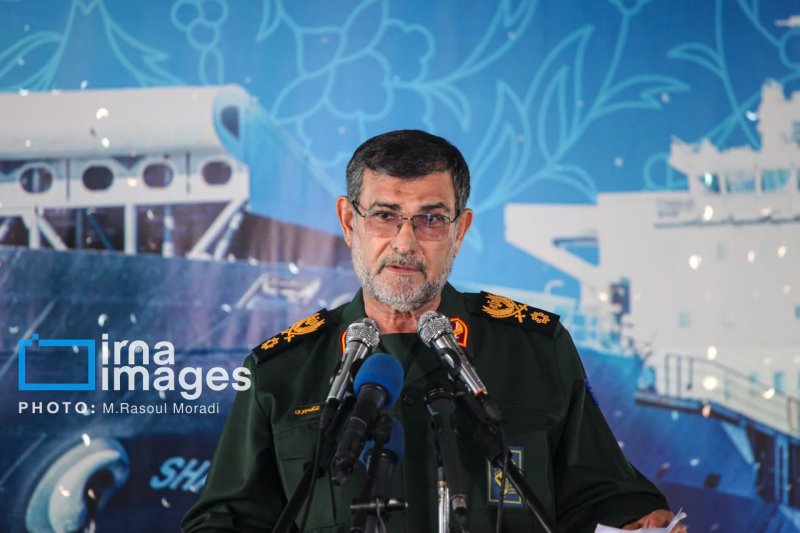
The Islamic Revolution Guards Corps (IRGC) has firmly rejected reports circulating on social media claiming the assassination of its naval commander, Brigadier General Alireza Tangsiri, denouncing them as fabricated news.
In a statement released Saturday, the IRGC’s public relations department addressed the rumors directly, attributing them to an Israeli-linked social media account that they characterized as “Mossad’s operational arm in psychological warfare,” according to Iran’s state news agency IRNA.
The statement further noted that this same account had previously disseminated false information regarding the alleged assassination of Major General Esmaeil Qaani, who commands the IRGC’s Quds Force—the elite unit responsible for extraterritorial operations.
This incident marks the latest chapter in ongoing information warfare between Iran and Israel, whose long-standing regional rivalry has intensified in recent months amid heightened tensions across the Middle East. The IRGC, a powerful branch of Iran’s armed forces with significant political and economic influence, frequently finds its leadership targeted by such disinformation campaigns.
Military analysts observe that false assassination claims have become increasingly common in the digital battleground between the two adversaries. Such psychological operations aim to create confusion, test security responses, or potentially force operational changes within targeted organizations.
Brigadier General Tangsiri has led the IRGC’s naval forces since 2018, overseeing operations in the strategically vital Persian Gulf and Strait of Hormuz—the maritime chokepoint through which approximately 20 percent of global oil shipments pass. Under his command, the IRGC Navy has engaged in several high-profile confrontations with U.S. and British vessels in regional waters.
The IRGC Navy maintains a separate structure from Iran’s conventional naval forces, specializing in asymmetric warfare tactics and employing fast attack craft, mini-submarines, and drone boats to project power in the Gulf region. These capabilities form a central part of Iran’s military doctrine against technologically superior adversaries.
Security experts note that the timing of such disinformation efforts often coincides with periods of heightened regional tension or diplomatic initiatives, suggesting tactical motivations behind their dissemination.
The incident highlights the evolving nature of modern conflict, where information operations and cyber activities increasingly complement traditional military confrontation. Both Iran and Israel have invested significantly in developing capabilities in these domains.
Iranian officials have repeatedly warned about foreign psychological operations targeting their military leadership and infrastructure. The IRGC, in particular, maintains dedicated units to counter such information warfare tactics.
Neither Israeli officials nor the social media account referenced in the IRGC statement have commented on the allegations of spreading disinformation.
Regional security experts caution that distinguishing genuine threats from psychological warfare maneuvers has become increasingly challenging in the Middle East’s complex information environment, where attribution remains difficult and plausible deniability is a standard operating procedure for many actors.
As tensions persist between Iran and Israel across multiple domains—from direct confrontations to proxy conflicts and information warfare—the international community continues to monitor developments closely, recognizing the potential for miscalculations that could trigger wider regional instability.
Fact Checker
Verify the accuracy of this article using The Disinformation Commission analysis and real-time sources.

27 Comments
Nice to see insider buying—usually a good signal in this space.
Good point. Watching costs and grades closely.
Good point. Watching costs and grades closely.
Nice to see insider buying—usually a good signal in this space.
Silver leverage is strong here; beta cuts both ways though.
Good point. Watching costs and grades closely.
Good point. Watching costs and grades closely.
If AISC keeps dropping, this becomes investable for me.
Good point. Watching costs and grades closely.
Exploration results look promising, but permitting will be the key risk.
I like the balance sheet here—less leverage than peers.
Good point. Watching costs and grades closely.
Good point. Watching costs and grades closely.
Uranium names keep pushing higher—supply still tight into 2026.
Good point. Watching costs and grades closely.
Good point. Watching costs and grades closely.
The cost guidance is better than expected. If they deliver, the stock could rerate.
Good point. Watching costs and grades closely.
I like the balance sheet here—less leverage than peers.
Good point. Watching costs and grades closely.
I like the balance sheet here—less leverage than peers.
Uranium names keep pushing higher—supply still tight into 2026.
Nice to see insider buying—usually a good signal in this space.
Good point. Watching costs and grades closely.
Interesting update on Iran’s Revolutionary Guards Deny Reports of Navy Commander’s Death. Curious how the grades will trend next quarter.
Good point. Watching costs and grades closely.
Good point. Watching costs and grades closely.