


Listen to the article
Iran’s claim of attacking a U.S. aircraft carrier has been categorically denied by American military officials, marking the latest escalation in tensions between the two nations in an increasingly volatile Middle East.
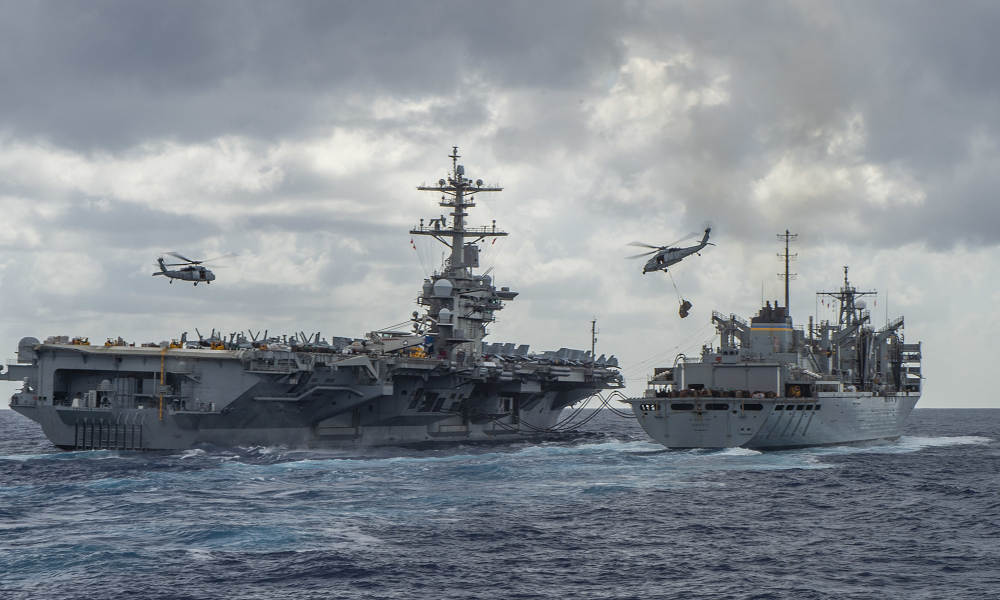
On Thursday, Iran’s Islamic Revolutionary Guard Corps (IRGC) announced that it had successfully targeted the USS Abraham Lincoln with missiles and drones, causing what it described as “major damage” to the Nimitz-class supercarrier. The IRGC further claimed that the vessel was retreating toward the United States as a result of the alleged attack.
U.S. Central Command (CENTCOM) swiftly rejected these assertions. A spokesperson told Al Jazeera that the Iranian claims were “completely false” and confirmed that the Abraham Lincoln continues to operate normally in the region. The aircraft carrier remains deployed as part of ongoing U.S. military operations aimed at countering Iranian influence and supporting regional security initiatives.
Military analysts note that such disinformation campaigns are consistent with Iran’s asymmetric warfare strategy, which often includes propaganda designed to project strength to domestic audiences and regional allies.
The USS Abraham Lincoln, one of America’s most powerful military assets, displaces over 100,000 tons when fully loaded and carries approximately 5,000 personnel along with dozens of aircraft. Any legitimate attack on such a vessel would represent a significant military escalation and would likely prompt a substantial American response.
Meanwhile, a separate incident potentially involving U.S. and Iranian naval forces has emerged. CBS News reported Thursday that U.S. forces struck an Iranian vessel earlier this week after it allegedly approached the Abraham Lincoln at an unsafe distance. According to two U.S. officials cited in the report, American forces initially attempted to warn off the vessel using a 5-inch Mark 45 deck gun but missed with several shots.
The situation reportedly escalated when a U.S. helicopter armed with Hellfire missiles engaged and struck the Iranian vessel twice. The current condition of the vessel and its crew remains unknown, and the U.S. Department of Defense has declined to officially confirm or comment on this reported engagement when questioned by CBS.
The alleged confrontation occurs against a backdrop of heightened regional tensions. Iran and its proxies have increased military activities across the Middle East in recent months, including attacks on commercial shipping in the Red Sea by Yemen’s Houthi rebels, who receive Iranian support.
The U.S. has maintained a significant naval presence in the region, including aircraft carrier strike groups, to protect maritime commerce and project power in response to these threats. The Pentagon has repeatedly emphasized that its forces will respond decisively to any direct attacks on American personnel or assets.
Maritime security experts point out that close encounters between Iranian and American vessels in the Persian Gulf and surrounding waters have become increasingly common in recent years, raising the risk of miscalculation or unintended escalation.
This latest exchange of claims and counterclaims represents a dangerous new chapter in U.S.-Iran relations, which have deteriorated significantly since the U.S. withdrawal from the Iran nuclear deal in 2018 and the subsequent reimposition of economic sanctions against Tehran.
Neither country appears willing to back down, with Iran continuing to develop its missile and drone capabilities while the United States reinforces its military posture in the region. Defense analysts warn that without diplomatic engagement, the risk of serious military confrontation between the two nations will continue to grow.
Fact Checker
Verify the accuracy of this article using The Disinformation Commission analysis and real-time sources.

11 Comments
Iran’s announcement of striking a US aircraft carrier is concerning, but the US military’s categorical denial of the event is reassuring. It’s important to be skeptical of such claims, especially when they seem to contradict the information provided by official sources. Disinformation campaigns are a common tactic in this region.
While the tension between the US and Iran remains high, it’s important to rely on authoritative sources when assessing military incidents. The US military’s swift rejection of Iran’s claims about striking the USS Abraham Lincoln suggests these announcements are more about propaganda than fact. Verifying information is crucial in these volatile situations.
You make a good point. Cutting through the noise and disinformation to get the facts is essential, especially when it comes to military actions and national security. The US denial seems to indicate Iran’s claims are more about perception than reality.
Iran’s claims of striking a US aircraft carrier seem to be more propaganda than fact. The US has firmly denied these allegations, and the USS Abraham Lincoln appears to be operating normally in the region. It’s concerning to see such disinformation attempts, likely meant to project an image of strength domestically and regionally.
You’re right, Iran’s claims seem to be an attempt at asymmetric warfare through propaganda. The US military has directly refuted the allegations, and the carrier’s continued operations suggest no actual attack took place.
The conflicting narratives around this incident highlight the importance of relying on authoritative and verified sources when it comes to military and security matters, especially in the volatile Middle East. While Iran may want to project an image of strength, the US denial seems to indicate these claims are more about disinformation than reality.
Absolutely. In these types of geopolitical disputes, it’s critical to separate fact from fiction and not get caught up in the information warfare. The US military’s firm rejection of Iran’s claims suggests the truth likely lies with their assessment.
The conflicting narratives around this incident highlight the need to carefully evaluate claims from both sides, rather than taking anything at face value. While Iran may want to project an image of strength, the US military’s firm denial suggests these allegations are more about disinformation than an actual attack. Verifying the facts is crucial in these tense situations.
This latest claim by Iran just seems to be another episode in the ongoing information war between the two countries. While it’s important to take all military statements with a grain of salt, the US’s categorical denial of the attack suggests these Iranian claims are likely false. Disinformation remains a key tactic in the region.
I agree, Iran’s announcement is likely more about posturing and propaganda than an actual attack. The US military’s swift and firm rejection of the claims points to this being a disinformation attempt rather than a real incident.
Iran’s alleged strike on the USS Abraham Lincoln is yet another example of the information warfare taking place between the two nations. However, the US military’s quick and unequivocal denial of the claims suggests this was simply Iranian posturing, not a real attack. Verifying facts is crucial in these tense situations.