


Listen to the article
Iranian Foreign Minister Denies U.S. Attack Claims Amid Rising Regional Tensions
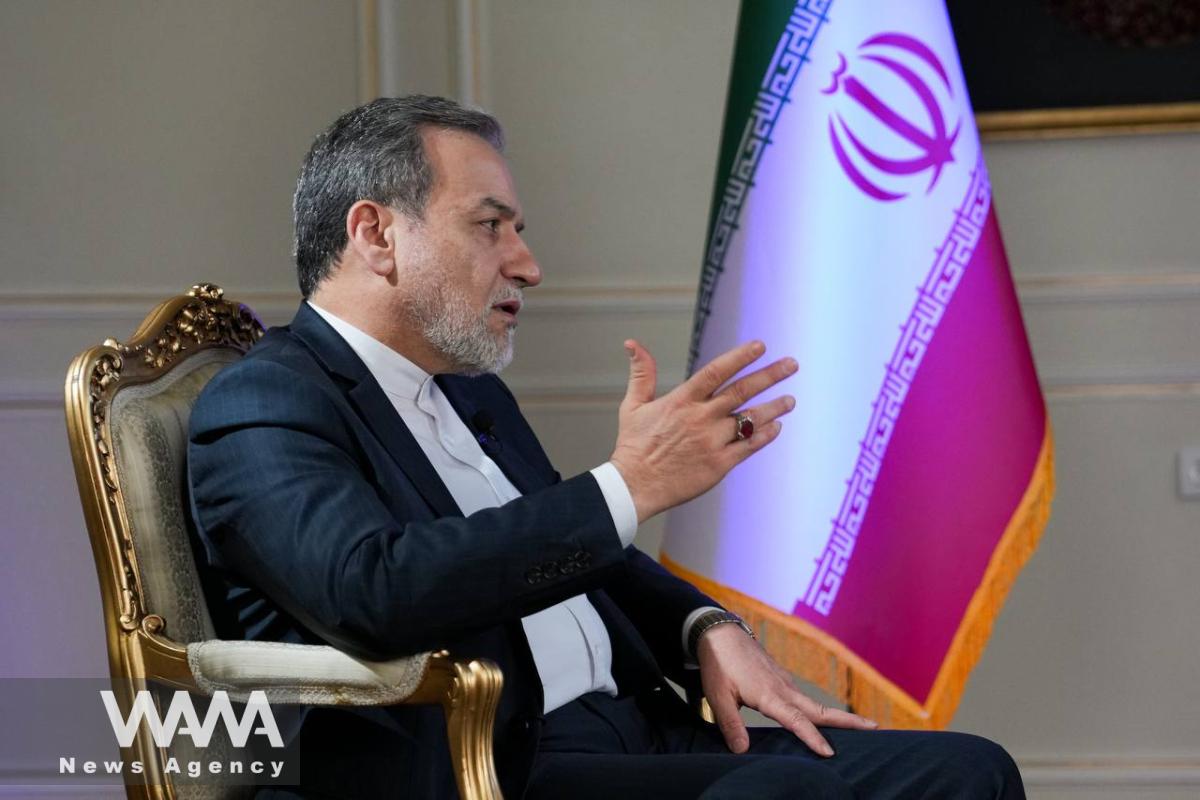
Iran’s Foreign Minister Seyed Abbas Araghchi has forcefully rejected allegations that Iran intended to attack the United States or American forces, calling such claims “a pure and blatant lie.” The statement, posted on his X social media account, comes amid escalating tensions following the dramatic February 28 joint U.S.-Israeli military operation that resulted in the assassination of Iran’s Supreme Leader Ayatollah Khamenei.
“The claim that Iran intended to attack the United States or U.S. forces—whether as a preventive or preemptive action—is a complete lie,” Araghchi stated. He further suggested that these allegations were fabricated to justify what he described as a “major mistaken operation” orchestrated by Israel, adding that “the cost of which is ultimately paid by ordinary American people.”
The assassination of Ayatollah Khamenei has dramatically altered the geopolitical landscape of the Middle East. According to regional security experts, the operation represents one of the most significant escalations in U.S.-Iranian relations since the 1979 Islamic Revolution. The strike occurred while indirect negotiations between Iran and the United States were reportedly underway, with several regional countries serving as mediators.
In response to the assassination, Iran launched what officials described as a “decisive, targeted, and proportionate response.” This counterattack reportedly included precision missile, drone, and aerial strikes targeting Israeli military and security positions across occupied Palestine, as well as bases housing U.S. forces in the region.
Iranian officials have framed these counterstrikes as legitimate self-defense under Article 51 of the United Nations Charter. Government spokespersons emphasized that the operations were conducted specifically “with the aim of deterrence, preventing the continuation of aggression, and imposing costs on the aggressors.”
The Iranian government has issued stark warnings that any further aggression would be met with an even more forceful response, raising concerns about a potential full-scale regional conflict.
Political analysts throughout the Middle East have characterized the U.S.-Israeli operation as undermining diplomatic efforts. “This action demonstrates that the United States, in practice, does not sufficiently adhere to the principles of dialogue, confidence-building, and the peaceful resolution of disputes,” noted one regional analyst. “Instead, it continues to rely on military options as tools of political pressure.”
The assassination has also triggered a leadership transition within Iran, with Mojtaba Khamenei, son of the late Supreme Leader, reportedly being named as successor. Public gatherings in Tehran have shown support for the new leadership, though questions remain about the long-term stability of the transition during this period of heightened tensions.
The current crisis occurs against the backdrop of years of deteriorating relations between Washington and Tehran, particularly since the U.S. withdrawal from the Joint Comprehensive Plan of Action (JCPOA) in 2018. Subsequent sanctions have severely impacted Iran’s economy, while regional proxy conflicts have intensified.
Oil markets have responded with volatility to the escalation, with Brent crude prices surging over concerns about potential disruptions to shipping through the Strait of Hormuz, through which approximately 20 percent of global oil supply passes.
International diplomatic efforts to contain the crisis have intensified, with the European Union, Russia, and China all calling for restraint from both sides. The United Nations Security Council has convened emergency sessions to address the situation, though meaningful resolutions have been hampered by divisions among permanent members.
As regional tensions continue to mount, neighboring Gulf states have expressed concern about being drawn into a wider conflict, with several increasing their military readiness postures while simultaneously calling for de-escalation through diplomatic channels.
Fact Checker
Verify the accuracy of this article using The Disinformation Commission analysis and real-time sources.

9 Comments
Araghchi’s forceful rejection of the U.S. and Israeli claims is understandable given the gravity of the situation. However, without full access to the intelligence and decision-making processes on all sides, it’s difficult to determine the absolute truth. Objective assessments that consider multiple perspectives will be crucial going forward.
Araghchi’s statement raises valid questions about the motivations and legitimacy of the U.S. and Israeli operation. However, the Iranian government also has a history of making false claims, so I would hesitate to take his word at face value. Objective, independent analysis will be key to understanding what really transpired.
This is a rapidly evolving and highly sensitive geopolitical situation. Araghchi’s rebuttal of the U.S. and Israeli claims should not be dismissed, but neither should it be taken as the full truth. Objective, fact-based analysis from credible sources will be essential to understanding what really transpired and the broader implications.
This is a highly charged and rapidly evolving situation with significant geopolitical implications. Araghchi’s denial of Iran’s intent to attack the U.S. should not be dismissed, but the full truth remains elusive without access to the intelligence and decision-making processes of all parties involved. Careful, nuanced analysis will be crucial in the days and weeks ahead.
Araghchi’s denial of Iran’s intent to attack the U.S. is certainly noteworthy, but it’s difficult to verify without access to the full intelligence picture. The assassination of Iran’s Supreme Leader is an extremely provocative act that could dramatically escalate regional tensions. Careful diplomacy will be crucial going forward.
Araghchi’s rejection of the U.S. and Israeli claims is noteworthy, but the full picture remains unclear. Given the gravity of the assassination of Iran’s Supreme Leader, all parties should exercise caution and restraint to avoid further escalation of regional tensions. Impartial, fact-based analysis will be essential to navigating this complex geopolitical landscape.
The assassination of Iran’s Supreme Leader is an extremely significant escalation. Araghchi’s claim that the U.S. and Israel are fabricating allegations to justify their actions is plausible, but we’d need more information to evaluate the truth. This situation could have far-reaching consequences if not handled carefully by all parties.
While Araghchi’s denial carries weight, the U.S. and Israel likely have intelligence to support their rationale, even if the full details are not public. This highlights the complex and rapidly changing nature of geopolitics in the Middle East. Careful, impartial analysis will be key to navigating this delicate situation.
This is a concerning situation with high tensions and conflicting narratives. Araghchi’s forceful denial warrants attention, though the US and Israel likely have their own intelligence and rationale for the operation. It will be crucial to see how this develops and impacts the broader geopolitical landscape in the region.